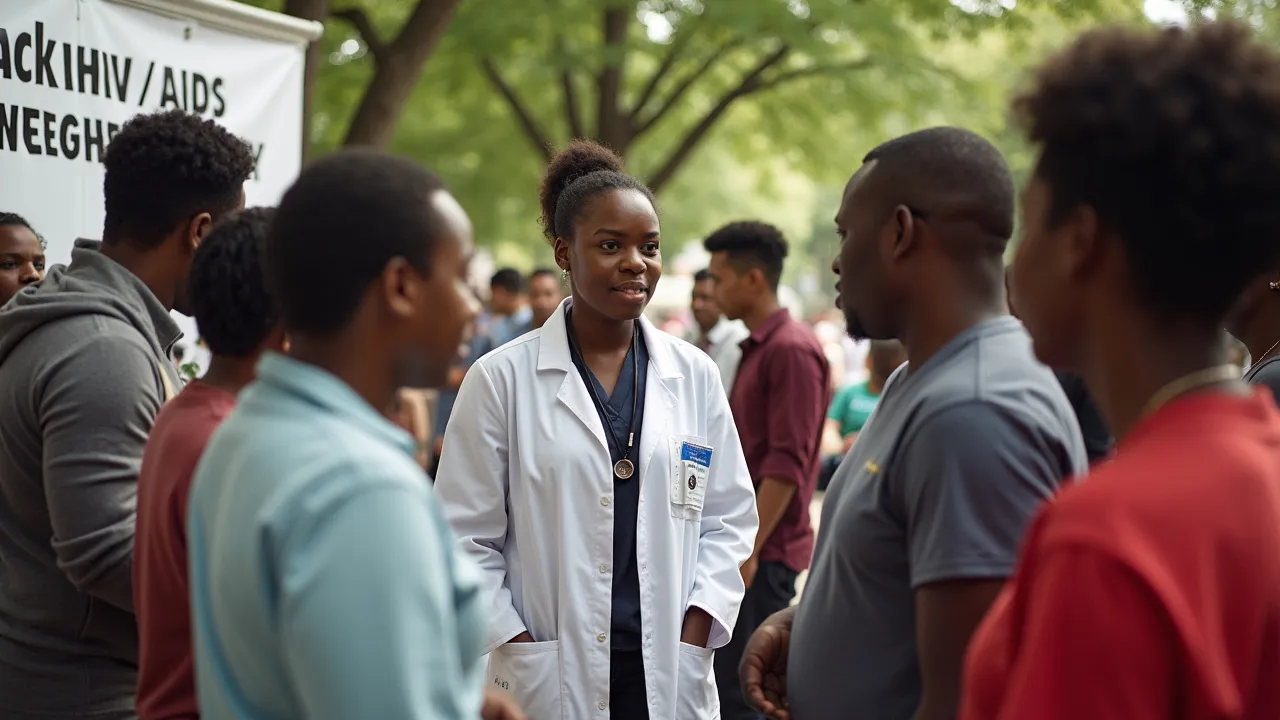
National Black HIV/AIDS Awareness Day on February 7th is a critical observance to address the disproportionate impact of HIV on Black communities. It promotes testing, prevention, treatment, and community mobilization to end the epidemic.
The Historical Origins & Evolutionary Journey
National Black HIV/AIDS Awareness Day (NBHAAD) was first observed on February 7, 2001, as a grassroots effort to address the skyrocketing HIV rates among African Americans. The day was conceived by the National Black Leadership Commission on AIDS (now part of the NAACP) in partnership with the U.S. Department of Health and Human Services.
The Foundational Catalyst
In the late 1990s, HIV/AIDS was devastating Black communities at alarming rates. African Americans accounted for over half of new HIV infections despite being only 13% of the U.S. population. Activists, faith leaders, and public health experts demanded a dedicated day to raise awareness, promote testing, and reduce stigma. The first NBHAAD focused on four pillars: testing, treatment, prevention, and education.
Legislative & Official Adoption
Unlike some observances, NBHAAD was not created by a presidential proclamation but by community organizations. However, federal agencies like the CDC and HRSA quickly endorsed it. Over the years, local governments issued proclamations, and the day gained national recognition. In 2021, the White House issued a formal statement reaffirming commitment to ending the HIV epidemic in Black America.
Modern Global Legacy
Although primarily a U.S. observance, the message has spread globally, influencing similar days in the Caribbean and Africa. The day now incorporates themes like U=U (Undetectable = Untransmittable) and PrEP access. Annual themes highlight emerging issues, such as 'We Are Stronger Together' in 2024.
How to Celebrate Black HIV/AIDS Awareness Day
Observing NBHAAD involves education, activism, and community support. Below are actionable strategies for individuals, schools, and organizations.
Personal Actions
- Get Tested: Know your status. Many communities offer free testing events. Use locator tools at gettested.cdc.gov.
- Educate Yourself: Read about HIV prevention methods like PrEP, PEP, and condoms. Understand U=U.
- Share Stories: Reduce stigma by sharing personal experiences or amplifying voices of those living with HIV.
Community & School Events
- Host a town hall with local health officials.
- Organize a candlelight vigil to remember those lost to AIDS.
- Distribute educational pamphlets at churches, barbershops, and beauty salons.
- Conduct social media campaigns using hashtags #NBHAAD and #BlackHIVAIDSAwarenessDay.
Corporate & Organizational Rituals
- Offer paid time off for employees to get tested.
- Fund community-based organizations working on HIV prevention.
- Implement internal training on HIV stigma and inclusion.
- Sponsor free condom distribution and PrEP navigation services.
Internationally, in countries like Nigeria and South Africa, similar days include rallies, free testing camps, and radio programs. The key is to tailor activities to local cultural contexts.
Disproportionate Impact on Black Communities
HIV/AIDS remains a critical health equity issue for African Americans. According to the CDC, Black people accounted for 42% of new HIV diagnoses in 2021, though they represent 12% of the U.S. population. Black women are 11 times more likely to acquire HIV than white women, and Black gay and bisexual men face elevated risks.
Socioeconomic Factors
- Poverty: Limited access to healthcare and preventive services.
- Stigma: Fear of discrimination deters testing and treatment.
- Healthcare Mistrust: Historical abuses like the Tuskegee Syphilis Study fuel skepticism.
- Incarceration: High incarceration rates disrupt social networks and increase risk.
Addressing these determinants is essential. Programs that integrate HIV services with mental health, housing, and employment support have shown success. Structural racism must be acknowledged as a root cause.
Stigma and Discrimination: Barriers to Ending the Epidemic
Despite medical advances, HIV stigma remains a formidable barrier. In Black communities, stigma is compounded by homophobia, religious condemnation, and racial mistrust. A 2023 study found that 30% of African Americans believe HIV is a 'gay disease', a myth that prevents many straight individuals from seeking testing.
Consequences of Stigma
- Delayed diagnosis and late linkage to care.
- Poor adherence to antiretroviral therapy.
- Mental health issues like depression and anxiety.
- Isolation and loss of social support.
NBHAAD promotes stigma reduction through honest conversations. Faith-based organizations have been pivotal in normalizing HIV discussion. The 'I Am a Work of Art' campaign used positive imagery to counteract shame.
Prevention and Testing: The Path to an AIDS-Free Generation
Prevention is a cornerstone of NBHAAD. Key strategies include:
PrEP (Pre-Exposure Prophylaxis)
Daily medication that reduces HIV risk by 99%. In recent years, injectable PrEP (cabotegravir) has become available. However, PrEP use among Black individuals is lower due to cost, lack of awareness, and medical mistrust. Programs like Ready, Set, PrEP provide free medication.
Testing
Routine testing is critical. CDC recommends that everyone aged 13–64 be tested at least once. Rapid tests provide results in 20 minutes. On NBHAAD, many sites offer free, confidential testing. Knowing your status allows early treatment and prevents transmission.
Locate testing sites via HIV.gov.
Use home testing kits (e.g., OraQuick).
Encourage partners and family to test.
Treatment and Care: Achieving Viral Suppression
Antiretroviral therapy (ART) allows people with HIV to live long, healthy lives and achieve viral suppression — meaning the virus is undetectable in the blood. Undetectable equals untransmittable (U=U). Yet, disparities persist: only 67% of Black people with HIV have viral suppression, compared to 77% of whites.
Improving Care Continuum
- Linkage to care: Ensure newly diagnosed individuals are connected to a provider within 30 days.
- Retention: Provide case management and peer support.
- Adherence: Use smartphone apps and pill boxes.
Community health workers and patient navigators from similar backgrounds improve outcomes. NBHAAD highlights successes and calls for investment in Black-led healthcare initiatives.
Historical Timeline
First cases of unusual immune failure reported in Los Angeles, later identified as AIDS.
Actor Rock Hudson dies of AIDS, increasing public awareness. The African American community begins organizing.
The Ryan White CARE Act passed, providing federal funding for HIV care. Black leaders push for targeted resources.
First National Black HIV/AIDS Awareness Day observed on February 7, founded by the National Black Leadership Commission on AIDS and federal partners.
CDC data shows African Americans represent 50% of new HIV cases. NBHAAD focuses on testing and reducing disparities.
FDA approves PrEP (Truvada). NBHAAD campaigns begin promoting its use in Black communities.
U=U (Undetectable = Untransmittable) consensus statement published, reducing stigma and empowering those on treatment.
COVID-19 pandemic disrupts HIV services. NBHAAD pivots to virtual events highlighting the need for continued care.
President Biden issues a proclamation for NBHAAD, reaffirming the goal of ending the HIV epidemic by 2030.
Theme 'We Are Stronger Together' emphasizes coalition building. Long-acting injectable PrEP becomes more accessible.