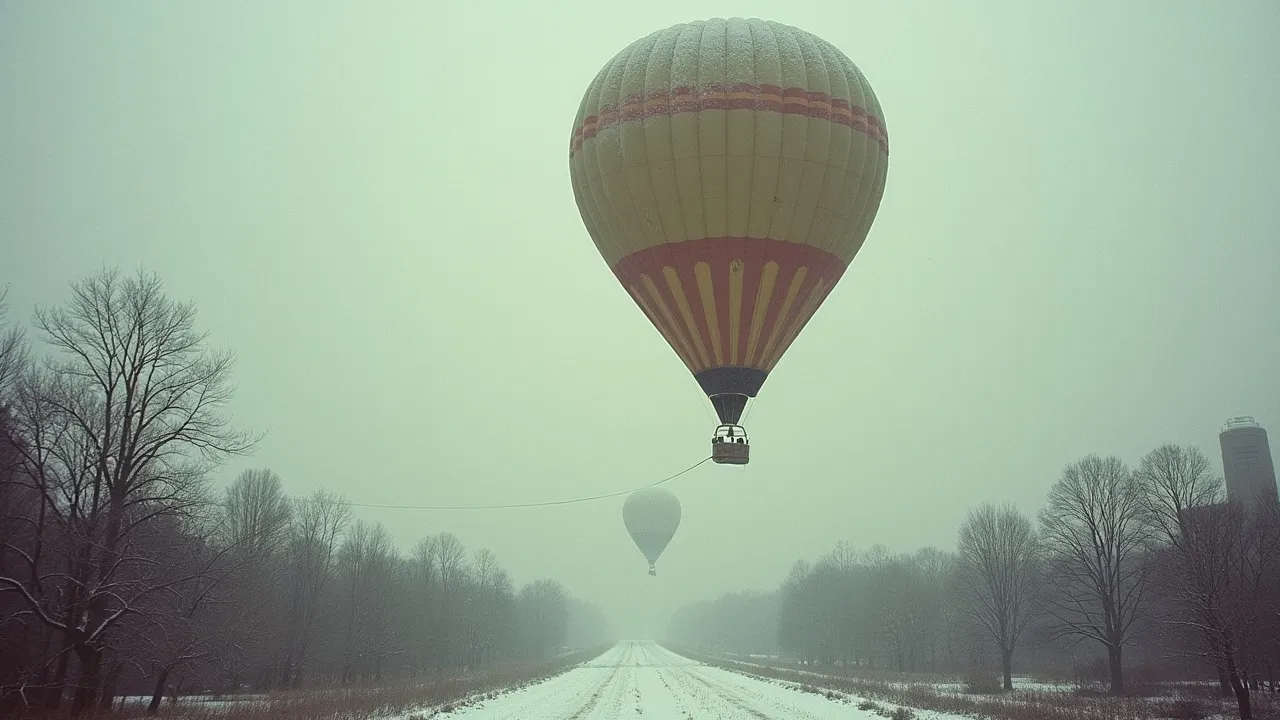
Observed on January 9th, Balloon Ascension Day commemorates Jean-Pierre Blanchard's historic 1793 balloon flight from Philadelphia to New Jersey. Celebrate with balloon launches, science education, and aviation-themed events.
The Historical Origins & Evolutionary Journey
Balloon Ascension Day, observed annually on January 9th, honors the first manned balloon flight in the United States, piloted by French aeronaut Jean-Pierre Blanchard on January 9, 1793. This landmark event took off from the yard of the Walnut Street Prison in Philadelphia, Pennsylvania, and landed 15 miles away in Deptford, New Jersey. President George Washington was among the distinguished spectators.
The Foundational Catalyst
The 18th century was an era of intense scientific curiosity, especially regarding lighter-than-air flight. The Montgolfier brothers had launched the first manned hot air balloon in France in 1783, sparking a global fascination. Blanchard, already a celebrated balloonist in Europe, brought his expertise to America. His flight was not only a demonstration of technological prowess but also a symbol of the young nation's embrace of innovation.
Blanchard's balloon, filled with hydrogen (a recent breakthrough), featured wings and a rudder—early attempts at steerability. The flight lasted 46 minutes, reached an altitude of about 5,800 feet, and covered 15 miles. Blanchard carried a letter from President Washington to be delivered "by aerial navigation" to any person he encountered, making it the first airmail delivery in the United States.
The Legislative/Official Adoption
Unlike official holidays, Balloon Ascension Day is a commemorative observance rather than a federal holiday. It gained recognition through historical societies and aviation enthusiasts over the following centuries. In 2008, the United States Postal Service issued a commemorative stamp honoring the 215th anniversary of Blanchard's flight, further solidifying the date in popular culture. Today, it is celebrated informally by ballooning clubs, museums, and educational institutions.
Modern Global Legacy
The spirit of Balloon Ascension Day extends beyond the United States. Balloon festivals around the world, such as the Albuquerque International Balloon Fiesta and the Bristol International Balloon Fiesta, trace their lineage back to early ascensions like Blanchard's. The day serves as a reminder of humanity's enduring quest to conquer the skies and the role of balloons in pioneering aviation, meteorology, and recreational tourism.
How to Celebrate Balloon Ascension Day
Balloon Ascension Day offers diverse opportunities for individuals, families, schools, and organizations to engage with history, science, and adventure. Below is a comprehensive guide to celebrating this unique observance.
For Individuals and Families
- Attend a balloon launch: Many communities hold coordinated balloon ascensions on January 9th. Check local aviation museums or hot air balloon companies for scheduled flights.
- Create paper lanterns: As a safer alternative to hot air balloons, release biodegradable sky lanterns in the evening (where permitted) to symbolize the historic ascent.
- Visit a science center: Explore exhibits on buoyancy, gas laws, and the history of flight. Some museums offer balloon-making workshops for children.
For Schools and Educators
- Classroom experiments: Build simple hot air balloons using tissue paper and a heat source. Teach students about the principles of density and thermal expansion.
- History lesson: Discuss the significance of Blanchard's flight and its connection to early aviation. Use primary sources like Washington's letter.
- Art projects: Design and paint miniature balloons, creating a colorful classroom mural that depicts the 1793 flight.
For Organizations and Corporations
- Corporate balloon launch: Partner with a local balloon company to host a branded ascent, promoting team building and community engagement.
- Charity events: Organize a "balloon glow" fundraiser, where tethered balloons illuminate a park, with proceeds going to aviation education programs.
- Workshops: Invite speakers from the ballooning industry to discuss careers in aeronautics and the evolution of flight technology.
Internationally, traditions vary. In France, Blanchard's homeland, enthusiasts may gather at sites associated with early ballooning. In Japan, balloon festivals often incorporate traditional elements like lanterns and kite flying. Wherever you are, the key is to connect with the thrill of flight and the pioneering spirit.
Scientific Significance of Balloon Ascension
Balloon Ascension Day is not just a historical commemoration; it highlights the scientific principles that underpin lighter-than-air flight. Understanding these concepts enriches the celebration.
Principles of Buoyancy
A balloon rises because the gas inside it (hot air, helium, or hydrogen) is less dense than the surrounding air. This creates a buoyant force, as described by Archimedes' principle. The temperature or composition of the gas determines the lift. Hot air balloons heat the air to about 100°C (212°F), reducing its density by roughly 25% compared to ambient air.
Materials and Safety
Early balloons used linen or silk coated with rubber to contain hydrogen—a highly flammable gas. Modern balloons use rip-stop nylon and propane burners for hot air, or helium for gas balloons. Safety measures include envelope temperature monitoring, burners with automatic shutoffs, and strict weather restrictions. On Balloon Ascension Day, pilots often conduct safety demonstrations.
Contributions to Meteorology
Balloons were instrumental in early atmospheric research. In the 19th century, scientists launched instrument-laden balloons to measure temperature, pressure, and humidity at various altitudes. Today, weather balloons—unmanned latex balloons carrying radiosondes—are launched twice daily from hundreds of sites worldwide, providing crucial data for weather forecasting and climate modeling. Balloon Ascension Day is an opportunity to recognize this ongoing contribution to science.
Balloon Ascension in Art and Culture
Balloons have long captured the human imagination, appearing in literature, visual art, film, and music. Balloon Ascension Day inspires creative expression that echoes the wonder of flight.
Literary Balloons
Jules Verne's classic Five Weeks in a Balloon (1863) popularized the adventure of balloon travel. Modern works like Around the World in Eighty Days (though not balloon-centric) and the children's book The Wonderful Balloon Ascension keep the theme alive. On this day, libraries and book clubs might host readings of balloon-related literature.
Visual Arts
Paintings from the 18th and 19th centuries often depicted balloon ascensions as public spectacles. Contemporary artists use balloons as motifs for freedom, fragility, and exploration. Street art, photography, and digital media celebrate the balloon's shape and color. Galleries sometimes hold special exhibits on Balloon Ascension Day.
Music and Film
Songs like "The Balloon" by The Flaming Lips and "99 Red Balloons" by Nena channel the emotional resonance of balloons. In film, scenes of balloon ascensions evoke wonder and escape—think The Wizard of Oz (the hot air balloon departure) or Up (the house lifted by balloons). Balloon Ascension Day is a perfect time for a movie marathon featuring iconic balloon scenes.
Modern Ballooning Industry and Safety
Today, ballooning is a global industry encompassing recreation, sport, and commerce. Balloon Ascension Day highlights both the joys and the responsibilities of modern aerostation.
Recreational and Sport Ballooning
Hot air balloon rides are a popular tourist attraction in scenic regions like Cappadocia, Turkey; Napa Valley, USA; and the Serengeti. Competitive ballooning includes events like the America's Challenge and the World Hot Air Balloon Championship, where pilots demonstrate precision flying and endurance. Balloon Ascension Day is often the start of the competitive season.
Safety Protocols
Commercial balloon operations must adhere to strict regulations set by aviation authorities. Pre-flight checks include envelope inspection, burner testing, and weather assessment (winds must be below 10-15 mph for safe launch). Pilots are required to hold commercial licenses and pass medical exams. Passengers receive safety briefings on landing positions and emergency procedures. On this day, many operators offer discounted flights with enhanced safety demonstrations.
Economic Impact
The balloon industry contributes billions annually through tourism, events, and equipment sales. Balloon fiestas draw hundreds of thousands of visitors, generating revenue for local economies. Balloon Ascension Day provides a platform to promote these events and the businesses behind them.
Environmental Impact and Alternatives
As with any human activity, ballooning has environmental implications. Balloon Ascension Day encourages reflection on sustainable practices and alternative ways to enjoy the spirit of the occasion.
Environmental Concerns
Traditional hydrogen and helium balloons can harm wildlife and contribute to litter. Latex balloons, though biodegradable, take months to decompose. Hot air balloons use propane, a fossil fuel, though emissions per flight are relatively low compared to aircraft. Mass releases of sky lanterns pose fire risks and can injure animals.
Eco-Friendly Celebrations
To minimize impact, consider these alternatives:
- Use reusable fabric balloons or banners instead of single-use latex.
- Organize a clean-up event following any large balloon launch.
- Advocate for lighter-than-air technology innovations like solar-heated balloons or using waste helium from industrial processes.
- Celebrate with virtual balloon releases using augmented reality apps, which have no physical footprint.
Historical Timeline
The Montgolfier brothers launch the first manned hot air balloon in France, sparking global interest in aeronautics.
Jean-Pierre Blanchard makes the first manned balloon flight in the United States on January 9th, from Philadelphia to Deptford, New Jersey.
The French Army uses balloons for reconnaissance during the Battle of Fleurus, marking the first military use of aircraft.
John Wise and his crew attempt a transatlantic balloon flight but fail; the feat is not accomplished until the Double Eagle II in 1978.
The first balloon race, the Gordon Bennett Cup, is held in Paris, launching a tradition of competition.
The Explorer II balloon ascends to 72,395 feet (22,066 meters), a record-breaking manned flight that contributes to stratospheric research.
The first hot air balloon designed for modern sport flying is built by Ed Yost, reviving the industry.
The Double Eagle II completes the first successful transatlantic balloon flight, landing in France.
Bertrand Piccard and Brian Jones complete the first nonstop round-the-world balloon flight in the Breitling Orbiter 3.
The Albuquerque International Balloon Fiesta sets a world record with 739 balloons participating.