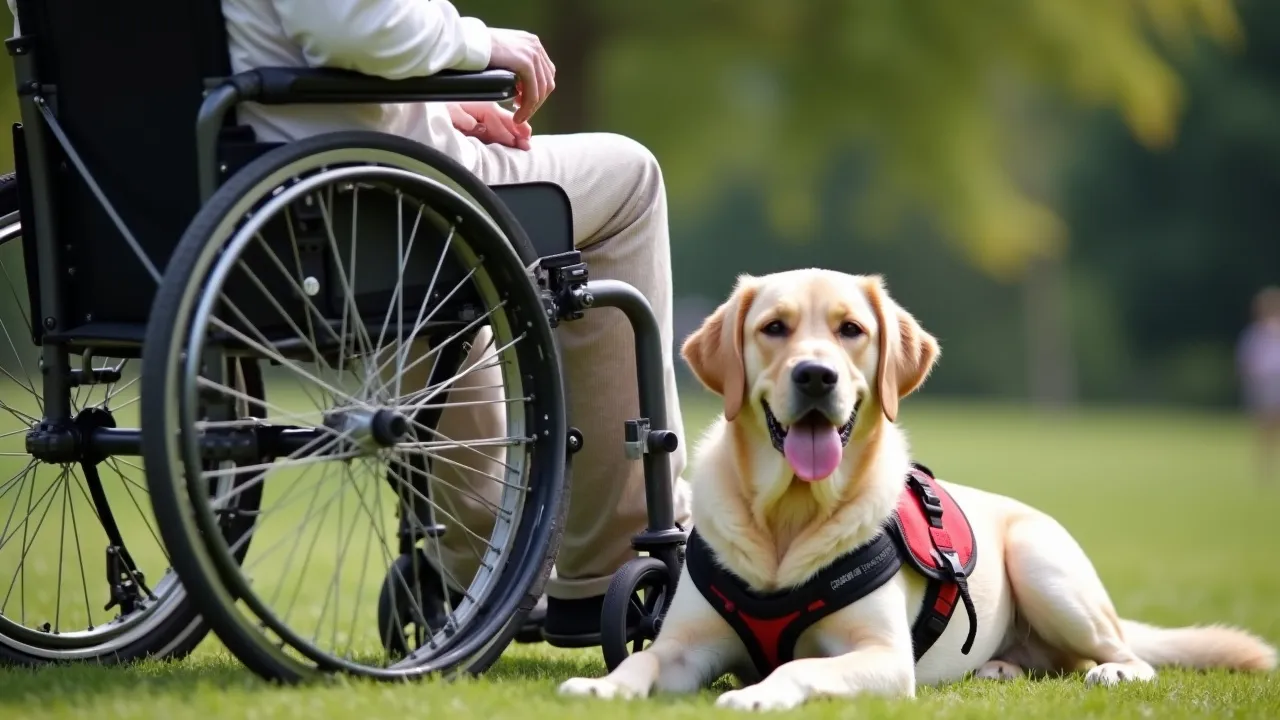
Assistance Dog Day on August 4th honors the incredible work of service dogs that aid individuals with disabilities. It raises awareness about the rights and training of these remarkable animals.
The Historical Origins & Evolutionary Journey
Assistance Dog Day, observed annually on August 4th, is part of International Assistance Dog Week (IADW), established in 2010 by Marcie Davis, a prominent advocate for service dog users. This day celebrates the profound bond between humans and specially trained dogs that provide independence and support to individuals with disabilities. The history of assistance dogs dates back much further, evolving from early experimental programs into a globally recognized partnership.
The Foundational Catalyst
The concept of using dogs to aid people with disabilities began in earnest after World War I, when German shepherds were trained to guide blinded veterans. The first formal guide dog school, The Seeing Eye, opened in the United States in 1929. This sparked a movement, with organizations like Guide Dogs for the Blind (1942) and later Assistance Dogs International (1986) setting standards for training and ethics. Over time, the role of assistance dogs expanded beyond guide work to include hearing dogs, mobility assistance dogs, and medical alert dogs.
The Legislative/Official Adoption
The passage of the Americans with Disabilities Act (ADA) in 1990 was a watershed moment, legally defining service animals and ensuring public access rights. Similar laws followed worldwide, such as the UK's Equality Act 2010. The establishment of Assistance Dog Day in 2010 by Marcie Davis aimed to celebrate these achievements and educate the public about proper etiquette and the critical role of assistance dogs.
Modern Global Legacy
Today, Assistance Dog Day is celebrated across continents with events, fundraisers, and social media campaigns. The day highlights the diversity of assistance dog roles, from autism support dogs to psychiatric service dogs. It also underscores ongoing challenges, including access issues and the need for stricter standards against fake service dogs. The legacy of this observance continues to grow as more people recognize the transformative impact of these canine partners.
How to Celebrate Assistance Dog Day
Assistance Dog Day on August 4th offers numerous ways for individuals, communities, and organizations to honor these heroic animals. Whether you are a handler, a dog lover, or a business owner, your participation can make a meaningful difference. Below is a definitive guide to celebrating with purpose and respect.
For Individuals and Families
- Educate yourself and others: Share accurate information about assistance dog etiquette, such as not distracting a working dog. Use social media with hashtags like #AssistanceDogDay.
- Donate or volunteer: Contribute to reputable organizations like Assistance Dogs International (ADI) accredited programs. Many accept time, money, or supplies.
- Create awareness events: Host a local park meet-up for handlers and their dogs, or organize a school assembly to teach children about service animals.
For Schools and Educational Institutions
- Incorporate lessons: Use the day to discuss disability rights, animal training, and the science of canine behavior.
- Invite speakers: Partner with local assistance dog organizations for a demonstration or Q&A session.
- Fundraising projects: Encourage students to raise funds for puppy raising or equipment like harnesses and vests.
For Businesses and Organizations
- Review policies: Ensure your establishment is fully compliant with ADA regulations for service animals. Train staff on proper interactions.
- Sponsor a dog: Financially support the training of a future assistance dog, often with naming rights.
- Host a 'Paws for a Cause' event: Invite the community for a dog-friendly gathering with educational booths and adoption drives for dogs that didn't make the cut as service animals.
Remember: Always ask permission before interacting with an assistance dog. The handler's dignity and the dog's focus are paramount.
Types of Assistance Dogs and Their Specialized Roles
Assistance dogs are not a monolithic group; they are highly trained to perform specific tasks that mitigate their handler's disability. Understanding the different types helps appreciate the breadth of their work.
Guide Dogs
Guide dogs assist individuals who are blind or visually impaired. They are trained to navigate obstacles, stop at curbs, and follow directional commands. Breeds like Labrador Retrievers and Golden Retrievers are common due to their temperament and intelligence.
Hearing Dogs
Hearing dogs alert people who are deaf or hard of hearing to important sounds like doorbells, smoke alarms, or crying babies. Their training involves recognizing sounds and making physical contact.
Mobility Assistance Dogs
These dogs help people with physical disabilities by retrieving dropped items, opening doors, turning lights on/off, and providing balance support. Some are trained to pull wheelchairs or brace against falls.
Medical Alert Dogs
Medical alert dogs detect changes in their handler's body chemistry. They can sense an impending seizure, diabetic emergency, or allergic reaction. This training is highly specialized and often uses scent detection.
Psychiatric Service Dogs
Psychiatric service dogs assist with mental health conditions like PTSD, anxiety, or depression. They perform tasks such as interrupting panic attacks, creating space in crowds, or reminding the handler to take medication.
Autism Support Dogs
For children and adults with autism, these dogs provide calming pressure, prevent wandering, and enhance social interaction. They are often trained with specific cues to reduce meltdowns.
Each type requires rigorous training—typically 18-24 months—and must be certified by an ADI-accredited program to ensure reliability and safety.
Legal Rights and Public Access: Navigating the Laws
One of the most critical aspects of Assistance Dog Day is raising awareness about the legal framework that protects the rights of handlers and their dogs. Misconceptions can lead to discrimination or public safety issues.
United States: The Americans with Disabilities Act (ADA)
The ADA defines a service animal as a dog (or miniature horse) individually trained to do work or perform tasks for a person with a disability. The dog must be harnessed, leashed, or tethered unless these interfere with the task. Businesses and state/local governments must allow service animals in all areas where the public is allowed.
- No certification required: Handlers are not required to show proof of training or licensing. However, staff may ask two questions: Is the dog a service animal required because of a disability? What work or task has the dog been trained to perform?
- Exclusion: A service animal can be removed if it is out of control, not housebroken, or poses a direct threat to health or safety.
United Kingdom: The Equality Act 2010
Similar protections exist in the UK, where assistance dogs (guide, hearing, and other accredited dogs) have access rights to most public places. Refusing access is considered disability discrimination.
Other Regions
Countries like Canada, Australia, and many European nations have their own laws. The International Association of Assistance Dog Partners (IAADP) provides guidelines. On Assistance Dog Day, advocates often host webinars to educate the public about these legalities, emphasizing that fake service dogs undermine the system and put genuine teams at risk.
The Training Journey: From Puppy to Professional
The path to becoming an assistance dog is rigorous and carefully structured. Training typically begins in puppyhood and continues for over a year, with a high percentage of dogs not making the cut. This section details the journey.
Phase 1: Puppy Raising (8 weeks to 18 months)
Volunteer puppy raisers socialize the dog in various environments—malls, public transit, and schools. The dog learns basic obedience and good manners. Key traits like confidence, calmness, and adaptability are monitored.
Phase 2: Advanced Training (18 to 24 months)
Dogs return to an accredited training center for task-specific instruction. For example, guide dogs learn to stop at kerbs, while mobility dogs practice opening doors. Training uses positive reinforcement and is tailored to the intended handler's needs.
Task Training Examples
- Seizure response: Dogs learn to lie down beside the handler during a seizure and activate an emergency alert system.
- Retrieval: Picking up dropped keys or a phone and delivering it to the handler's hand.
- Alerting: Using scent samples to identify drops in blood sugar and pawing the handler to check.
Phase 3: Team Training (4 to 6 weeks)
The dog is matched with a handler based on personality, activity level, and specific disability needs. Together, they undergo intensive bonding and practice. The trainer ensures the pair works smoothly as a team.
Phase 4: Certification and Follow-up
Most ADI programs require passing a public access test. After certification, trainers continue to support the team for the dog's working life (typically 8-10 years). On Assistance Dog Day, many programs showcase graduation ceremonies or host open houses to demonstrate these training procedures.
Supporting Assistance Dog Organizations: How You Can Help
The assistance dog ecosystem relies heavily on donations, volunteers, and public goodwill. Assistance Dog Day is a perfect opportunity to contribute in ways big and small.
Financial Support
Training a single assistance dog can cost $25,000-$50,000. Most organizations are non-profits and rely on donations. Consider sponsoring a puppy's training, making a one-time gift, or setting up a monthly donation. Even small amounts help cover food, vet bills, and equipment.
Volunteer Your Time
Opportunities include:
- Puppy raising: Temporarily housing and socializing a future assistance dog for 12-18 months.
- Administrative help: Fundraising events, office tasks, or social media management.
- Breeding host: Some programs need volunteers to care for breeding dogs that produce litters.
In-Kind Donations
Items such as gently used crates, leashes, towels, and toys are always accepted. Check with local programs for specific needs. Some also accept frequent flyer miles or vehicle donations.
Advocacy and Awareness
Spread the word about Assistance Dog Day. Correct myths (e.g., any dog can be a service animal with online certification). Support legislation that strengthens protections for handlers and punishes fake service dog fraud. By taking action, you help ensure that more individuals receive the life-changing support of an assistance dog.
Historical Timeline
The Seeing Eye, the first guide dog school in the United States, is founded in Nashville, Tennessee. It establishes the model for modern assistance dog training.
Guide Dogs for the Blind is founded in San Rafael, California, initially to support veterans blinded in World War II.
The first hearing dog program is established by the American Humane Association, expanding the definition of assistance dogs beyond guide work.
Assistance Dogs International (ADI) is founded to set universal standards for training and ethics among assistance dog programs worldwide.
The Americans with Disabilities Act (ADA) is signed into law, legally defining service animals and guaranteeing public access rights.
Canine Companions for Independence opens its first Northeast campus, expanding services for mobility assistance dogs.
The first diabetic alert dog is formally trained, marking the rise of medical alert dogs using scent detection.
Marcie Davis establishes International Assistance Dog Week, including Assistance Dog Day on August 4th, to raise awareness and celebrate service dog teams.
The United Kingdom's Equality Act 2010 comes into force, strengthening protections for assistance dog handlers across England, Scotland, and Wales.
The first psychiatric service dog programs for PTSD gain widespread recognition, leading to increased training for veterans.
During the COVID-19 pandemic, assistance dogs are recognized as essential workers, and programs adapt to remote training methods.