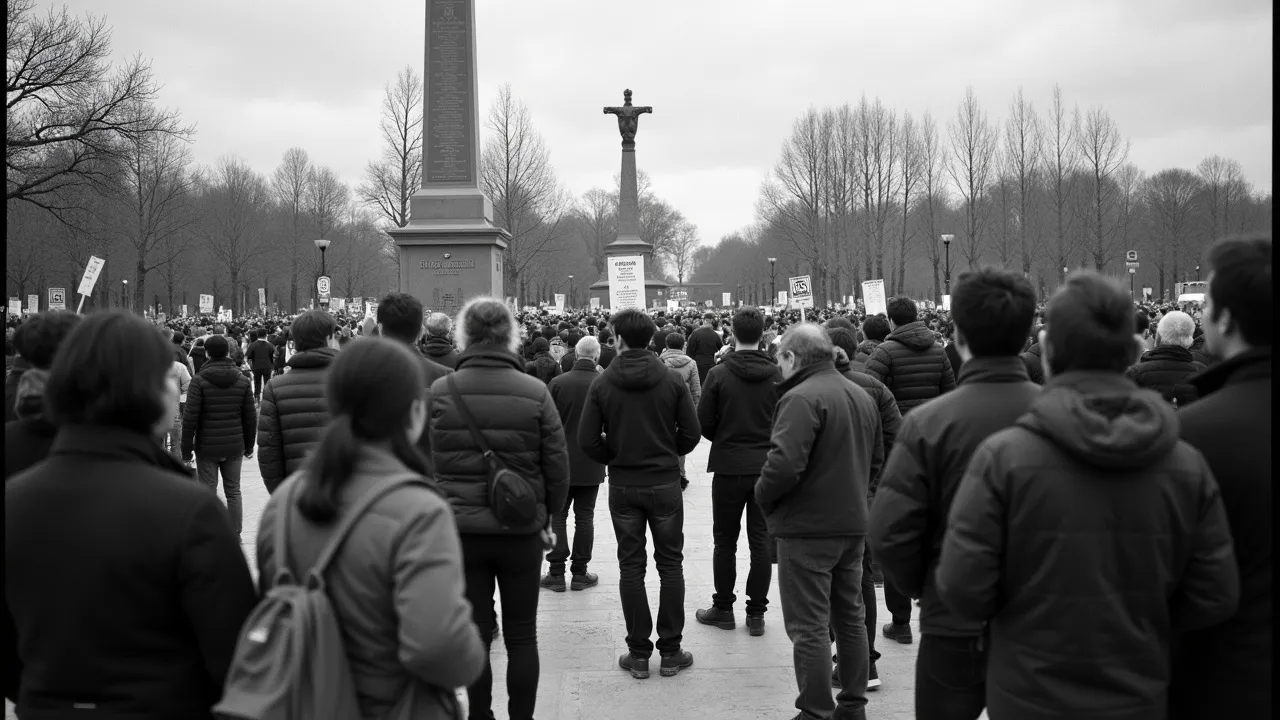
Armenian Genocide Remembrance Day on April 24 honors the 1.5 million victims of the Ottoman Empire's systematic massacres and deportations starting in 1915, with worldwide commemorations and advocacy for recognition.
Historical Origins & Evolutionary Journey
The Foundational Catalyst
The Armenian Genocide was the Ottoman Empire's systematic destruction of its Armenian population, beginning on April 24, 1915. On that day, Ottoman authorities arrested over 200 Armenian intellectuals, writers, and community leaders in Constantinople, marking the start of a campaign of mass deportations, forced marches, and massacres. Approximately 1.5 million Armenians were killed between 1915 and 1923. The term 'genocide' was coined by Raphael Lemkin to describe this atrocity.
Legislative and Official Adoption
Survivors organized the first commemoration in Constantinople in 1919. Over the decades, the Armenian diaspora and the Republic of Armenia pushed for global recognition. In 1965, on the 50th anniversary, massive demonstrations in Yerevan demanded Soviet acknowledgment. Following Armenia's independence, the day became an official state holiday. Internationally, over 30 countries, including France, Germany, and the United States, have officially recognized the genocide. April 24 is now a day of global remembrance.
Modern Global Legacy
Today, Armenian Genocide Remembrance Day features:
- Wreath-laying ceremonies at memorials like Tsitsernakaberd in Yerevan.
- Church services and vigils in Armenian communities worldwide.
- Educational events, lectures, and film screenings.
- Advocacy campaigns to combat genocide denial.
The day serves as a powerful reminder of the consequences of hatred and impunity, reinforcing the commitment to 'Never Again'.
How to Celebrate Armenian Genocide Remembrance Day
For Individuals and Families
- Attend a local commemoration event or virtual vigil.
- Light a candle and observe a moment of silence at 7:00 PM local time.
- Read survivor testimonies or watch documentaries.
- Share educational resources on social media using #ArmenianGenocideRemembranceDay.
For Schools and Universities
- Organize classroom discussions on genocide prevention.
- Invite speakers from Armenian community organizations.
- Display student artwork or essays about the genocide.
For Organizations and Corporations
- Issue a public statement acknowledging the genocide.
- Encourage staff to participate in remembrance activities.
- Donate to humanitarian projects benefiting Armenian communities.
Remembering the past is crucial to preventing future atrocities. Participation demonstrates solidarity and commitment to human rights.
Global Recognition and Denial
Countries That Recognize
As of 2025, over 30 countries, including France, Germany, Italy, Canada, and Russia, have officially recognized the Armenian Genocide. In 2021, U.S. President Joe Biden became the first American president to formally use the term 'genocide' in a Yom HaShoah statement. These recognitions are vital for historical justice.
Denial and Advocacy
Turkey continues to deny the genocide, asserting that deaths were a result of war and intercommunal conflict. This denial impacts Armenian communities and hinders reconciliation. Commemoration days serve as platforms to counter denial through education and advocacy. The International Association of Genocide Scholars (IAGS) has repeatedly affirmed the genocide's historical reality.
Cultural and Educational Impact
Literature and Arts
Armenian Genocide has inspired numerous literary works, such as Franz Werfel's 'The Forty Days of Musa Dagh' and Peter Balakian's 'Black Dog of Fate'. Films like 'Ararat' directed by Atom Egoyan explore the impact. Cultural expressions ensure the memory lives on.
Educational Initiatives
Many school curricula include the Armenian Genocide as a case study in genocide education. The USC Shoah Foundation houses survivor testimonies. Teaching this history fosters understanding of genocide prevention and human rights.
The Role of the Armenian Diaspora
Diaspora Communities
The Armenian diaspora, numbering over 10 million, plays a crucial role in preserving memory and advocating for recognition. Communities in the United States, France, Lebanon, and Russia organize annual events. Diaspora activism has driven legislative recognitions globally.
Cultural Preservation
Through churches, schools, and cultural centers, the diaspora passes down stories and traditions. Remembrance Day unites Armenians worldwide in a shared expression of resilience.
Memorials and Commemorative Sites
Tsitsernakaberd Memorial Complex
Located in Yerevan, Armenia, this memorial was completed in 1967. It features a 44-meter stele symbolizing national rebirth, with an eternal flame at its center. Each year on April 24, thousands gather to lay flowers. Tsitsernakaberd is the global focal point of remembrance.
Other Memorials Worldwide
- Armenian Genocide Museum in Washington, D.C.
- Monument in Metz, France.
- Khachkar (cross-stone) in Sydney, Australia.
These sites ensure the genocide is never forgotten.
Historical Timeline
April 24: Ottoman authorities arrest and deport hundreds of Armenian intellectuals in Constantinople, initiating the Armenian Genocide.
Systematic massacres, forced marches, and starvation result in the deaths of approximately 1.5 million Armenians.
First official commemoration held in Constantinople by Armenian survivors.
Massive demonstrations in Yerevan on the 50th anniversary demand Soviet recognition of the genocide.
Tsitsernakaberd memorial complex completed in Yerevan, becoming the central site of remembrance.
International recognition accelerates; several European countries pass resolutions.
U.S. House of Representatives passes a resolution (H.Res. 296) recognizing the Armenian Genocide.
U.S. President Joe Biden formally recognizes the Armenian Genocide, a historic first.