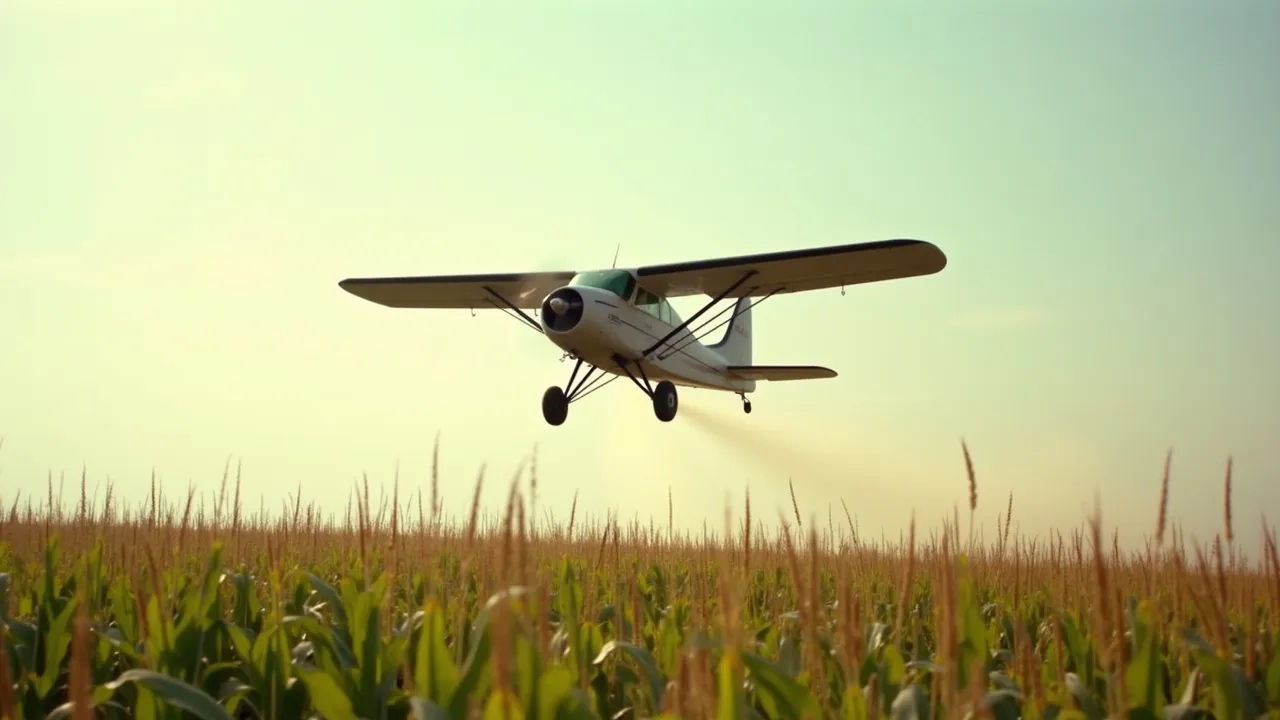
Celebrate Airplane Crop Duster Day on August 3rd by honoring the vital role of agricultural aviation in modern farming. From humble beginnings to advanced technology, crop dusters have revolutionized pest control and crop yield worldwide.
The Historical Origins & Evolutionary Journey of Crop Dusting
Airplane Crop Duster Day, observed annually on August 3rd, commemorates the advent and evolution of agricultural aviation. The practice of dispersing substances from aircraft, known as crop dusting or aerial application, began shortly after World War I when surplus military planes were adapted for civilian use.
The Foundational Catalyst
The first documented aerial application of insecticide occurred in 1921 in Ohio, where a Huff-Daland biplane dusted catalpa trees with lead arsenate to control sphinx moth larvae. This pioneering flight, piloted by John A. Macready, demonstrated the potential of aviation in agriculture. By 1923, the Huff-Daland Duster Company, the world’s first aerial application company, was formed. Early crop dusters faced numerous challenges, including crude equipment, unreliable engines, and lack of precise application techniques. Despite these hurdles, the efficiency of covering large areas quickly spurred adoption across the United States, particularly in cotton-growing regions of the South.
The Legislative/Official Adoption
As the industry grew, so did the need for regulation and recognition. In 1998, the National Agricultural Aviation Association (NAAA) established National Agricultural Aviation Day, later known as Airplane Crop Duster Day, to honor the contributions of aerial applicators. After years of advocacy, August 3rd was chosen to coincide with the anniversary of the first commercial aerial application contract. The day gained official recognition through resolutions in state legislatures and proclamations from the U.S. Department of Agriculture, cementing its place in the calendar of agricultural observances.
Modern Global Legacy
Today, crop dusting has evolved into a sophisticated industry employing GPS-guided spray systems, drones, and specialized aircraft like the Air Tractor 802. The observance now extends beyond the United States, with countries such as Brazil, Australia, and Canada recognizing the day to highlight the role of aerial application in ensuring food security. However, the core spirit remains: appreciating the pilots and the machines that protect crops from pests and diseases, making modern agriculture possible.
How to Celebrate Airplane Crop Duster Day
Airplane Crop Duster Day offers a unique opportunity to learn about and appreciate agricultural aviation. Whether you are an individual, a school, or an organization, there are many ways to participate meaningfully.
For Individuals and Families
- Visit a Local Agricultural Aviation Operator: Reach out to nearby crop dusting companies for a tour of their facilities and hangars. Many operators offer open houses on August 3rd.
- Attend an Air Show: Look for events featuring vintage and modern crop duster aircraft. The NAAA often hosts demonstrations at regional airshows.
- Watch Documentaries: View films such as "The Crop Duster" or historical footage from the Smithsonian Air and Space Museum to understand the evolution of the field.
- Share on Social Media: Use hashtags like #AirplaneCropDusterDay and #AgAviation to spread awareness and share photos or stories.
For Schools and Educators
- Classroom Lessons: Integrate agricultural aviation into science and history curricula. Discuss topics like pest management, GPS technology, and the physics of flight.
- Invite a Guest Speaker: Arrange for a pilot or agronomist to speak to students about career opportunities and the importance of crop dusting.
- Model Aircraft Contest: Engage students in building and decorating model crop duster planes, fostering creativity and interest in aviation.
For Organizations and Companies
Agribusinesses and aviation groups can host community events such as fly-ins, pancake breakfasts, or safety workshops. Partner with local USDA offices to highlight the impact of aerial application on food production. Additionally, many companies sponsor scholarships for aspiring agricultural aviators on this day.
Globally, celebrations vary. In Brazil, where crop dusting is crucial for soybean and sugarcane production, pilots perform low-altitude flyovers over rural towns. In Australia, the day includes demonstrations of water-bombing techniques used in bushfire response, showcasing the versatility of crop duster aircraft.
The Global Impact of Agricultural Aviation
Crop dusting has transformed agriculture worldwide, enabling farmers to manage vast areas efficiently. In the United States, over 80 million acres are treated annually by aerial applicators. The practice is especially vital in regions with difficult terrain, such as rice paddies in Asia, mountainous coffee plantations in South America, and large-scale wheat fields in Europe.
Food Security and Pest Control
Agricultural aviation plays a critical role in combating locust plagues, fungal outbreaks, and invasive species. During the 2020 locust infestation in East Africa, crop dusters were deployed to spray biopesticides over millions of acres, preventing widespread famine. Similarly, in the United States, aerial application is essential for controlling cotton bollworms and soybean rust.
Environmental Advantages
Modern aircraft equipped with precision nozzles reduce chemical drift and optimize dosage, minimizing environmental impact. Compared to ground-based application, aerial spraying uses less fuel per acre and compacts soil less, preserving soil health. Furthermore, the use of biological pesticides and targeted treatments aligns with sustainable agriculture practices.
Economic Contributions
The agricultural aviation industry supports thousands of jobs globally, from pilots and mechanics to researchers and logistics specialists. In the U.S., the industry contributes over $5 billion annually to the economy. Crop dusting also increases crop yields by up to 20% in some cases, directly impacting food prices and availability.
Technological Innovations in Crop Dusting
From simple hoppers and hand-operated valves to advanced GPS and variable-rate technology, crop dusting has undergone a technological revolution.
GPS and Precision Agriculture
Global Positioning System (GPS) guidance allows pilots to follow precise flight paths, reducing overlap and missed areas. Swath width control and real-time data logging ensure accurate application, saving chemicals and preventing overuse. Some aircraft now use multi-spectral sensors to detect pest hotspots before spraying.
Unmanned Aerial Vehicles (UAVs) and Drones
Drones are increasingly used for small-scale applications, such as in vineyards or orchards, where larger planes cannot operate. They offer lower costs and reduced human risk, though regulatory hurdles remain. However, manned aircraft still dominate large-scale operations due to payload capacity.
Aircraft Design and Safety
Modern crop dusters, like the Air Tractor 802, feature powerful engines, corrosion-resistant materials, and crash-resistant fuel systems. Innovations include enclosed cockpits with HVAC systems to protect pilots from chemical exposure, and aerodynamic refinements for better fuel efficiency. Safety enhancements, such as terrain awareness warning systems (TAWS) and reduced vertical separation minima, have drastically reduced accident rates over the past two decades.
Safety and Environmental Considerations
The safe and responsible use of crop dusting is paramount to its continued acceptance. Strict regulations govern pilot licensing, chemical handling, and flight operations.
Regulatory Frameworks
In the United States, the Federal Aviation Administration (FAA) and the Environmental Protection Agency (EPA) jointly oversee aerial application. Pilots must hold a commercial pilot certificate with an agricultural aircraft endorsement, and all pesticides must be approved for aerial use. Similar agencies operate in other countries, such as the Civil Aviation Safety Authority (CASA) in Australia and the National Civil Aviation Agency (ANAC) in Brazil.
Environmental Stewardship
Best management practices include maintaining buffer zones near waterways, calibrating equipment regularly, and using drift-reduction technology. The NAAA promotes the "Drift Mitigation Pro" training program to educate applicators on reducing off-target movement. Additionally, many operators voluntarily participate in third-party certification programs like the Agricultural Aircraft Association Stewardship Program.
Community Relations
To address public concerns, pilots often communicate with nearby residents before spraying, using signage and notification systems. The industry also supports research into bee-safe spray adjuvants and nocturnal application to protect pollinators. Transparency and education are key to maintaining trust in the practice.
Economic Significance of Aerial Application
Aerial application is not just about pest control; it is a major economic driver in the agricultural sector. By enabling timely treatment of large areas, crop dusting helps stabilize supply chains and reduce food waste.
Cost-Effectiveness
While per-acre costs may be higher than ground spraying, the speed of aerial application often saves crops that would otherwise be lost to rapidly spreading diseases or insects. For example, in rice production, aerial seeding and fertilization are significantly faster than manual methods, reducing labor costs.
Job Creation and Industry Growth
The industry supports tens of thousands of high-skilled jobs, including pilots, mechanics, sales representatives, and consultants. Many rural communities rely on crop dusting services as a primary source of income. In addition, aircraft manufacturing companies like Piper, Cessna, and Thrush Aircraft continue to produce specialized models for the global market.
Insurance and Risk Management
Agricultural aviation also plays a role in risk management. Many crop insurance policies require timely application of pesticides, making aerial applicators essential partners. In some regions, aerial application is the only viable method for treating crops in wet or mountainous conditions, reducing the financial risk for farmers.
Historical Timeline
First aerial application of insecticide by John A. Macready in Ohio, using a Huff-Daland biplane to treat catalpa trees.
Huff-Daland Duster Company formed, the first commercial aerial application company, based in Macon, Georgia.
World War II advances in aviation technology lead to more reliable aircraft and the development of specialized spray equipment.
The Environmental Protection Agency (EPA) establishes regulations for pesticide use, including aerial application standards.
The National Agricultural Aviation Association (NAAA) establishes National Agricultural Aviation Day, later renamed Airplane Crop Duster Day.
GPS-based precision agriculture becomes widely adopted in crop dusting, significantly reducing chemical usage and drift.
First official observance of Airplane Crop Duster Day on August 3rd as a national day of recognition.
Drones begin to be integrated into agricultural aviation for small-scale and precision applications, though manned aircraft remain dominant.
Airplane Crop Duster Day celebrates its 11th anniversary, with events held across the U.S., Brazil, and Australia.