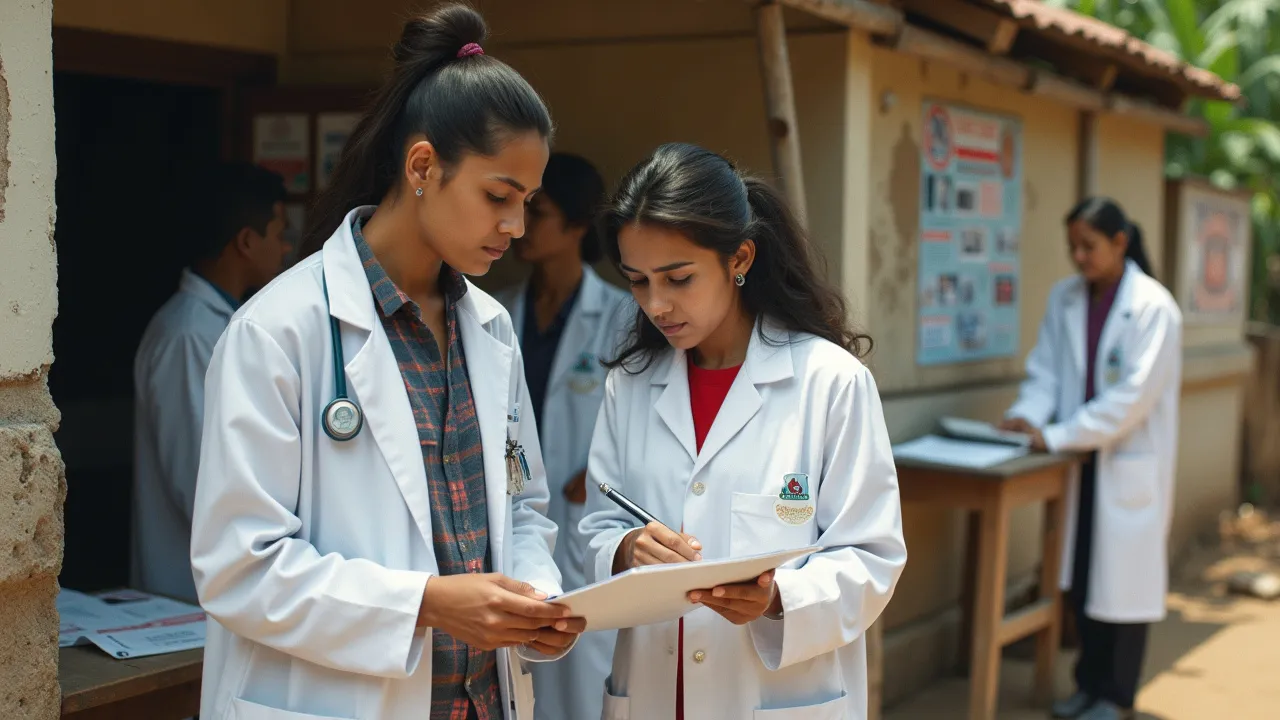
World Tuberculosis Day, observed on March 24th, raises awareness about the devastating health, social, and economic impact of tuberculosis. It calls for accelerated efforts to end the global TB epidemic.
The Historical Origins & Evolutionary Journey
World Tuberculosis Day, observed annually on March 24th, commemorates the day in 1882 when Dr. Robert Koch announced his discovery of Mycobacterium tuberculosis, the bacterium that causes tuberculosis (TB). This breakthrough paved the way for diagnosis and treatment of a disease that has plagued humanity for millennia. The day was first officially recognized by the World Health Organization (WHO) in 1982, marking the centenary of Koch's discovery.
The Foundational Catalyst
Prior to Koch's discovery, TB was known as consumption and was shrouded in mystery and stigma. Koch's announcement at the Berlin Physiological Society on March 24, 1882, provided the first scientific evidence that TB was an infectious disease, not a hereditary curse. This finding revolutionized medical understanding and led to the development of diagnostic tests like the tuberculin skin test.
The Legislative/Official Adoption
In 1982, the International Union Against Tuberculosis and Lung Disease (IUATLD) proposed a global day to highlight the ongoing battle against TB. The WHO endorsed the proposal, and March 24th was chosen to honor Koch's discovery. Initially, the day focused on awareness and fundraising for TB control programs. In 1993, the WHO declared TB a global health emergency, giving the day renewed urgency. Since then, each year has featured a specific theme, such as "Stop TB in my lifetime" or "It's time to End TB."
Modern Global Legacy
Today, World Tuberculosis Day is a cornerstone of global health advocacy. It mobilizes governments, NGOs, and communities to intensify TB prevention, diagnosis, and treatment. The day also serves as a platform to showcase innovations like GeneXpert rapid testing and shorter treatment regimens. Despite progress, TB remains one of the top infectious killers worldwide, especially in low- and middle-income countries. The day continues to call for political commitment and funding to meet the WHO's End TB Strategy targets by 2035.
How to Celebrate World Tuberculosis Day (Alternate)
World Tuberculosis Day is not just a day of awareness; it is a call to action. Individuals, communities, and organizations can participate in meaningful ways to contribute to TB elimination. Below are actionable strategies for different groups.
For Individuals
- Educate Yourself and Others: Learn the symptoms of TB (persistent cough, fever, night sweats, weight loss) and share infographics on social media using hashtags like #WorldTBDay and #EndTB.
- Support TB Patients: Volunteer with local TB support groups or donate to organizations like Partners In Health or the Stop TB Partnership.
- Get Tested: If you have risk factors (e.g., HIV, close contact with TB patients), schedule a TB test at your local clinic.
For Schools and Universities
- Organize Awareness Events: Host a guest lecture by a pulmonologist or a screening of a documentary like "The Forgotten Plague."
- Fundraising Drives: Run a "TB-Free Walkathon" or a bake sale with proceeds going to TB research.
- Student Projects: Encourage students to create posters or digital campaigns highlighting TB facts and stigma reduction.
For Organizations and Governments
- Policy Advocacy: Lobby for increased domestic funding for TB control programs and universal health coverage.
- Free Screening Camps: Set up mobile testing units in underserved areas, especially urban slums and remote villages.
- Media Campaigns: Release press statements, publish op-eds, and run radio/TV spots focusing on TB's economic impact and preventable nature.
Regional Variations
While March 24th is the global date, some regions may have alternative observances due to local circumstances. For example, in India, which has the highest TB burden, the day is often extended into a week of activities. In some African countries, community leaders incorporate TB messages into existing health events. However, the primary date remains March 24th, as endorsed by the WHO.
The Global Impact of Tuberculosis: A Persistent Scourge
Tuberculosis is an airborne infectious disease that primarily affects the lungs. In 2022, an estimated 10.6 million people fell ill with TB, and 1.3 million died, according to the WHO. The disease disproportionately affects the poor, malnourished, and immunocompromised. Multidrug-resistant TB (MDR-TB) poses a growing threat, with about 3.1% of new cases resistant to key antibiotics.
Economic and Social Costs
TB is not just a health issue; it has profound economic consequences. The disease costs the global economy billions of dollars annually in lost productivity. TB patients often face catastrophic health expenditures, pushing families into poverty. Additionally, stigma and discrimination are rampant, leading to delay in seeking care and poor adherence to treatment.
Progress and Setbacks
The COVID-19 pandemic set back TB control efforts significantly, with a decline in reported cases and an increase in deaths. In response, the WHO launched the "Find. Treat. All. #EndTB" campaign. Promising new vaccines and treatments are in development, but funding gaps remain critical. World TB Day serves as a reminder that TB is preventable, curable, and must be eliminated to achieve global health security.
Innovations in Diagnosis and Treatment
Recent years have seen remarkable innovations in the fight against TB. Traditional methods like sputum smear microscopy are being replaced by rapid molecular tests such as GeneXpert, which can detect TB and drug resistance in under two hours. Whole-genome sequencing is also improving surveillance of outbreak strains.
New Drug Regimens
The treatment of drug-sensitive TB now includes a four-drug regimen lasting six months. For MDR-TB, shorter all-oral regimens like the BPaL (bedaquiline, pretomanid, linezolid) combination have shown high success rates with fewer side effects. These advances are a key focus of World TB Day awareness campaigns.
Vaccine Development
The only licensed TB vaccine, BCG, is over a century old and offers variable efficacy. New candidates like M72/AS01E are in advanced trials, raising hopes for a more effective vaccine. World TB Day provides a platform to highlight the need for accelerated vaccine research and funding.
The Role of Advocacy and Funding
Global advocacy is crucial to sustain political will and financial resources for TB elimination. The Stop TB Partnership, the Global Fund to Fight AIDS, Tuberculosis and Malaria, and national governments coordinate efforts. World TB Day is a key moment to push for increased domestic and international funding.
Goals and Commitments
UN High-Level Meeting on TB (2023): 193 countries committed to providing universal access to TB prevention, diagnosis, treatment, and care by 2027.
WHO End TB Strategy: Aims for a 90% reduction in TB deaths and an 80% reduction in incidence by 2030 compared to 2015.
Funding Needs: An estimated $13 billion per year is required for TB prevention and care, with a $2 billion gap for research. Advocates use World TB Day to demand pledges.
Addressing Tuberculosis in Vulnerable Populations
TB thrives in conditions of poverty, malnutrition, overcrowding, and limited access to healthcare. Vulnerable groups include people living with HIV, prisoners, miners, migrants, and the homeless. World TB Day highlights the need for targeted interventions.
Key Approaches
- Integrated Services: Combining TB screening with HIV care and nutritional support improves outcomes.
- Community-Based Care: Community health workers can deliver directly observed therapy (DOT) to ensure adherence.
- Legal and Social Protection: Advocacy for anti-stigma laws, paid sick leave, and housing support helps patients complete treatment without catastrophic costs.
Without addressing social determinants, the goal of TB elimination remains elusive. World TB Day reminds us that equity must be at the center of the response.
The Future of TB Elimination: Goals and Challenges
The vision of a TB-free world by 2035 is ambitious but attainable with sustained effort. Major challenges include drug resistance, underdiagnosis (especially in children and men), and the need for a more effective vaccine. Climate change and conflict also disrupt TB programs.
Promising Developments
- Digital Health: Mobile apps and AI for chest X-ray interpretation can expand screening reach.
- Preventive Therapy: Shorter regimens like 3HP (isoniazid-rifapentine) are making TB prevention more accessible.
- Political Momentum: The 2023 UN High-Level Meeting declaration reaffirmed commitments, with World TB Day serving as an accountability checkpoint.
World Tuberculosis Day is not merely a date on the calendar; it is a global mobilization to ensure that future generations can live in a world without TB. Join the movement and take action on March 24th.
Historical Timeline
Dr. Robert Koch announces the discovery of Mycobacterium tuberculosis as the cause of tuberculosis on March 24, transforming understanding of the disease.
Robert Koch receives the Nobel Prize in Physiology or Medicine for his work on tuberculosis.
Selman Waksman and his team discover streptomycin, the first effective antibiotic against TB. Waksman later wins the 1952 Nobel Prize.
Isoniazid, a key drug in TB treatment, is introduced, making combination therapy possible.
The first World TB Day is observed by the International Union Against Tuberculosis and Lung Disease, but not yet globally.
The World Health Organization officially endorses March 24 as World Tuberculosis Day, coinciding with the centenary of Koch's discovery.
The WHO declares tuberculosis a global health emergency, the first such declaration for a disease.
The Millennium Development Goals include a target to halt and reverse the incidence of TB by 2015.
WHO launches the End TB Strategy, endorsed by the World Health Assembly, aiming for a 90% reduction in TB deaths by 2035.
The COVID-19 pandemic disrupts TB services globally, leading to an increase in TB deaths for the first time in years.
The UN High-Level Meeting on TB sets new targets for universal access to TB prevention and care by 2027.