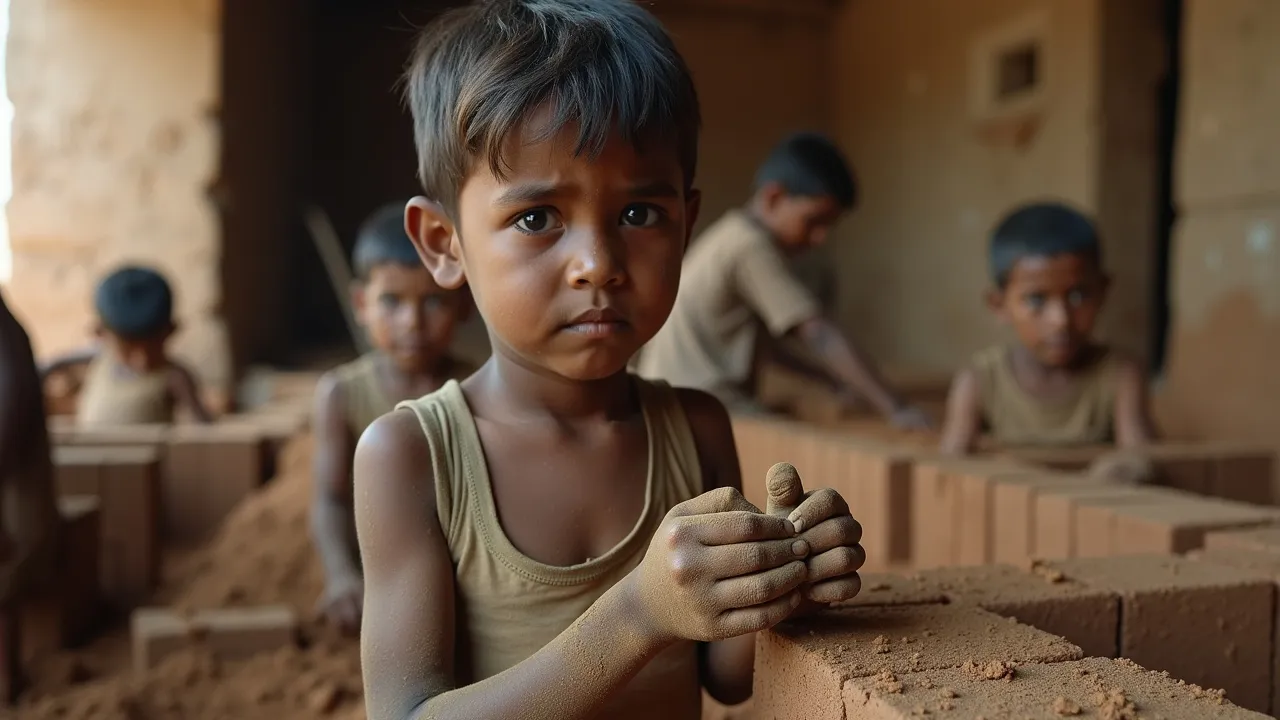
Observed annually on June 12th, the World Day Against Child Labour raises awareness and mobilizes action to eliminate child labour worldwide. Established by the ILO in 2002, it highlights the plight of millions of children forced into work, depriving them of education and childhood.
Historical Origins & Evolutionary Journey
The World Day Against Child Labour was established by the International Labour Organization (ILO) in 2002 to focus global attention on the urgent need to eradicate child labour. The day emerged from the ILO's long-standing commitment to child rights and decent work for all, rooted in its founding principles and conventions, particularly Convention No. 138 on Minimum Age (1973) and Convention No. 182 on Worst Forms of Child Labour (1999).
The Foundational Catalyst
The global movement against child labour gained momentum in the 1990s as NGOs, governments, and international bodies recognized the scale of the problem. The 1999 ILO Convention No. 182 called for immediate action against the worst forms of child labour, including slavery, trafficking, and hazardous work. This led to the formal creation of a dedicated awareness day on June 12th, 2002, as a platform for advocacy and action.
The Official Adoption and Evolution
In 2002, the ILO officially launched the World Day Against Child Labour with the theme 'Give a Future to Childhood'. Since then, each year has featured a specific theme, such as End Child Labour in Supply Chains (2016) and Act Now: End Child Labour! (2021). The day has evolved into a global campaign involving governments, employers, workers' organizations, civil society, and children themselves.
Modern Global Legacy
Today, the observance drives progress toward SDG Target 8.7, which calls for ending child labour in all its forms by 2025. Events include marches, policy dialogues, media campaigns, and educational activities. Despite setbacks from COVID-19 and conflict, the day remains a vital catalyst, helping reduce child labour from 246 million (2000) to 160 million (2020), though renewed efforts are urgently needed.
How to Celebrate World Day Against Child Labour
Millions of individuals, organizations, and governments participate each year. Here is a definitive global guide:
For Individuals and Families
- Educate Yourself and Others: Read reports from the ILO and UNICEF, watch documentaries, and share facts on social media using #EndChildLabour.
- Ethical Consumerism: Buy products from brands certified as child-labour-free (e.g., Fair Trade). Use apps like Buycott to check supply chains.
- Donate: Contribute to organizations like Save the Children, World Vision, or local NGOs rescuing child labourers.
For Schools and Universities
- Organize essay competitions, poster contests, or role-play sessions on child labour.
- Invite speakers from anti-child labour organizations.
- Conduct awareness walks or fundraisers for education projects in high-risk areas.
For Businesses and Organizations
- Audit Supply Chains: Use tools like the ILO's International Programme on the Elimination of Child Labour (IPEC) resources to identify risks.
- Adopt Policies: Publicly commit to child labour-free operations and require the same from suppliers.
- Employee Engagement: Host workshops, webinars, or volunteer days focused on child rights.
Regional Traditions
In India, local NGOs organize rallies and street plays; in Brazil, the government launches campaigns focusing on forced labour; in many African nations, radio programmes discuss the issue in local languages. The day is observed globally, with universal emphasis on protecting the girl child and ending hazardous work.
Global Impact & Current Statistics
The World Day Against Child Labour highlights an urgent crisis. According to the ILO and UNICEF (2021), 160 million children aged 5–17 are engaged in child labour – half of them in hazardous work. Sub-Saharan Africa has the highest prevalence (23.9% of children), followed by Central and Southern Asia (5.5%). Agriculture accounts for 70% of child labour, with 20% in services and 10% in industry.
Gender Disparities
Boys make up 60% of child labourers, but girls are more likely to be involved in unpaid household work and domestic labour, which is often invisible. The COVID-19 pandemic threatened to increase numbers by millions due to poverty, school closures, and reduced family incomes.
Economic and Social Costs
Child labour perpetuates poverty: children miss school, limiting future earning potential. The ILO estimates that eliminating child labour could generate billions in economic benefits through better education and health outcomes. The day mobilizes governments to adopt National Action Plans and allocate budgets for social protection and education.
Key Drivers & Root Causes
Understanding why child labour persists is crucial for action. The primary drivers include:
- Poverty: Families need income to survive, pushing children into work.
- Confflict and Displacement: Refugee and internally displaced children are highly vulnerable.
- Weak Enforcement of Laws: Many countries have regulations, but lack inspection and penalties.
- Cultural Norms: In some regions, child labour is accepted as normal or as a form of training.
- Lack of Access to Quality Education: When schools are unavailable or costly, parents choose work.
The day encourages holistic solutions: improving family incomes through decent work, expanding social protection, ensuring free and compulsory education, and strengthening legal frameworks.
International Frameworks & Legal Protections
Several international instruments underpin the fight against child labour, and the World Day Against Child Labour promotes their ratification and implementation.
ILO Conventions
- Convention No. 138 (1973): Sets the minimum age for work at 15 (or 14 for developing countries) and prohibits hazardous work under 18.
- Convention No. 182 (1999): Calls for the immediate elimination of the worst forms of child labour, including slavery, trafficking, forced labour, and hazardous work.
United Nations Instruments
- Convention on the Rights of the Child (1989): Article 32 protects children from economic exploitation.
- Sustainable Development Goals (2015): Target 8.7 aims to end child labour in all its forms by 2025.
While global ratification is near-universal, enforcement remains weak. The day provides a platform to demand accountability and stronger national legislation.
The Role of Supply Chains & Corporate Responsibility
The World Day Against Child Labour increasingly focuses on the private sector's role. Global supply chains in agriculture, garments, electronics, and mining often involve child labour at raw material or production stages. For example, cotton in Uzbekistan, cocoa in West Africa, and cobalt in the Democratic Republic of the Congo have well-documented child labour issues.
Corporate Accountability
Companies are expected to conduct due diligence, disclose supply chains, and remediate issues. Initiatives like the ILO's Better Work Programme and Fair Labour Association help brands improve conditions. The day urges consumers to demand transparency and support ethical businesses.
Positive Examples
Some corporations have made commitments, such as Nestlé and Mars in cocoa, and Apple in electronics. However, progress is uneven, and the day calls for scaling up efforts and joining multi-stakeholder initiatives like the Alliance 8.7.
How You Can Take Action Beyond the Day
Individual and collective action must extend beyond June 12th. Here are sustained strategies:
- Support Education: Sponsor a child's education through organizations like Room to Read or Plan International.
- Advocate for Policy Change: Contact your representatives to strengthen child labour laws and increase funding for social protection.
- Raise Awareness Year-Round: Use social media, give talks, or write articles to keep the issue visible.
- Join Campaigns: Participate in the Red Card to Child Labour campaign or volunteer with local NGOs.
- Monitor Your Purchases: Use apps like Good On You to check brand ethics.
Even small actions contribute to the global movement, ensuring every child enjoys their right to a childhood filled with play, learning, and development.
Historical Timeline
The International Labour Organization (ILO) is founded, with child labour as a key concern; it adopts the first Minimum Age Convention (No. 5) for industry.
ILO adopts Convention No. 138 on Minimum Age, establishing 15 as the basic minimum age for work, with a lower threshold for developing countries.
ILO adopts Convention No. 182 on the Worst Forms of Child Labour, requiring immediate action to eliminate slavery, trafficking, and hazardous work for children.
The ILO launches the first World Day Against Child Labour on June 12th, with the theme 'Give a Future to Childhood'. The day becomes an annual observance.
The ILO reports that global child labour has declined by 11% since 2004, thanks in part to awareness raised by the World Day.
The World Day focuses on human rights and social justice, urging governments to ratify and implement ILO conventions.
The UN adopts the Sustainable Development Goals, including Target 8.7 to end child labour by 2025. The World Day becomes a key advocacy tool.
The COVID-19 pandemic threatens progress; the World Day theme 'COVID-19: Act Now to End Child Labour' highlights increased risks. ILO and UNICEF estimate child labour could rise.
The ILO launches the 'International Year for the Elimination of Child Labour', culminating in a global conference. The World Day calls for renewed commitment.
World Day Against Child Labour marks its 20th anniversary with a focus on sustainable financing for education and social protection.