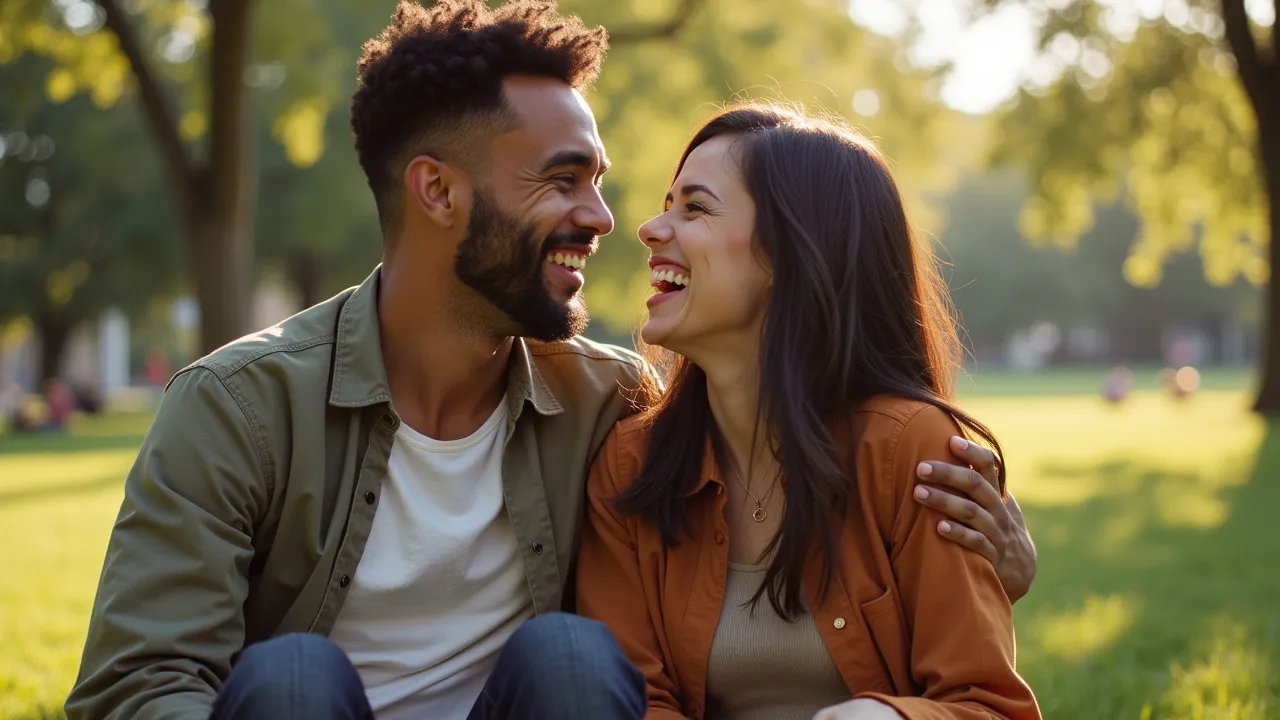
Loving Day, celebrated annually on June 12th, honors the landmark Loving v. Virginia Supreme Court decision that legalized interracial marriage nationwide. It’s a day to celebrate love without boundaries and reflect on the ongoing fight for marriage equality.
The Historical Origins & Evolutionary Journey
Loving Day commemorates the anniversary of the U.S. Supreme Court's unanimous decision in Loving v. Virginia (1967), which struck down state laws banning interracial marriage. This day has grown from a grassroots remembrance into a global celebration of love and equality.
The Foundational Catalyst
In 1958, Richard Loving, a white man, and Mildred Jeter, a woman of African American and Native American descent, were married in Washington, D.C. They returned to their home state of Virginia, where their marriage was illegal under the state's Racial Integrity Act. Authorities raided their home at 2 a.m., and they were arrested and charged with cohabiting as man and wife, a felony. They pleaded guilty to avoid jail but were sentenced to one year in prison, suspended on condition they leave Virginia for 25 years. The Lovings moved to Washington, D.C., but longed to return to their families and community.
The Legislative/Official Adoption
Seeking justice, Mildred Loving wrote to U.S. Attorney General Robert F. Kennedy, who referred her to the American Civil Liberties Union. ACLU lawyers Bernard Cohen and Philip Hirschkop took the case. After a series of state court appeals, the case reached the U.S. Supreme Court in 1967. On June 12, the Court unanimously ruled that Virginia's anti-miscegenation laws violated the Due Process and Equal Protection Clauses of the Fourteenth Amendment. Chief Justice Earl Warren wrote that "the freedom to marry, or not marry, a person of another race resides with the individual, and cannot be infringed by the State." This landmark decision invalidated all remaining racial marriage bans in 16 states.
Modern Global Legacy
In 2004, Ken Tanabe, a Japanese-Belgian American student, founded Loving Day as a way to celebrate the anniversary and raise awareness of the ongoing fight for marriage equality. The first event was a small gathering in New York City. Over the years, Loving Day has grown into a worldwide movement, with events in dozens of countries. It has also been used to advocate for same-sex marriage rights, as arguments from Loving were cited in Obergefell v. Hodges (2015). Today, Loving Day serves as a reminder that love is not limited by race, ethnicity, or gender, and that the struggle for equality continues.
How to Celebrate Loving Day
Loving Day can be celebrated in many meaningful ways, from personal reflection to community action. Below are actionable strategies for individuals, schools, and organizations.
For Individuals and Families
- Host a potluck or picnic with friends and family, inviting people from diverse backgrounds to share food and stories.
- Watch the film Loving (2016) or read the book The Loving Story to understand the couple's journey.
- Create art or music that celebrates mixed-race families and love without boundaries.
- Share on social media using #LovingDay, posting photos of interracial couples and family histories.
For Schools and Educational Institutions
- Hold a teach-in about the history of anti-miscegenation laws and the Supreme Court case.
- Encourage students to research their own family trees and discuss multicultural heritage.
- Organize a dialogue on race, identity, and love, inviting guest speakers from mixed-race communities.
For Organizations and Corporations
- Sponsor a Loving Day event in the community, focusing on inclusion and diversity.
- Update employee resource groups to support interracial and multicultural families.
- Highlight the day in internal communications, emphasizing the importance of love and equality.
Global Celebrations
In the United States, events range from formal dinners in New York to street festivals in Los Angeles. In the United Kingdom, Loving Day is observed with film screenings and panel discussions. In Japan, where Ken Tanabe has roots, events often focus on the intersection of race and nationality. In South Africa, it aligns with the post-apartheid movement for mixed-race couples. Regardless of location, the core message remains: love is a fundamental human right.
Global Perspectives on Interracial Marriage
Interracial marriage has a complex history worldwide. While Loving v. Virginia was a watershed moment in the U.S., other countries have faced similar struggles and victories.
Legalization Around the World
- South Africa: The Immorality Act banned interracial relationships until 1985; the post-apartheid constitution guarantees equality.
- Brazil: No legal bans, but social prejudice persists; mixed-race families are common due to colonial history.
- Israel: Interfaith marriages face obstacles, but interethnic marriages among Jews of different backgrounds are accepted.
- Japan: No legal barriers, but cultural and social pressures continue, especially for foreign spouses.
- United Kingdom: No laws ever banned interracial marriage, but societal acceptance grew slowly; mixed-race relationships are now widespread.
Modern Acceptance and Challenges
Today, interracial marriages are increasingly common. In the U.S., the Pew Research Center reports that 17% of newlyweds in 2015 were intermarried, compared to 3% in 1967. However, prejudice still exists. Loving Day provides a platform to discuss these challenges and celebrate progress. It also highlights the intersectionality of race, gender, and sexual orientation in the fight for marriage equality.
Loving Day's Impact on Marriage Equality Movements
The principles of Loving v. Virginia have been instrumental in advancing same-sex marriage. The decision established that the right to marry is a fundamental liberty protected by the Constitution, regardless of racial distinctions. This reasoning was directly cited in Obergefell v. Hodges (2015), which legalized same-sex marriage nationwide.
Legal Precedent
In Obergefell, Justice Anthony Kennedy wrote: "The right to marry is a fundamental right inherent in the liberty of the person, and under the Due Process and Equal Protection Clauses of the Fourteenth Amendment couples of the same-sex may not be deprived of that right." This echoes the language of Loving. Loving Day thus symbolizes not only racial equality but also LGBTQ+ equality.
Community Overlap
Many Loving Day events include LGBTQ+ groups, recognizing the shared struggle. Ken Tanabe has stated that Loving Day is "about celebrating love in all its forms." The day is used to advocate for remaining legal protections and to combat discrimination faced by interracial and same-sex couples globally.
Cultural Shifts and Continuing Challenges
Despite the legal victory in 1967, interracial couples still face subtle and overt forms of bias. Loving Day serves as a moment to reflect on how far society has come and how far it still needs to go.
Changing Attitudes
Polls show that acceptance of interracial marriage in the U.S. rose from 4% in 1958 to 87% in 2013. Media representation has also improved, with shows like Modern Family and Black-ish featuring interracial families. However, studies indicate that interracial couples may experience higher rates of divorce, partly due to societal pressures.
Ongoing Issues
- Microaggressions: comments like "Where are you really from?" or stares in public.
- Family rejection: some families disapprove of interracial relationships.
- Legal hurdles: In some countries, interfaith or interracial marriages are still banned or restricted.
Loving Day encourages open conversations about these issues and promotes a vision of a society where love knows no boundaries.
Historical Timeline
Richard Loving and Mildred Jeter marry in Washington, D.C., and are arrested in Virginia for violating the state's anti-miscegenation law.
On June 12, the U.S. Supreme Court unanimously rules in Loving v. Virginia that laws banning interracial marriage are unconstitutional.
Ken Tanabe founds Loving Day, holding the first celebration in New York City to commemorate the anniversary.
The U.S. Supreme Court cites Loving v. Virginia in Obergefell v. Hodges, legalizing same-sex marriage nationwide.
U.S. Census data shows that interracial marriages have risen to 17% of all new marriages, reflecting growing acceptance.