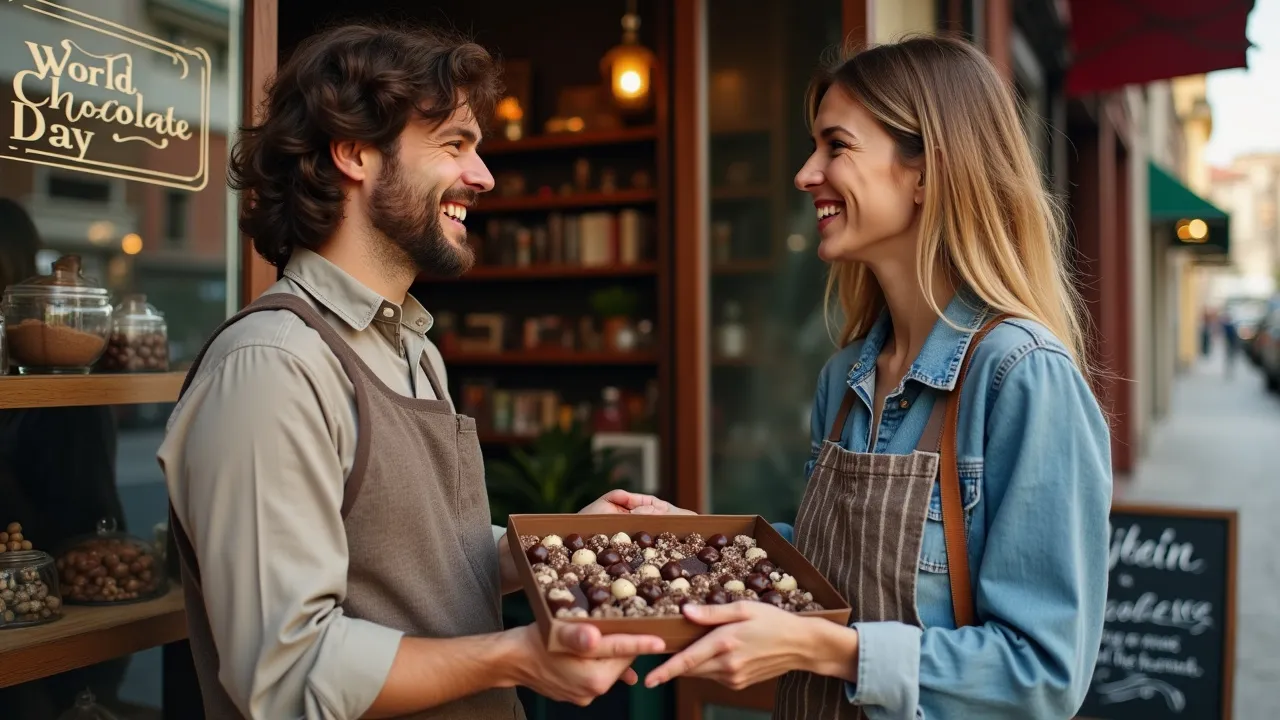
Celebrate the rich history and global love for cocoa on July 7th. From ancient Mesoamerican rituals to modern artisan creations, discover how chocolate became a worldwide obsession.
The Historical Origins & Evolutionary Journey
World Chocolate Day, observed annually on July 7th, is a global celebration of one of humanity's most beloved foods. While the modern observance dates to 2009, chocolate's story spans millennia. This section explores the deep roots of cacao, from its first domestication to its current status as a multi-billion dollar industry.
The Foundational Catalyst: Ancient Mesoamerica
The history of chocolate begins in the tropical lowlands of present-day Mexico and Central America. The Olmec civilization (circa 1500 BCE) is believed to have been the first to process cacao beans into a beverage. Later, the Maya revered cacao as a gift from the gods, using it in religious ceremonies and as currency. They prepared a bitter, spiced drink called xocolātl, often flavored with vanilla, chili, and achiote.
The Aztecs continued this tradition. Their emperor, Montezuma II, reportedly consumed large quantities of a cacao-based drink for energy and virility. Cacao beans were so valuable that they were used as tribute and currency.
The Legislative/Official Adoption: Arrival in Europe
With the Spanish conquest of the Americas in the 16th century, cacao was introduced to Europe. Initially, the bitter drink was sweetened with sugar and honey, becoming a luxury for the Spanish elite. From Spain, chocolate spread to France, Italy, and England. The first chocolate house opened in London in 1657. The invention of the cocoa press in 1828 by Coenraad van Houten allowed for the separation of cocoa butter from cocoa solids, paving the way for solid chocolate. In 1847, the first solid chocolate bar was created by J.S. Fry & Sons in England. Later, Daniel Peter and Henri Nestlé developed milk chocolate in 1875.
Modern Global Legacy and the Birth of World Chocolate Day
The exact origins of World Chocolate Day are somewhat obscure, but it is widely believed to have been established by the National Confectioners Association in the United States in 2009. The date July 7th was chosen because it is also World Cocoa Day, recognizing the cocoa farmers. Some sources claim that July 7th commemorates the introduction of chocolate to Europe in 1550 (though historical records vary). Today, World Chocolate Day is celebrated in numerous countries, including the United States, United Kingdom, Canada, Australia, and across Europe. It has become a day for indulgence, education, and advocacy for sustainable cocoa farming.
How to Celebrate World Chocolate Day
World Chocolate Day offers endless possibilities for enjoyment and appreciation. Whether you prefer a simple treat or an elaborate event, there are countless ways to join the celebration. Below are actionable ideas organized by different contexts.
For Individuals and Families
- Host a chocolate tasting party: Gather an assortment of chocolates from different origins (e.g., single-origin from Ghana, Ecuador, Madagascar) and compare flavors. Use a tasting sheet to note aroma, texture, and aftertaste.
- Try homemade chocolate recipes: Make classic chocolate fondue, chocolate lava cakes, or even bean-to-bar chocolate from scratch. Involve the whole family for a fun activity.
- Visit a local chocolate shop or factory: Many chocolatiers offer special tours or samples on this day. Support small businesses.
- Learn about chocolate making: Watch documentaries like The Dark Side of Chocolate or read books such as The True History of Chocolate by Coe and Coe.
For Schools and Communities
- Organize a chocolate-themed educational fair: Set up stations about the history, geography, and science of chocolate. Include a cacao bean display.
- Fundraise for cocoa farmers: Sell chocolate bars or baked goods and donate proceeds to organizations like the World Cocoa Foundation that support sustainable farming.
- Hold a chocolate art contest: Participants create sculptures or paintings using chocolate or inspired by it. Display in a local gallery.
Corporate and Social Rituals
- Employee appreciation: Give out high-quality chocolate gifts to employees or clients. Include a card explaining the day's significance.
- Host a networking event with a chocolate theme: Invite a chocolate sommelier to lead a tasting, paired with wines or coffee.
- Support ethical brands: Choose chocolates with fair trade, Rainforest Alliance, or direct trade certifications to ensure farmers are paid fairly.
Regional Variations Worldwide
While July 7th is the primary date, some countries celebrate other days. For example, in the United States, National Chocolate Day is also observed on October 28th. In Ghana, the world's second-largest cocoa producer, World Chocolate Day aligns with World Cocoa Day and includes farmer appreciation events. In Switzerland, which has the highest per capita chocolate consumption, the day often features chocolate exhibitions and museum discounts. Venezuela and Ecuador, known for high-quality cacao, also host festivals.
The Economics of Chocolate: From Bean to Bar
Chocolate is a global commodity with a complex supply chain. The cocoa industry supports millions of farmers, primarily in West Africa (Côte d'Ivoire and Ghana produce over 60% of the world's cocoa). However, economic challenges persist.
Key Economic Facts
- Global market size: The chocolate market was valued at approximately $130 billion in 2023 and is expected to grow steadily.
- Price volatility: Cocoa prices fluctuate due to weather, political instability, and market speculation. In 2024, prices hit record highs due to poor harvests in West Africa.
- Fair trade and premiums: Certified chocolate often includes a premium paid to farmers, supporting community projects.
Challenges
- Poverty among farmers: Many cocoa farmers live on less than $2 a day, despite chocolate's profitability.
- Child labor: A significant concern in cocoa farming, especially in West Africa. Organizations and companies are working toward traceability and certification.
- Environmental impact: Deforestation and pesticide use threaten ecosystems. Sustainable practices are gaining traction.
World Chocolate Day is a perfect occasion to support ethical brands and advocate for fair compensation for farmers.
Health Benefits and Myths of Chocolate
Chocolate, particularly dark chocolate, has been studied for its health effects. Understanding the science can help you enjoy chocolate responsibly.
Proven Benefits
- Rich in antioxidants: Dark chocolate contains flavonoids, which can improve heart health by lowering blood pressure and improving blood flow.
- Mood enhancement: Chocolate triggers the release of endorphins and serotonin. It also contains small amounts of caffeine and theobromine, which can boost alertness.
- Nutrient density: High-quality dark chocolate provides iron, magnesium, copper, and manganese.
Common Myths Debunked
- Myth: Chocolate causes acne. Scientific evidence does not support a strong link between chocolate consumption and acne in most people.
- Myth: Chocolate is highly addictive. While it can be pleasurable, chocolate does not meet the strict criteria for addiction. Cravings are often psychological.
- Myth: White chocolate is chocolate. White chocolate technically contains no cocoa solids; it is made from cocoa butter, sugar, and milk solids. By FDA standards, it qualifies as chocolate but lacks many of the antioxidant benefits.
Consumption Recommendations
Choose dark chocolate with at least 70% cocoa content for maximum health benefits. Enjoy in moderation (1-2 ounces per day) as part of a balanced diet. Avoid overly processed chocolate with high sugar and unhealthy fats.
Sustainable Cocoa Farming and Ethical Consumption
World Chocolate Day is an opportunity to reflect on the environmental and social impact of chocolate production. Sustainable practices are essential for the future of cacao.
Environmental Challenges
- Deforestation: Cocoa farming has contributed to forest loss in West Africa and the Amazon. Agroforestry methods that integrate trees can help.
- Climate change: Rising temperatures and shifting rainfall patterns threaten cacao production, especially in regions like Ghana and Côte d'Ivoire.
- Biodiversity loss: Monoculture plantations reduce habitat for wildlife.
Ethical Concerns
- Child and forced labor: Despite industry efforts, reports of child labor persist. Certification programs like Fair Trade, Rainforest Alliance, and UTZ aim to address these issues.
- Gender inequality: Women often have less access to land and resources in cocoa farming communities.
What You Can Do
- Look for certifications: Choose chocolate with Fair Trade, Rainforest Alliance, or Direct Trade labels. Use apps like Buycott to scan products.
- Support bean-to-bar makers: Small-scale artisans often prioritize transparency and ethical sourcing.
- Reduce waste: Buy minimal packaging and recycle or compost where possible.
By making informed choices, you can celebrate World Chocolate Day while supporting a more sustainable industry.
Chocolate in Popular Culture and Media
Chocolate permeates movies, literature, and art, symbolizing indulgence, romance, and comfort. This section highlights its cultural significance.
Iconic Films Featuring Chocolate
- Willy Wonka & the Chocolate Factory (1971) and Charlie and the Chocolate Factory (2005): Roald Dahl's story captures the magic of chocolate from a child's perspective.
- Chocolat (2000): A film set in a French village where a chocolatier uses her confections to transform a rigid community.
- Forrest Gump (1994): The classic line "Life is like a box of chocolates" has become a metaphor for unpredictability.
Literature and Art
- Like Water for Chocolate by Laura Esquivel: A novel where cooking and chocolate are central to the plot and magical realism.
- The Chocolate War by Robert Cormier: A darker take on chocolate's role in a school setting.
- Still-life paintings: Dutch and Spanish Golden Age paintings often feature chocolate pots and luxury goods, reflecting its status.
Chocolate in Daily Life
Chocolate is also a staple of holidays: Easter bunnies, Valentine's Day hearts, Halloween treats. Its versatility makes it a universal symbol of celebration. On World Chocolate Day, share your favorite chocolate-related media on social media using hashtags like #WorldChocolateDay.
Historical Timeline
Olmec civilization in Mesoamerica first cultivates cacao and produces a chocolate beverage.
Maya civilization uses cacao beans as currency and in religious ceremonies.
Christopher Columbus encounters cacao beans on his fourth voyage, but does not recognize their value.
Chocolate drink is introduced to the Spanish court, eventually spreading across Europe.
Coenraad van Houten invents the cocoa press, separating cocoa butter from solids, enabling mass production.
J.S. Fry & Sons in England produce the first solid chocolate bar.
Daniel Peter and Henri Nestlé invent milk chocolate.
World Chocolate Day is first observed on July 7th, promoted by the National Confectioners Association in the United States.