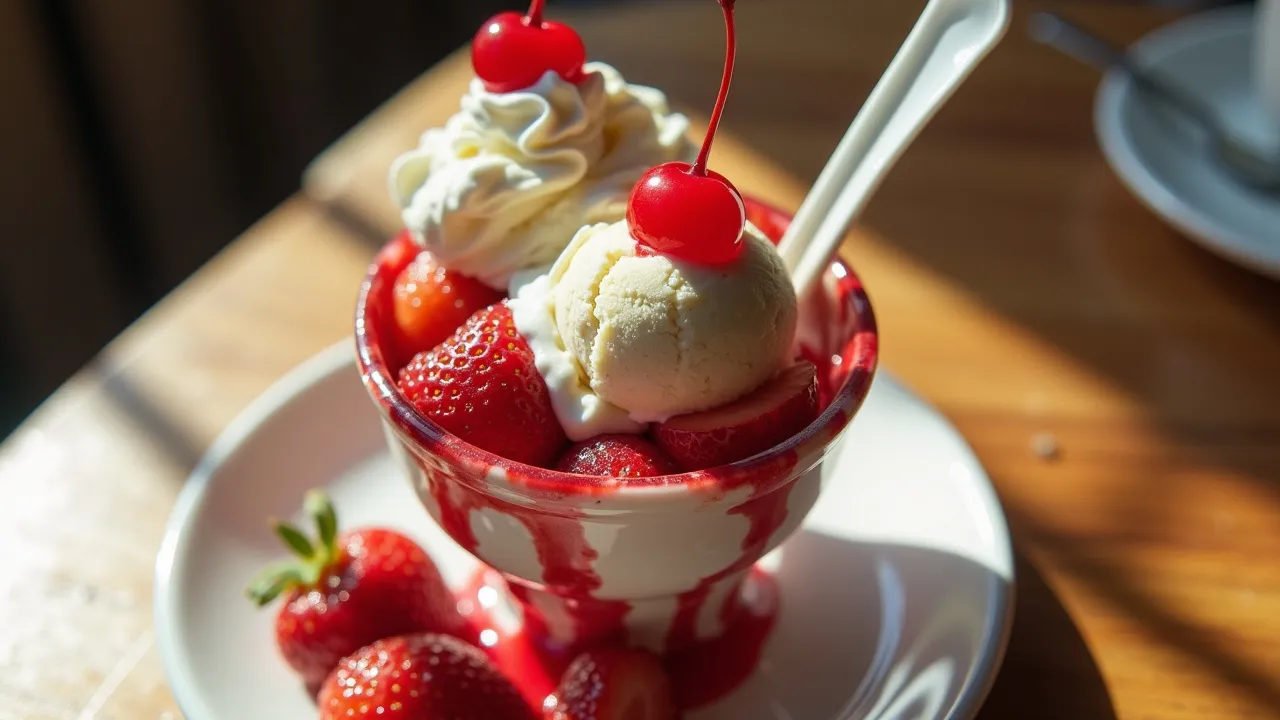
National Strawberry Sundae Day, observed on July 7th, celebrates the timeless dessert of vanilla ice cream topped with sweet strawberries, whipped cream, and a cherry. It honors the sundae's rich history and invites everyone to indulge in this classic treat.
The Historical Origins & Evolutionary Journey
National Strawberry Sundae Day, celebrated each year on July 7th, traces its roots to the invention of the ice cream sundae in the late 19th century. The sundae emerged as a solution to the "Sunday Soda" controversy, where many communities banned the sale of carbonated beverages on the Sabbath. Eager to serve cold treats on Sundays, soda fountain operators replaced soda water with syrup and toppings, creating a new dessert.
The Foundational Catalyst
The most widely accepted origin story places the first sundae in Two Rivers, Wisconsin, in 1881. According to local lore, customer George Hallauer asked for a dish of ice cream with chocolate syrup at Edward C. Berners' soda fountain. Berners obliged, and the "ice cream Sunday" was born. The name later changed to "sundae" to avoid religious connotations. Strawberry quickly became a favored variation due to the fruit's seasonal availability and natural sweetness.
The Legislative/Official Adoption
Although no single act officially declared July 7th as National Strawberry Sundae Day, the observance gained traction through grassroots promotion by ice cream manufacturers, dairy associations, and local chambers of commerce. The Wisconsin Historical Society played a pivotal role by preserving the sundae's history and encouraging annual celebrations. In 2006, the day was listed on several national food holiday calendars, solidifying its place in American culture.
Modern Global Legacy
Today, National Strawberry Sundae Day is celebrated not only in the United States but also in countries where ice cream is popular, such as Canada, Australia, and the United Kingdom. The dessert has evolved to include variations like vegan strawberry sundaes, gluten-free toppings, and artisanal strawberry compotes. The day serves as a reminder of the simple joy of combining fresh fruit with creamy ice cream.
How to Celebrate National Strawberry Sundae Day
National Strawberry Sundae Day offers endless opportunities for enjoyment. Whether you prefer a classic recipe or an innovative twist, here are actionable strategies for individuals, families, schools, and organizations to celebrate.
For Individuals & Families
- Make a Classic Strawberry Sundae: Start with a scoop of high-quality vanilla ice cream, top with fresh strawberry slices, drizzle with strawberry syrup, add a generous swirl of whipped cream, and sprinkle chopped nuts or a cherry on top.
- Host a Sundae Bar Party: Set up a table with various ice cream flavors, strawberry toppings (fresh, frozen, or jam), whipped cream, sprinkles, chocolate sauce, and other fruits. Let guests create their own masterpieces.
- Visit a Local Ice Cream Parlor: Support small businesses by ordering a strawberry sundae from a neighborhood shop. Many offer special deals on July 7th.
For Schools & Educational Institutions
- Teach the History: Incorporate a lesson on the sundae's invention and the science of ice cream making. Use hands-on activities like making ice cream in a bag.
- Healthy Twist: Offer a "build-your-own" sundae with low-sugar ice cream or frozen yogurt, fresh strawberries, and light whipped topping to promote balanced choices.
For Organizations & Community Groups
- Fundraiser: Sell strawberry sundaes at a fair or event, with proceeds going to a local charity. Highlight the day's theme on social media using #StrawberrySundaeDay.
- Social Media Challenge: Encourage members to share photos of their strawberry sundaes, tagging the organization for a chance to win a prize.
Across the globe, traditions vary: In Japan, strawberry sundaes often feature mochi and red bean paste; in Italy, they use gelato and balsamic strawberries; in Australia, they serve them with passionfruit sauce. Embrace cultural diversity by experimenting with international flavors.
Global Variations & Cultural Adaptations
The strawberry sundae has been adapted worldwide, reflecting local tastes and ingredients. While the American version remains iconic, other countries have put their own stamp on the dessert.
North America
In the United States and Canada, the classic strawberry sundae features a scoop of vanilla, fresh or macerated strawberries, and whipped cream. In Quebec, maple syrup sometimes replaces the strawberry syrup. Some regions add graham cracker crumbs or a drizzle of chocolate.
Europe
In the United Kingdom, strawberry sundaes often use clotted cream and strawberry compote. Italian gelato alla fragola sundaes include a splash of balsamic vinegar to enhance the fruit's sweetness. In France, they serve coupe glacée aux fraises with strawberry sorbet, fresh berries, and a dollop of crème Chantilly.
Asia
Japanese strawberry sundaes are layered with vanilla soft serve, fresh strawberries, sweet red beans, mochi pieces, and sometimes matcha syrup. In South Korea, trendy cafes offer "strawberry snow sundaes" made with shaved ice, condensed milk, and strawberry puree. Indian versions use kulfi (dense ice cream) topped with strawberry syrup and pistachios.
Australia & New Zealand
Down under, strawberry sundaes are often made with vanilla ice cream, fresh strawberries, and a generous drizzle of passionfruit pulp or pavlova-like meringue bits. They are a popular summer treat.
The Science of Strawberry Sundae Perfection
Creating the ultimate strawberry sundae involves more than just assembly. Understanding the interplay of temperatures, textures, and flavors can elevate the experience.
Temperature & Texture
Ice cream should be slightly softened for easy scooping but still firm. Fresh strawberries are best at room temperature to release their aroma. Whipped cream should be cold and aerated. The contrast between cold ice cream and warm strawberry sauce (if used) creates a pleasing thermal sensation.
Flavor Chemistry
Strawberries contain volatile compounds like furaneol and linalool that contribute to their sweet, floral notes. Vanilla ice cream complements these with vanillin. The fat in cream coats the palate, allowing the fruity flavors to linger. A pinch of salt can enhance the sweetness.
Presentation Tips
- Layering: Alternate ice cream and strawberries to ensure every bite has both.
- Toppings: Add a final garnish of mint leaves or edible flowers for visual appeal.
- Glassware: Use a tall, clear sundae glass to showcase the layers.
Economic & Industry Impact
National Strawberry Sundae Day has notable economic implications for multiple sectors, from dairy farming to tourism.
Ice Cream & Dairy Industry
July 7th falls in peak ice cream season. The day boosts sales of vanilla ice cream (the base for most sundaes) and strawberry products. According to the International Dairy Foods Association, ice cream sales increase by up to 15% on food holidays like this. Dairy farmers benefit from higher demand for milk and cream.
Strawberry Growers
Strawberry production aligns with June and July harvests in many regions. The day encourages consumers to buy fresh strawberries, supporting local farmers. U-pick farms often host strawberry sundae events to attract visitors.
Foodservice & Retail
Restaurants, ice cream parlors, and fast-food chains run promotions on sundaes. Grocery stores display strawberry-themed products, from syrups to fresh berries. The observance also boosts sales of whipped cream, cherries, and nuts.
Nutritional Profile & Health Considerations
While strawberry sundaes are indulgent, they can be part of a balanced diet when enjoyed in moderation. Understanding the nutritional content helps consumers make informed choices.
Calories & Macronutrients
A typical strawberry sundae (one scoop vanilla ice cream, 1/2 cup strawberries, 2 tbsp whipped cream) contains roughly 250-300 calories, 14g fat, 30g carbs, and 4g protein. Adding syrup, nuts, or extra toppings increases calorie count.
Health Benefits
Strawberries are rich in vitamin C, manganese, and antioxidants like ellagic acid. They support immune function and reduce inflammation. The calcium and vitamin D from ice cream contribute to bone health.
Dietary Modifications
- Lower Sugar: Use sugar-free syrup and unsweetened whipped cream.
- Vegan Option: Substitute coconut or almond milk ice cream and coconut cream.
- Lactose-Free: Choose lactose-free ice cream or frozen yogurt.
- Gluten-Free: Ensure toppings like nuts and chocolate sauce are certified gluten-free.
Historical Timeline
The ice cream sundae is invented at Edward C. Berners' soda fountain in Two Rivers, Wisconsin. A customer requests ice cream with chocolate syrup, leading to the creation of the "Sunday." Strawberry becomes a popular variation.
Sundaes spread across the United States as soda fountains add strawberry toppings. The name "sundae" is adopted to avoid religious objections to the original "Sunday."
The strawberry sundae is featured at the St. Louis World's Fair, introducing it to a global audience. Vendors sell thousands of sundaes, boosting its popularity.
Commercial strawberry syrup becomes widely available, making it easier to prepare sundaes at home. Ice cream manufacturers begin packaging strawberry ice cream.
The rise of drive-in restaurants and diners popularizes the strawberry sundae as a casual dessert. It becomes a staple of American pop culture.
National Strawberry Sundae Day gains recognition through food blogs and social media. July 7th is listed on numerous "national food day" calendars.
The Wisconsin Historical Society formally recognizes the Two Rivers origin story and promotes July 7th as a day to celebrate the strawberry sundae. Retailers and ice cream chains launch annual promotions.
Gourmet and artisanal strawberry sundaes emerge, featuring balsamic reduction, fresh mint, and hand-crafted strawberry sauces. The day is celebrated globally via online campaigns.