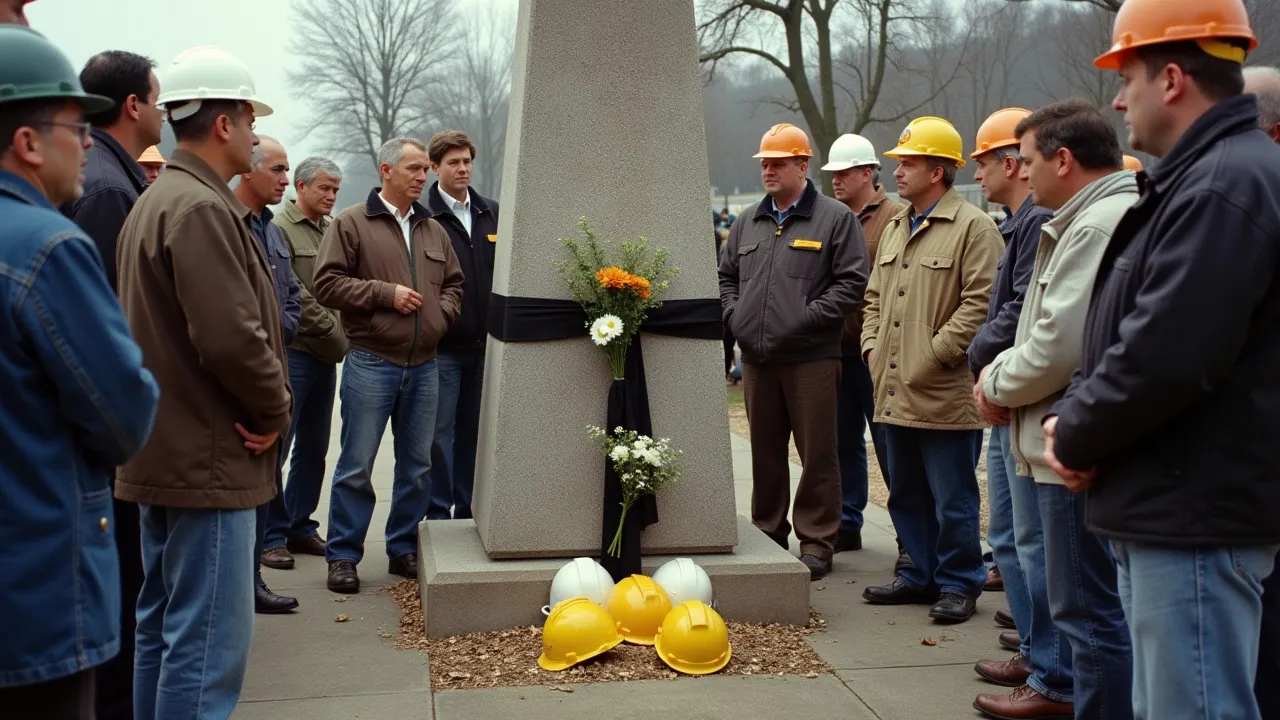
Workers' Memorial Day on April 28th honors workers who have died or been injured on the job. Established by the global labor movement in 1989, it serves as a solemn reminder to renew commitments to workplace safety and worker rights worldwide.
The Historical Origins & Evolutionary Journey
Workers' Memorial Day, observed annually on April 28th, is a day of remembrance for the millions of workers who have lost their lives, been injured, or fallen ill because of hazardous working conditions. Its origins lie in the early struggles of the labor movement to demand safer workplaces and dignity for all workers.
The Foundational Catalyst
The late 20th century saw a growing awareness of occupational hazards. In North America, the 1970s brought landmark legislation like the Occupational Safety and Health Act (OSHA) in the United States (1970) and similar laws in Canada. However, enforcement was weak, and worker fatalities remained high. The catalyst for a dedicated day came from unions demanding accountability. In 1984, the Canadian Union of Public Employees (CUPE) declared April 28 as a day of remembrance, choosing the date to coincide with the anniversary of the passage of Ontario's Workers' Compensation Act in 1914. The AFL-CIO in the United States officially adopted April 28 in 1989.
The Legislative/Official Adoption
Throughout the 1990s, the observance gained global traction. In 1996, the United Nations International Labour Organization (ILO) recognized April 28 as International Workers' Memorial Day. Many countries began passing resolutions: Canada made it official in 2001, the United States still lacks a federal proclamation but many states observe it, and nations like Spain, Australia, and the United Kingdom widely commemorate it. The day became a rallying point for the global union movement to push for stronger laws and enforcement.
Modern Global Legacy
Today, Workers' Memorial Day is observed by millions across the globe. Events include moments of silence, candlelight vigils, laying of wreaths, and union-led marches. The day also emphasizes preventive action: "Remember the dead, fight for the living" is a common slogan. In many countries, April 28th has become a day to highlight ongoing issues such as asbestos exposure, chemical hazards, and psychosocial risks. The ILO uses the day to launch campaigns and reports on occupational safety and health.
How to Celebrate Workers' Memorial Day
Workers' Memorial Day is marked by solemn remembrance and a call to action. Here is a definitive guide on how individuals, schools, and organizations can meaningfully participate, with specific practices observed in different regions.
Individual Actions
- Observe a moment of silence at 12:00 PM local time for 30 seconds to honor fallen workers.
- Light a candle on your doorstep or at a community memorial.
- Wear a black ribbon or a purple hard hat—purple symbolizes remembrance for workers affected by asbestos.
- Share stories of workers lost on social media using hashtags like #WorkersMemorialDay.
School and Educational Activities
- Hold a classroom discussion on the history of labor rights and modern safety issues.
- Invite a union representative to speak about workplace hazards and prevention.
- Create art projects such as a "Wall of Remembrance" with names of workers.
Organizational and Corporate Rituals
Companies can demonstrate commitment to safety by:
- Conducting a safety stand-down—halting work for a safety briefing or drill.
- Reviewing and updating standard operating procedures to eliminate risks.
- Providing free health screenings for employees exposed to hazards.
Regional Celebrations
The day is observed differently worldwide:
- Canada and USA: Union-led rallies and memorial services; the AFL-CIO holds a national teleconference.
- United Kingdom: The Hazards Campaign organizes local events; many councils fly flags at half-mast.
- Australia: Unions hold breakfasts and candlelight vigils; the Construction, Forestry, Maritime, Mining and Energy Union (CFMMEU) often leads commemorations.
- Spain: Major marches in Madrid and Barcelona demand stronger enforcement of safety laws.
- India: Labor organizations organize street plays and leaflet campaigns in industrial belts.
Occupational Safety: A Global Imperative
Workers' Memorial Day shines a light on the persistent global crisis of occupational injuries and deaths. According to the ILO, nearly 2.78 million workers die each year from work-related accidents or diseases—that's over 7,600 deaths per day. Additionally, 374 million non-fatal occupational injuries occur annually.
Most Hazardous Sectors
- Agriculture: High rates of fatal accidents due to machinery, pesticides, and heat stress.
- Construction: Falls, struck-by objects, and electrocution are leading causes.
- Mining: Collapses, explosions, and long-term lung diseases like silicosis.
- Manufacturing: Repetitive strain injuries, machine entrapment, and chemical exposure.
Emerging Risks
The modern workplace introduces new dangers: psychosocial risks such as burnout and harassment, technological risks like ergonomic injuries from poor workstation setup, and climate change impacts including heat stress and increased vector-borne diseases for outdoor workers.
The Role of Unions and Advocacy Groups
Trade unions have been the vanguard of the fight for safer workplaces. Workers' Memorial Day is a key date in the union calendar, used to mobilize for better laws and enforcement.
Key Advocacy Achievements
Right to Refuse Unsafe Work: Many nations have laws protecting workers who reject hazardous tasks.
Health and Safety Committees: Mandatory joint management-worker committees in many countries.
Whistleblower Protections: Shielding workers who report safety violations.
Modern Campaigns
Unions currently push for:
Stronger penalties for employers who violate safety regulations.
Extension of safety standards to gig economy and informal workers.
Recognition of occupational diseases like COVID-19 as compensable.
Legal Frameworks and International Standards
Workers' Memorial Day underscores the importance of international labor standards. The ILO has adopted over 40 conventions directly related to occupational safety and health (OSH).
Key Conventions
- Occupational Safety and Health Convention, 1981 (No. 155): Requires national OSH policies.
- Promotional Framework for Occupational Safety and Health Convention, 2006 (No. 187): Promotes continuous improvement of OSH.
- Safety and Health in Agriculture Convention, 2001 (No. 184): Addresses specific risks in farming.
National Examples
Countries like Germany have a strong dual system of state regulation and accident insurance institutions, resulting in low accident rates. In contrast, many developing nations struggle with weak enforcement and informal sectors.
The Human Toll: Stories and Statistics
Behind the statistics are real people. Workers' Memorial Day personalizes the tragedy by sharing stories of those lost.
Notable Disasters
- Triangle Shirtwaist Factory Fire (1911): 146 garment workers died in New York City, sparking safety reforms.
- Piper Alpha Oil Platform Explosion (1988): 167 workers killed in the North Sea, leading to offshore safety regulations.
- Rana Plaza Collapse (2013): 1,134 garment workers died in Bangladesh, spurring the Accord on Fire and Building Safety.
Everyday Tragedies
Most fatalities occur in small- and medium-sized enterprises where safety is often neglected. This day honors them and calls for vigilance.
Historical Timeline
The Ontario Workers' Compensation Act is passed, establishing a no-fault insurance system for workplace injuries. The date later inspires Workers' Memorial Day.
The U.S. Occupational Safety and Health Act is signed into law, creating OSHA and setting federal safety standards.
The Canadian Union of Public Employees (CUPE) proclaims April 28 as a day of remembrance for workers killed on the job.
The AFL-CIO officially adopts April 28 as Workers' Memorial Day in the United States.
The United Nations International Labour Organization (ILO) recognizes April 28 as International Workers' Memorial Day.
Canada's Parliament passes a bill officially designating April 28 as Workers' Memorial Day.
The ILO releases a report showing that nearly 2.3 million workers die annually from occupational accidents and diseases, spurring renewed global action.
The COVID-19 pandemic highlights the risk to essential workers; Workers' Memorial Day emphasizes protections for healthcare and frontline staff.
The ILO updates its estimate to 2.78 million work-related deaths per year, with COVID-19 accounting for over 300,000 deaths.