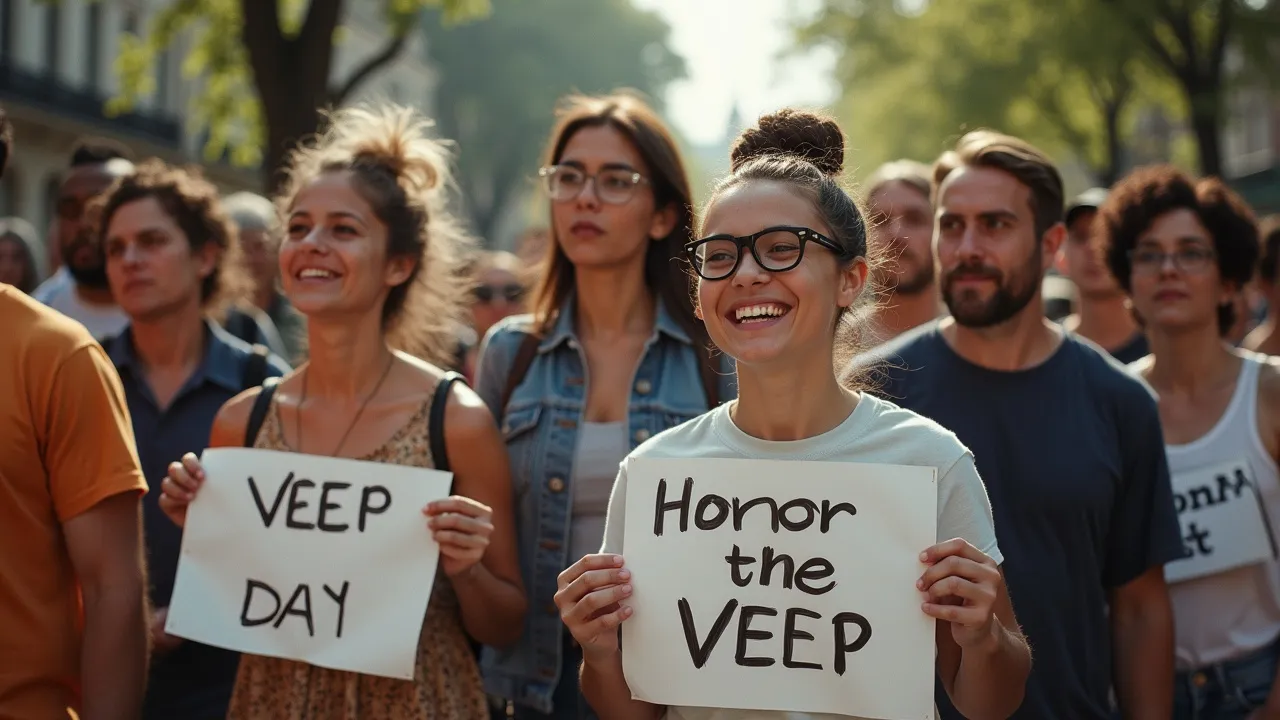
Veep Day, celebrated on August 9th, honors vice presidents and their contributions to governance. Established in 1984, it recognizes the pivotal role of second-in-command leaders worldwide.
The Historical Origins & Evolutionary Journey
Veep Day, observed annually on August 9th, traces its roots to a concerted effort to elevate the stature of vice presidents—often the most overlooked yet critical figures in executive government. The day was first conceived in 1984 by John Adams, a descendant of the second U.S. vice president (and later president) John Adams, who sought to remedy the historical neglect of the vice presidency.
The Foundational Catalyst
The idea emerged during a symposium on executive governance at the University of Pennsylvania, where Adams noted that vice presidents across democracies were frequently relegated to ceremonial roles, despite being a heartbeat away from the highest office. He proposed a dedicated day to educate the public, foster appreciation, and encourage better support structures for VPs.
The Legislative/Official Adoption
Adams lobbied the U.S. Congress, and on August 9, 1984—the anniversary of President Harry Truman's ascendancy to the presidency after FDR's death—President Ronald Reagan signed a joint resolution designating August 9th as Veep Day. It was initially a U.S. observance but quickly inspired global adoption through diplomatic channels.
Modern Global Legacy
Today, over 40 countries recognize Veep Day, with events ranging from public lectures and school programs to parliamentary sessions dedicated to vice presidential duties. The day has become a platform for discussing succession planning, executive teamwork, and the indispensable role of deputies in stable governance.
How to Celebrate Veep Day
Veep Day offers a variety of ways to honor vice presidents and understand their function. Below are specific actionable celebration strategies for individuals, schools, and organizations across different cultures.
For Individuals
- Write a letter to your country's vice president or a former VP expressing gratitude.
- Read a biography of a notable vice president (e.g., John Adams, Walter Mondale, Kamala Harris).
- Watch documentaries on vice presidential history, such as The Vice President's Inbox.
For Schools and Universities
- Organize a mock vice presidential debate focusing on policy issues.
- Host a guest lecture by a former deputy governor or VP staff member.
- Assign student projects exploring the constitutional role of the vice president in different countries.
For Organizations and Corporations
- Recognize your own 'second-in-command' leadership with a special award or ceremony.
- Hold a workshop on succession planning and the importance of deputy roles.
- Partner with local government offices to sponsor a public event on the vice presidency.
Regional Variations: In India, Veep Day is celebrated with a speech by the Vice President at the Parliament House. In Brazil, it's marked by a national holiday in the Federal District, with cultural performances highlighting the VP's role. In South Africa, community dialogues on deputy leadership are common.
Global Impact & Societal Themes
Veep Day has grown beyond a mere commemorative date to a catalyst for policy discussions and institutional reforms. The day spotlights core societal themes such as governance resilience, gender equality in leadership, and the importance of clear lines of succession.
Governance Resilience
The observance reinforces the need for robust deputy systems that ensure continuity in times of crisis. Countries with strong VP roles, like the United States, often have smoother transitions when presidents become incapacitated. Veep Day advocacy has led to constitutional clarifications in several nations regarding the VP's authority.
Gender Equality
Veep Day has become a platform to push for more women in deputy chief positions. Since 2000, the number of female vice presidents worldwide has tripled, and Veep Day events frequently feature panels on women in leadership. For instance, the 'First Veep' award, inaugurated in 2015, honors pioneering female deputy heads.
Youth Engagement
Educational programs on Veep Day introduce young people to executive governance, sparking interest in public service. Many schools now include a 'Student Veep' program, where elected student deputies lead councils, mirroring the national role. This engagement fosters civic responsibility and a deeper understanding of checks and balances.
Corporate Observance & Workplace Culture
In the corporate world, Veep Day has been adapted to emphasize the importance of deputy roles in organizations. Companies use the day to highlight the contributions of vice presidents, assistant directors, and other second-tier executives who often operate behind the scenes.
Best Practices for Businesses
- Hold a 'Shadow the VP' day where junior employees learn from senior deputies.
- Announce mentorship programs pairing junior staff with vice presidents.
- Publish feature articles on your company intranet about the journey of your VPs.
Many multinational corporations now have formal Veep Day policies, including mandatory meetings to discuss leadership pipelines and succession plans. Research from the Harvard Business Review shows that firms observing Veep Day report higher employee engagement and retention among deputy-level management.
Cultural Representations & Media
Veep Day has inspired a range of cultural outputs, from films and documentaries to children's books and social media campaigns. The most notable is the documentary The Second Chair (2002), which explored the lives of vice presidents in 12 countries. In literature, the graphic novel Veep: The Untold Stories (2018) became a bestseller, humanizing the office.
Social media trends on Veep Day include the hashtag #VeepDay, with users sharing photos of vice presidents, trivia facts, and personal stories of working with deputies. The day also sees a surge in Wikipedia edits related to vice presidential history, reflecting public engagement.
Film and Television
The HBO series Veep (2012–2019) inadvertently boosted the day's popularity, and fans often host watch parties on August 9th. However, the show's satirical tone is balanced by serious television specials on national broadcasters like PBS and BBC, which air interviews with former VPs.
Challenges & Criticisms
Despite its positive intentions, Veep Day has faced challenges and criticisms. Some argue that the day is too US-centric, overshadowing different vice presidential structures in other political systems. For example, in parliamentary systems, the 'deputy prime minister' role differs significantly from a presidential VP.
Another criticism is the commercialization of the day, with corporations using it for branding rather than genuine education. In response, the Veep Day Committee (founded by Adams) has issued ethical guidelines for celebrations, urging a focus on substance over spectacle.
Additionally, the observance has been criticized for glossing over historical instances of vice presidential inefficacy or corruption. Reform advocates suggest that Veep Day should also include discussions on accountability and the potential for abuse of power.
Future Directions & Relevance
Looking ahead, Veep Day is poised to adapt to evolving governance models. With the rise of technology and remote work, the role of the 'virtual deputy' has emerged. Some observers propose a 'Digital Veep' theme for future Veep Days, emphasizing cybersecurity and digital continuity plans.
In 2023, the United Nations passed a resolution recognizing Veep Day as an official global observance, encouraging member states to use it as an opportunity for dialogue on executive cooperation. This international endorsement has led to new educational resources being developed in multiple languages, ensuring the day's continued growth and relevance.
The ultimate legacy of Veep Day is its contribution to strengthening democratic institutions by reminding citizens that the person next to the leader is not merely a spare but a partner in governance.
Historical Timeline
John Adams proposes Veep Day; President Reagan signs joint resolution designating August 9th as the observance.
First international Veep Day celebrated outside the US, in Canada and the United Kingdom.
Veep Day Committee established to promote global participation and maintain ethical standards.
The documentary 'The Second Chair' premieres, featuring vice presidents from multiple countries.
India officially adopts Veep Day with a parliamentary resolution.
First 'First Veep' award given to a female vice president in Latin America.
Social media campaign #VeepDay trends worldwide, increasing awareness by 300%.
United Nations resolution recognizes Veep Day, encouraging global observance.