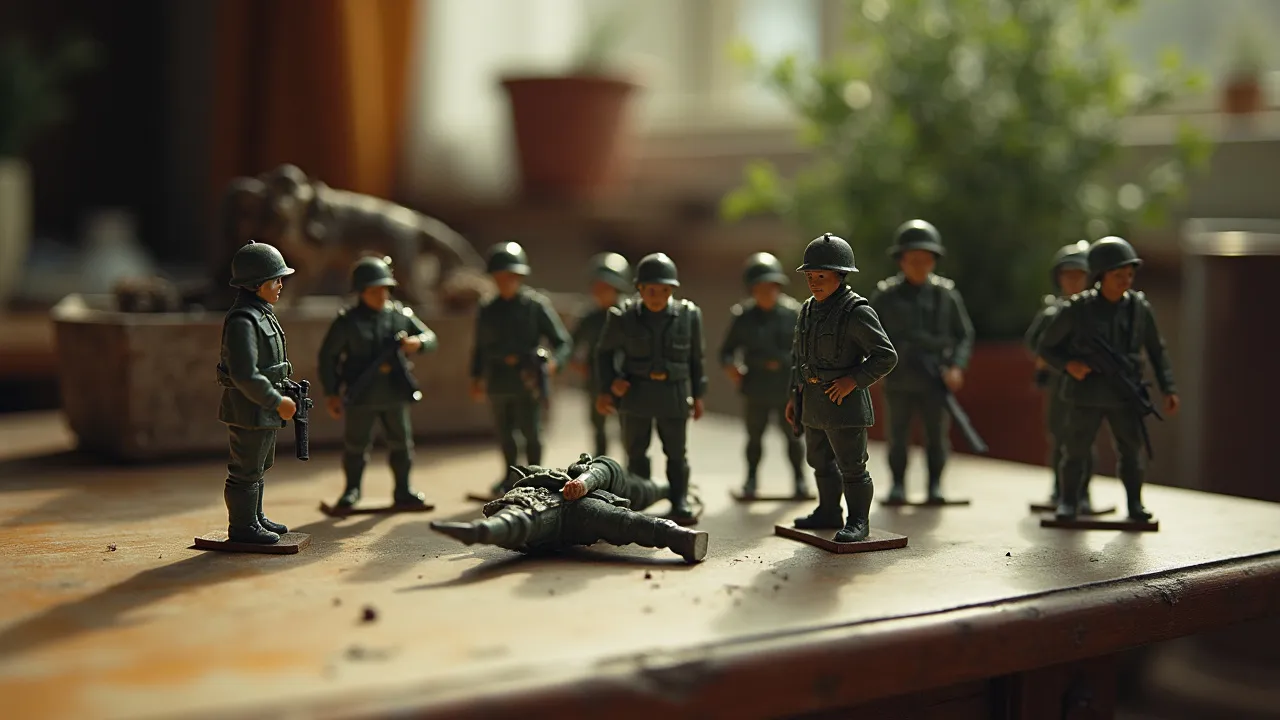
Toy Soldier Day, observed on March 4th, honors the timeless tradition of miniature military figurines. From historical collectibles to modern playsets, discover the rich history and ways to celebrate this unique day.
The Historical Origins & Evolutionary Journey
The tradition of toy soldiers dates back centuries, evolving from simple carved figures to intricately painted collectibles. Toy Soldier Day, celebrated on March 4th, was established to honor this enduring hobby and its cultural significance.
The Foundational Catalyst
The earliest known toy soldiers were discovered in Egyptian tombs, carved from wood and depicting warriors. However, the modern concept began in 18th-century Europe, where tin soldiers were handcrafted for children of nobility. The Industrial Revolution transformed production, with companies like Heyde in Germany mass-producing lead soldiers. These early figures were flat and two-dimensional, known as "flats," but later evolved into solid, three-dimensional models.
By the 19th century, toy soldiers became a staple of childhood play, especially in Britain. The iconic Britains brand, founded in 1893, revolutionized the industry by introducing hollow-cast lead soldiers, making them more affordable and detailed. Sets included historical regiments, ceremonial guards, and even foreign armies, sparking a global collecting craze.
The Legislative/Official Adoption
In the modern era, the National Toy Soldier Collectors Association (NTSCA) sought to formalize a day to celebrate the hobby. After years of advocacy, March 4th was officially recognized as National Toy Soldier Day in 2005. The date was chosen to coincide with the birthday of a prominent collector and to avoid conflicts with other toy-related observances. The day aims to promote awareness of toy soldier history, encourage new collectors, and support museums dedicated to these miniatures.
Modern Global Legacy
Today, Toy Soldier Day is celebrated worldwide by collectors, historians, and enthusiasts. However, regional variations exist. In the United Kingdom, the British Toy Soldier Collectors Society organizes a separate observance in November. In Germany, a traditional toy soldier festival is held in August. These regional differences highlight the universal appeal of toy soldiers while respecting local traditions.
The legacy of toy soldiers extends beyond play; they are valued as historical artifacts, teaching tools, and art forms. Museums like the Toy Soldier Museum in Alum Creek, Ohio, and Les Armées de l'Ombre in France preserve thousands of figures. The day also inspires modern makers who use 3D printing and resin casting to create custom soldiers, ensuring the hobby continues to evolve.
How to Celebrate Toy Soldier Day
Whether you are a seasoned collector or a curious newcomer, Toy Soldier Day offers countless ways to participate. Here is a definitive global guide to celebrating this unique day.
Personal Celebrations
- Display Your Collection: Arrange your toy soldiers in a diorama or on shelves. Consider recreating famous battles like Waterloo or D-Day with historically accurate figures.
- Host a Toy Soldier Swap: Invite fellow collectors to trade duplicates or rare pieces. Use online forums like the Toy Soldier Chat Forum to connect.
- Attend a Local Show: Look for toy soldier shows or hobby fairs near you. In the US, the Chicago Toy Soldier Show is a highlight. In the UK, the London Toy Soldier Fair is renowned.
School and Family Activities
- History Lesson: Use toy soldiers to teach children about military history, famous battles, and uniforms. Pair with a documentary or book.
- Art Project: Paint unassembled figures together. Many companies sell blank soldiers for customization. Use acrylic paints and fine brushes.
- Museum Visit: Many museums offer special Toy Soldier Day programs. Check local museums for exhibitions or workshops.
Corporate and Community Events
Businesses can celebrate by hosting collection contests, sponsoring diorama competitions, or donating toy soldiers to children's hospitals. Libraries can organize displays and talks. In Japan, some communities hold parade reenactments with life-sized models, while in Australia, collectors often gather in parks for informal meetups.
Digital Celebrations
Social media plays a huge role. Post photos with #ToySoldierDay, join live-streamed collector panels, or participate in virtual auctions. The Toy Soldier Collectors Association hosts a webinar series on March 4th featuring restoration experts and historians.
Cultural Impact of Toy Soldiers
Toy soldiers have left an indelible mark on culture, influencing art, literature, cinema, and even military strategy. Their role as both playthings and collectibles bridges generations and continents.
In Literature and Film
The most famous literary reference is Hans Christian Andersen's "The Steadfast Tin Soldier," a tale of love and perseverance. In film, toy soldiers appear in classics like "The Nutcracker" (where they come to life) and "Toy Story," where the character Sergeant and his troops embody loyalty. More recently, the stop-motion film "Robot Chicken" parodies toy soldier clichés.
As Historical Teaching Tools
Educators use toy soldiers to illustrate military tactics, logistics, and the human cost of war. For example, a diorama of the Battle of Gettysburg with accurate formations helps students visualize terrain and troop movements. Museums often employ toy soldier displays to show historical uniforms and weaponry evolution.
Psychological and Social Impact
Playing with toy soldiers encourages narrative thinking, risk assessment, and ethical decision-making. Children reenact battles, often inventing complex backstories. Collecting fosters community: clubs, conventions, and online forums create bonds across countries. Many veterans collect toy soldiers as a way to process their service, finding nostalgia and camaraderie.
Collecting and Valuing Toy Soldiers
The collecting community ranges from casual enthusiasts to serious investors. Understanding the factors that determine value is key to building a meaningful collection.
Key Factors in Valuation
- Rarity: Limited editions, early productions, and figures from defunct companies (like Mignot or Heyde) often command high prices.
- Condition: Original paint, no chips, and intact accessories are crucial. Mint-in-box items are especially valuable.
- Historical Accuracy: Figures from famous regiments or battles, especially those with documented provenance, are sought after.
- Material: Lead soldiers are older and heavier, but plastic soldiers from the 1950s (like Marx) are also collectible.
How to Start Collecting
- Choose a focus: specific era, country, or manufacturer. Many start with World War II or Napoleonic wars.
- Learn to identify fakes: check for heavy uniform details, correct proportions, and original box markings.
- Attend shows and join clubs: The Toy Soldier Collectors Association and the British Toy Soldier Collectors Society offer resources and community.
- Store properly: Keep soldiers in a cool, dry place away from sunlight. Use archival boxes and avoid over-handling.
Notable Collections and Auctions
The Forbes Collection of toy soldiers sold at Christie's in 2003 for over $3 million. The James Opie collection, known for its comprehensive Britains line, was a record-setter. Today, online platforms like eBay and specialized auction houses like Vectis (UK) handle regular sales.
Toy Soldiers in Media and Art
Beyond play, toy soldiers have been adopted by artists and filmmakers as powerful symbols. Their rigid, uniform appearance makes them ideal for commentary on war, conformity, and nostalgia.
Contemporary Art
Artists like Annette Lemieux and Charles LeDray have used toy soldiers in installations to explore conflict and memory. The famous "The Quiet in the Land" series by French artist Alain Godon places toy soldiers in everyday scenes, creating surreal juxtapositions. In China, sculptor Chen Wenling uses hundreds of red toy soldiers to critique consumerism.
Animation and Digital Media
Video games like "Toy Soldiers" (2012) and "Battlefield" mods allow players to control miniature armies. The game "Company of Heroes" even has a toy soldier mod for realistic reenactment. Stop-motion animators often use toy soldiers as inexpensive puppets, as seen in the web series "Brick Battle" and "Soldier's Story."
Photography and Social Media
Instagram and Flickr host vibrant communities of toy soldier photographers who create dioramas with forced perspective. Accounts like @toy_soldier_photography and #toyarmy showcase incredible detail. These images blur the line between toy and art, often going viral.
Future of Toy Soldiers
As technology reshapes hobbies, toy soldiers are adapting while retaining their classic appeal. The future looks bright for both traditional and innovative formats.
Digital Integration and 3D Printing
3D printing allows collectors to create custom soldiers from historical photos or game designs. Companies like Shapeways offer printable files, and affordable printers make home production feasible. This democratizes collecting but also raises questions about authenticity.
Sustainability and Materials
Health concerns over lead and environmental issues with plastic have prompted shifts. Many modern toy soldiers are made from resin, metal alloys, or biodegradable bioplastics. Manufacturers like King & Country now use pewter, while others explore recycled materials.
Community and Education
The internet keeps the hobby alive with forums, YouTube tutorials, and virtual events. Augmented reality (AR) apps allow collectors to "bring" their soldiers to life, simulating battles on their phone screens. Schools increasingly use toy soldiers in STEM education, integrating history with problem-solving.
As Toy Soldier Day continues to grow, it is likely to inspire a new generation to appreciate these miniature guardians of history. Whether through preservation, innovation, or sheer joy, the toy soldier's legacy is secure.
Historical Timeline
Ancient Egyptian toy soldiers carved from wood are placed in tombs as funerary objects.
First mass-produced tin toy soldiers appear in Nuremberg, Germany, by tinworker Johann Gottfried Hilpert.
The Britains company is founded in London, pioneering hollow-cast lead soldiers that become iconic.
World War I halts production of many toy soldier companies; after the war, plastic begins to replace lead.
The Marx Toy Company releases the first plastic toy soldiers, the 'Plastic Army Men', a huge success.
Toy soldier collecting booms as post-war prosperity and nostalgia drive demand for vintage sets.
Lead toy soldiers are banned in the US due to health concerns, accelerating the shift to plastic and other materials.
The Toy Soldier Collector magazine launches, becoming the premier periodical for enthusiasts.
March 4th is officially recognized as National Toy Soldier Day by the National Toy Soldier Collectors Association.
The video game 'Toy Soldiers' is released, allowing players to control toy soldiers in a digital battlefield.
During the pandemic, virtual toy soldier shows and online auctions surge in popularity.