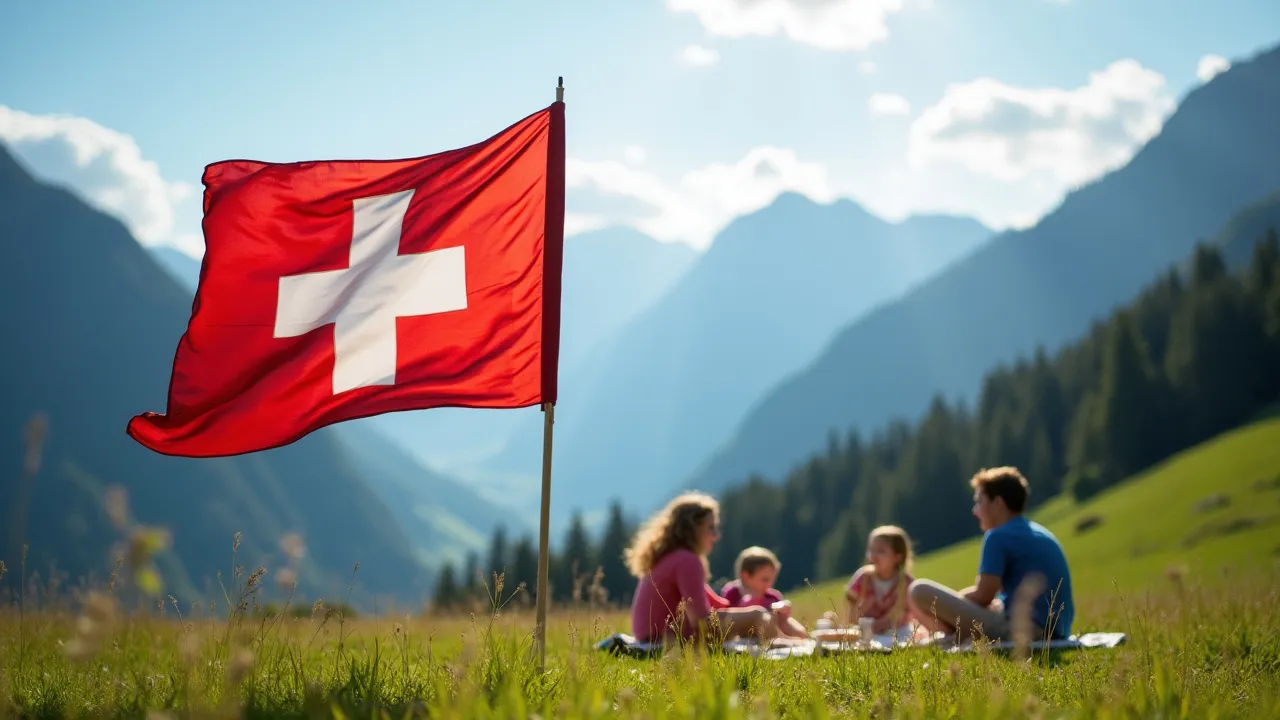
Swiss National Day on August 1st commemorates the founding of the Swiss Confederation in 1291. Celebrated with fireworks, bonfires, and patriotic speeches, it is a day of national pride and unity across Switzerland.
The Historical Origins & Evolutionary Journey
The Foundational Catalyst
Swiss National Day traces its roots to August 1, 1291, when the three cantons of Uri, Schwyz, and Unterwalden signed the Federal Charter of 1291, forming the Swiss Confederacy. This event is considered the foundation of modern Switzerland, though the date was not officially recognized until centuries later. The charter established a defensive alliance against external threats, fostering a spirit of unity and independence that persists today.
The Legislative/Official Adoption
In 1891, the Swiss government declared August 1st a national holiday to commemorate the 600th anniversary of the Confederation. However, it was not until 1994 that it became an official federal holiday through a popular vote. The decision reflected growing national consciousness and the desire to honor Swiss history and values. The day is now enshrined in the Swiss constitution, with celebrations blending tradition and modernity.
Modern Global Legacy
Swiss National Day has evolved into a global celebration, with Swiss communities worldwide organizing events. In Switzerland, it features public speeches, fireworks, and bonfires. The day promotes Swiss cultural heritage, including yodeling, alphorn music, and traditional costumes. Internationally, it serves as a symbol of Swiss neutrality, democracy, and quality of life.
How to Celebrate Swiss National Day
Swiss National Day offers numerous ways to participate, whether in Switzerland or abroad. Below are actionable strategies for individuals, schools, and organizations.
For Individuals and Families
- Attend local festivities: Many towns host parades, concerts, and firework displays.
- Light a bonfire: Traditional bonfires symbolize the liberation from foreign rule.
- Listen to the Federal President's speech: Broadcast nationally at 8 p.m.
- Enjoy Swiss cuisine: Fondue, raclette, and Swiss chocolate are popular choices.
- Display the Swiss flag: Decorate homes and gardens with national colors.
For Schools
- Organize a history lesson on the Federal Charter of 1291.
- Create art projects featuring the Swiss flag or national symbols.
- Host a traditional Swiss music session with alphorn or yodeling.
For Organizations
- Host a cultural fair highlighting Swiss innovations, from watches to banking.
- Arrange a charity event supporting Swiss cultural preservation.
- Encourage employees to wear traditional Swiss attire.
The Symbolism of Swiss National Day
Swiss National Day is rich in symbolism, from the iconic Swiss flag to the bonfires that light up the Alps. The flag, a white cross on a red background, represents the nation's commitment to neutrality and Christianity. Bonfires, traditionally lit on hillsides, recall the signal fires that warned of invaders in medieval times. The day also highlights Swiss values such as democracy, direct participation, and federalism. The national anthem, the "Swiss Psalm," is sung at public events, reinforcing a sense of unity. Additionally, the day emphasizes environmental stewardship, as many events are held outdoors in Switzerland's pristine natural settings.
Regional Variations and Traditions
While August 1st is celebrated nationwide, traditions vary by region. In German-speaking Switzerland, the day is known as Bundesfeier, with activities like alphorn concerts and flag waving. In French-speaking areas, the Fête nationale suisse features street parades and communal meals. Italian-speaking Ticino emphasizes family gatherings and fireworks. Romansh regions incorporate ancient traditions, such as the burning of the "Chalandamarz" effigy. These regional differences reflect Switzerland's multicultural heritage, yet they unite under the same national pride. Internationally, embassies host receptions, and Swiss clubs organize events to maintain cultural ties.
Economic Impact and Tourism
Swiss National Day significantly boosts tourism and local economies. Hotels and restaurants see increased bookings as travelers flock to enjoy the festivities. The event generates revenue for artisans selling traditional crafts and for food vendors. Firework displays, often coordinated by municipalities, stimulate local industries. Internationally, the day enhances Switzerland's brand, promoting exports like watches, chocolates, and pharmaceuticals. It also serves as a soft power tool, attracting investment and reinforcing Switzerland's image as a stable, prosperous nation.
Environmental and Social Considerations
As with any large celebration, Swiss National Day has environmental impacts. Fireworks contribute to air and noise pollution, prompting calls for more eco-friendly alternatives like drone shows. Bonfires, if not managed sustainably, can affect local ecosystems. Socially, the day promotes community cohesion but can also reinforce nationalistic sentiments. Efforts are underway to make celebrations more inclusive, acknowledging Switzerland's diverse population and immigrant communities. Many events now incorporate themes of sustainability and global citizenship, balancing patriotism with broader values.
Historical Timeline
The Federal Charter is signed by Uri, Schwyz, and Unterwalden, founding the Swiss Confederacy.
Swiss National Day is first officially celebrated on August 1st, marking the 600th anniversary of the Confederacy.
Swiss voters approve making August 1st an official federal holiday in a national referendum.
August 1st becomes a federal holiday, with the Swiss constitution amended to recognize Swiss National Day.
The Swiss government introduces a new edition of the Federal Charter to celebrate the 710th anniversary.
Swiss National Day sees record participation with over 1 million people attending events nationwide.