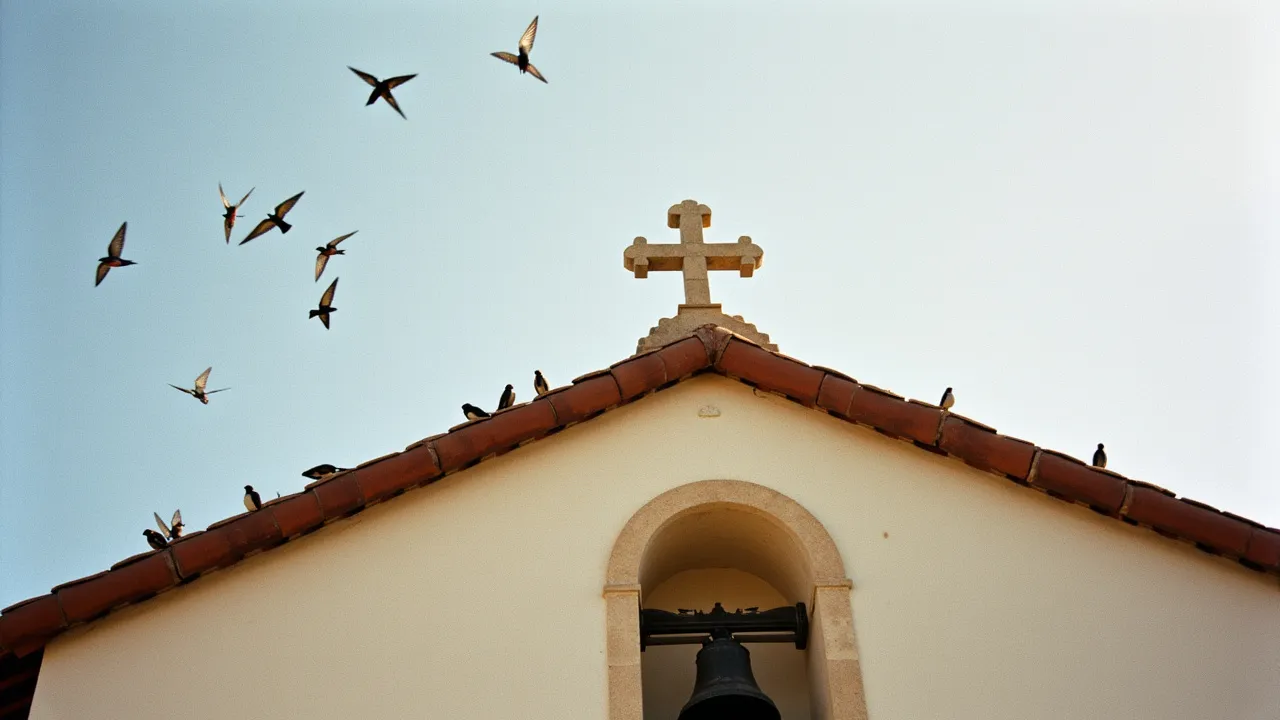
Celebrated annually on March 19, Swallows Return to San Juan Capistrano Day marks the legendary migration of cliff swallows back to Mission San Juan Capistrano in California. It honors the birds' arrival, the mission's history, and the onset of spring.
The Historical Origins & Evolutionary Journey
The Swallows Return to San Juan Capistrano Day is a cherished observance that has grown from a local legend into a widely recognized annual event. Its roots lie in the natural phenomenon of the cliff swallow (Petrochelidon pyrrhonota) migration and the enduring allure of the Mission San Juan Capistrano in Orange County, California.
The Foundational Catalyst
The mission, founded in 1776 by Spanish Franciscans under Father Junípero Serra, became a historical and spiritual landmark. The swallows began nesting on the mission walls as early as the 1800s, and local lore held that they departed on St. John's Day (October 23) and returned on St. Joseph's Day (March 19). This annual cycle captured the imagination of residents and visitors alike.
The Official Adoption as a Celebration
In the 1930s, the mission and the city of San Juan Capistrano formalized the day with a community festival. The event gained national attention in 1939 when a popular song, "When the Swallows Come Back to Capistrano" by Leon René, became a hit. This cemented the day in American culture. Over time, the festival expanded to include a parade, live music, historical reenactments, and environmental education programs.
Modern Global Legacy
Today, while the core celebration remains at the mission, the day has inspired similar bird-watching and migration festivals worldwide. The event symbolizes resilience, renewal, and the deep connection between nature and cultural heritage. The mission continues to track swallow populations and advocate for habitat conservation, ensuring the legacy endures. Despite challenges like urban development and climate change, the return of the swallows remains a hopeful annual spectacle.
How to Celebrate Swallows Return to San Juan Capistrano Day
Celebrating this day can be as local as visiting the mission or as global as tracking swallow migrations from your own backyard. Here are diverse ways to honor the tradition across cultures and settings.
For Individuals and Families
- Visit Mission San Juan Capistrano: Attend the official festival on March 19, featuring a parade, live music, art exhibits, and guided tours of the historic grounds. Watch for the swallows around the bell wall and ruins.
- Birdwatch Locally: Cliff swallows can be found across North America. Set up a bird feeder or install nesting shelves to attract them if you live in suitable habitat. Record sightings via citizen science apps like eBird.
- Learn About Migration: Read books or watch documentaries about swallow migration. Discuss the ecological significance with family or friends.
For Schools and Community Groups
- Educational Workshops: Host presentations on the history of the mission, the biology of cliff swallows, and the importance of biodiversity. Create art projects featuring swallows in flight.
- Habitat Restoration: Organize a local clean-up or planting day to support swallow nesting sites. Build and place swallow nesting structures in parks or schoolyards.
- Cultural Exchange: Connect with schools in other regions where swallows migrate, such as Argentina, to share observations and stories.
Corporate and Social Rituals
- Themed Events: Host a "Swallows Day" party with bird-themed decorations, natural foods, and proceeds donated to avian conservation groups.
- Volunteer Programs: Encourage employees to volunteer with local Audubon societies or mission restoration projects.
- Sustainable Practices: Use the day to launch corporate sustainability initiatives, such as reducing pesticide use to protect insect populations that swallows feed on.
International Variations
- In Europe, similar celebrations exist for barn swallows in countries like Italy and Spain, often tied to Saint Joseph's Day. Activities include ringing swallows for migration research.
- In Australia, although species differ, bird migration festivals are common, with events centered on welcome swallows. The day can be adapted to local species.
- In South America, where cliff swallows spend the winter, communities may hold farewell celebrations in February before the birds head north.
No matter where you are, the key is to acknowledge the wonder of animal migration and the historical ties that bind humans and birds.
Environmental Significance of the Swallow Migration
The annual migration of cliff swallows is not only a cultural icon but also a vital ecological indicator. These insectivorous birds play a key role in controlling insect populations, consuming thousands of flying insects daily. Their return signals the start of spring in the Northern Hemisphere and is closely tied to climate patterns.
Ecological Role
- Pest Control: Cliff swallows eat agricultural pests such as mosquitoes, flies, and beetles, reducing the need for chemical pesticides. A single swallow can consume up to 850 insects per day.
- Pollination: While not primary pollinators, swallows indirectly contribute to plant health by controlling herbivorous insects.
- Indicator Species: Changes in swallow arrival times or population numbers can signal shifts in climate or habitat quality. Scientists monitor these trends to assess environmental health.
Conservation Challenges
Urban development, pesticide use, and climate change threaten swallow habitats. The mission's nesting sites have declined due to building modifications and natural erosion. Conservation efforts include:
- Protecting existing nesting structures and installing artificial swallow nests at the mission.
- Encouraging organic farming and reduced pesticide application in surrounding areas.
- Promoting citizen science programs to track migration patterns and nest success rates.
The day serves as a rallying point to educate the public about these issues and inspire action to preserve swallow populations for future generations.
Cultural Impact and Literary References
The swallows' return has permeated American culture for nearly a century, inspiring art, music, and storytelling. The most famous reference is the 1939 song "When the Swallows Come Back to Capistrano," which became a hit for the Ink Spots and later covered by many artists. The song helped solidify the March 19 date in popular imagination.
Literature and Film
The mission and its swallows appear in travelogues, children's books, and historical novels. Authors like James Michener have referenced the tradition. In film, the event has been featured in documentaries about bird migration and California missions. The story has also been adapted into animated shorts and educational videos.
Local Traditions
In San Juan Capistrano, the day is celebrated with a morning parade, mariachi music, and a reenactment of the swallows' arrival. Children dress as swallows, and local restaurants offer special menus. The mission's "Blessing of the Swallows" ceremony led by Franciscan friars blends Catholic tradition with natural appreciation. The festival has become a symbol of the city's identity, drawing tens of thousands of visitors annually.
Global Influence
The concept of a "return day" has inspired other communities to establish similar observances for migratory birds, such as the Sandhill Crane Festival in Nebraska or the Swallow Festival in Japan. It underscores a universal human fascination with the seasonal rhythms of nature.
Economic Impact on San Juan Capistrano
The Swallows Return Day is a major economic driver for San Juan Capistrano, a small city of about 35,000 residents. The event injects significant revenue into the local economy through tourism, hospitality, and retail sales.
Tourism Statistics
- Attendance at the festival ranges from 20,000 to 40,000 people, many from outside Orange County.
- The mission itself attracts over 400,000 visitors annually, with March 19 often being the busiest day.
- Hotels, restaurants, and shops in the historic district report a surge in business during the week of March 19.
Media and Marketing
The day receives regional and national media coverage, including news segments, print articles, and social media mentions. This free publicity is valued at millions of dollars in marketing for the city and the mission.
Long-Term Investments
The event has spurred investments in infrastructure, such as improved parking, signage, and public restrooms. It also supports local artisans and performers, who are hired for the festival. The city uses the day to promote year-round tourism, highlighting its Spanish colonial heritage and natural beauty.
Ecological Observations and Citizen Science
The return of the swallows provides an ideal opportunity for citizen science and ecological monitoring. Enthusiasts can participate in data collection that aids researchers studying bird migration, climate change, and urban ecology.
How to Get Involved
- eBird: Submit observations of cliff swallows on March 19 and surrounding weeks. Your data contributes to global migration maps.
- Nest Monitoring: At the mission, volunteers count nests and record occupancy rates. Similar projects exist elsewhere.
- Weather and Climate Logging: Note arrival dates and weather conditions to help scientists understand how temperature and precipitation affect migration timing.
Scientific Insights
Cliff swallows are known for their precise migration schedules, but recent studies show that climate change is causing some populations to arrive earlier or shift their routes. Data from the mission indicates that swallows now sometimes appear in late February rather than March 19, sparking discussions about environmental shifts. The day thereby serves as a living scientific record.
Schools and universities often use the event as a live case study in ecology courses, teaching students about migratory behavior, adaptation, and conservation biology.
Historical Timeline
Mission San Juan Capistrano is founded by Spanish Franciscans, beginning the historical connection with swallows that nest on its walls.
The mission church is damaged by an earthquake, and swallows begin nesting in the ruins, strengthening the annual tradition.
The local community organizes the first official Swallows Day celebration on March 19 (St. Joseph's Day), featuring a parade and festivities.
Composer Leon René releases "When the Swallows Come Back to Capistrano," which becomes a national hit and popularizes the event across the U.S.
The festival grows, attracting larger crowds and media coverage. The mission begins offering guided tours and educational programs about the swallows.
Conservation concerns arise due to declining swallow numbers. The mission installs artificial nesting structures and limits human disturbance during breeding.
The city of San Juan Capistrano officially recognizes the Swallows Return Day as a key cultural event, allocating city resources for its promotion.
Citizen science initiatives expand; eBird and mission volunteers track swallow arrival dates and populations, contributing to climate change research.
The festival celebrates its 90th anniversary with enhanced digital outreach, including a live stream of the swallows' arrival and virtual tours of the mission.