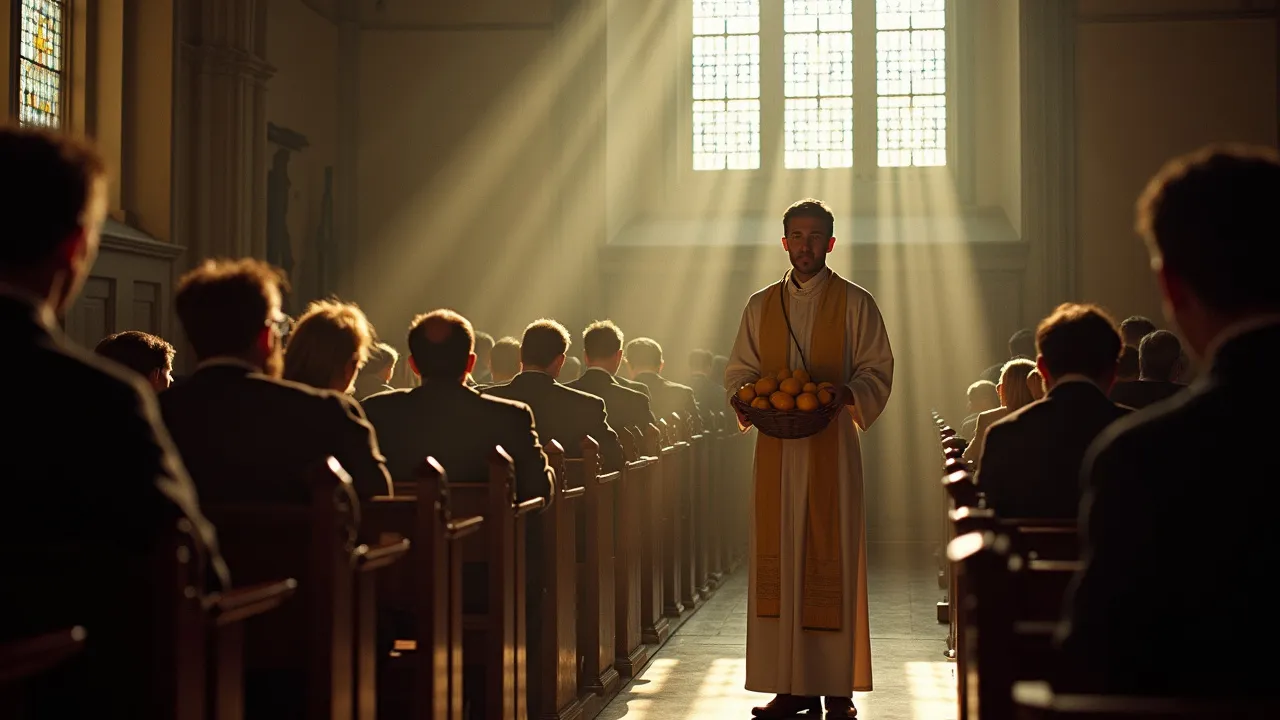
Oranges and Lemons Day, observed on the third Thursday in March, commemorates the classic nursery rhyme with a special service at London's St. Clement Danes church, featuring bell ringing and distribution of citrus fruits.
The Historical Origins & Evolutionary Journey
The Foundational Catalyst
Oranges and Lemons Day finds its roots in the traditional nursery rhyme 'Oranges and Lemons,' which dates back to the 17th or 18th century. The rhyme lists the bells of various London churches, ending with 'And here comes a chopper to chop off your head!' The observance began at St. Clement Danes church in the Strand, London, which is mentioned in the rhyme: 'Oranges and lemons, say the bells of St. Clement's.' The church has a historic association with the fruit trade because of its proximity to the wharves where citrus fruits were unloaded.
The Legislative/Official Adoption
The first formal Oranges and Lemons Day service was instituted in the early 1920s by the then-rector of St. Clement Danes, Rev. William Pennington-Bickford. He introduced a special service where oranges and lemons are distributed to children, and the bells ring the tune of the nursery rhyme. The service became an annual tradition, though it was interrupted by World War II when the church was bombed in 1941. After the war, the church was rebuilt and the tradition resumed. The day is now officially part of the church calendar, celebrated on the third Thursday in March each year.
Modern Global Legacy
While primarily a local London tradition, Oranges and Lemons Day has gained international recognition through the popularity of the nursery rhyme. Similar services have been adopted by other churches named St. Clement's around the world, particularly in former British colonies. The day also highlights the cultural heritage of London's church bells and the preservation of traditional rhymes.
How to Celebrate Oranges and Lemons Day
Oranges and Lemons Day is primarily observed at St. Clement Danes church, but individuals anywhere can participate in various ways.
Attend the Service at St. Clement Danes
- Location: St. Clement Danes Church, Strand, London WC2R 1DH.
- Time: Usually a midday service on the third Thursday of March.
- Activities: Bell-ringing, distribution of oranges and lemons, singing of the nursery rhyme.
Celebrate at Home or School
- Learn the Rhyme: Teach children the full version of 'Oranges and Lemons'.
- Make Citrus Treats: Bake orange and lemon cakes, pies, or marmalade.
- Bell Ringing: Use handbells or chimes to play the tune.
- Crafts: Create paper oranges and lemons or decorate with citrus themes.
Corporate and Community Celebrations
- Office Potluck: Encourage citrus-themed dishes.
- Fundraisers: Donate citrus fruits to food banks or schools.
Globally, some churches in the US, Australia, and Canada with ties to the Church of England also hold services.
The Nursery Rhyme and Its Symbolism
Origins of the Rhyme
The rhyme 'Oranges and Lemons' first appeared in print around 1744 in 'Tommy Thumb's Pretty Song Book'. It lists the bells of several prominent London churches, each with a distinctive phrase. The full version includes 'You owe me five farthings, say the bells of St. Martin's', etc. The ending, 'Here comes a chopper to chop off your head', is a reference to the execution of traitors at the Tower of London or perhaps the beheading of King Charles I.
Interpretation
The rhyme is a cumulative song that children sing while playing a game where two children form an arch and others pass under, until the arch falls and catches one – echoing the 'chopper'. Oranges and lemons symbolize the citrus trade that flourished near St. Clement Danes. The bells of each church are anthropomorphized to 'say' different things, highlighting the rich auditory landscape of historic London.
Cultural Impact
The rhyme has been referenced in literature, music, and film. It appears in George Orwell's '1984' and T.S. Eliot's 'The Waste Land'. The tune is widely recognized and has been used in commercials and educational materials.
The Bells of London: A Musical Heritage
London's church bells are an iconic part of the city's soundscape. The rhyme 'Oranges and Lemons' celebrates this heritage.
Key Churches Mentioned
- St. Clement's: St. Clement Danes – 'Oranges and lemons'.
- St. Martin's: St. Martin-in-the-Fields – 'You owe me five farthings'.
- Old Bailey: The bell of the Old Bailey courthouse – 'When will you pay me?'
- Shoreditch: St. Leonard's, Shoreditch – 'When I grow rich'.
- ... and others.
Bell Ringing Tradition
Change ringing is a traditional English art where bells are rung in mathematical sequences. On Oranges and Lemons Day, the bells of St. Clement Danes ring the tune of the rhyme. The church has a ring of ten bells, cast in the 20th century.
Preservation
Organizations like the Central Council of Church Bell Ringers help maintain this tradition. The day also raises awareness for the restoration of historic bells.
Global Impact and Similar Traditions
While unique to London, the spirit of Oranges and Lemons Day resonates worldwide.
Similar Fruit-Based Festivals
- Lemon Festival in Menton, France – February/March.
- Orange Festival in Lincang, China.
- Citrus festivals in Florida and California.
Adoptions and Adaptations
Churches named St. Clement in other countries sometimes hold their own services. Educational institutions use the day to teach about London history. The rhyme is a staple in early childhood education globally.
Charitable Aspects
At St. Clement Danes, the citrus fruits distributed are donated, emphasizing charity. Many celebrations include fundraising for bell restoration or local food banks.
Cultural Significance and Modern Observances
Preserving Heritage
Oranges and Lemons Day is part of the intangible cultural heritage of London. It keeps alive the nursery rhyme, the art of bell ringing, and the history of the church. In an age of digital entertainment, such traditions offer a tangible link to the past.
Modern Adaptations
Social media campaigns use #OrangesAndLemonsDay to share celebrations. Virtual bell ringing apps and online performances have emerged. The day also sees increased interest in historical London walks.
Relevance Today
The observance promotes community gathering, intergenerational bonding, and appreciation for local history. It reminds us of the simpler pleasures of rhymes and fruit. The church continues to welcome visitors from around the world for the annual service.
Historical Timeline
The nursery rhyme 'Oranges and Lemons' appears in print for the first time in Tommy Thumb's Pretty Song Book.
Rev. William Pennington-Bickford, rector of St. Clement Danes, initiates the first Oranges and Lemons Day service, distributing citrus fruits to children and ringing the bells.
St. Clement Danes church is heavily damaged during the Blitz in World War II, halting the tradition.
After restoration, the church is reconsecrated and the Oranges and Lemons Day tradition resumes.
Oranges and Lemons Day continues to be celebrated at St. Clement Danes with a special service, bell ringing, and citrus distribution.