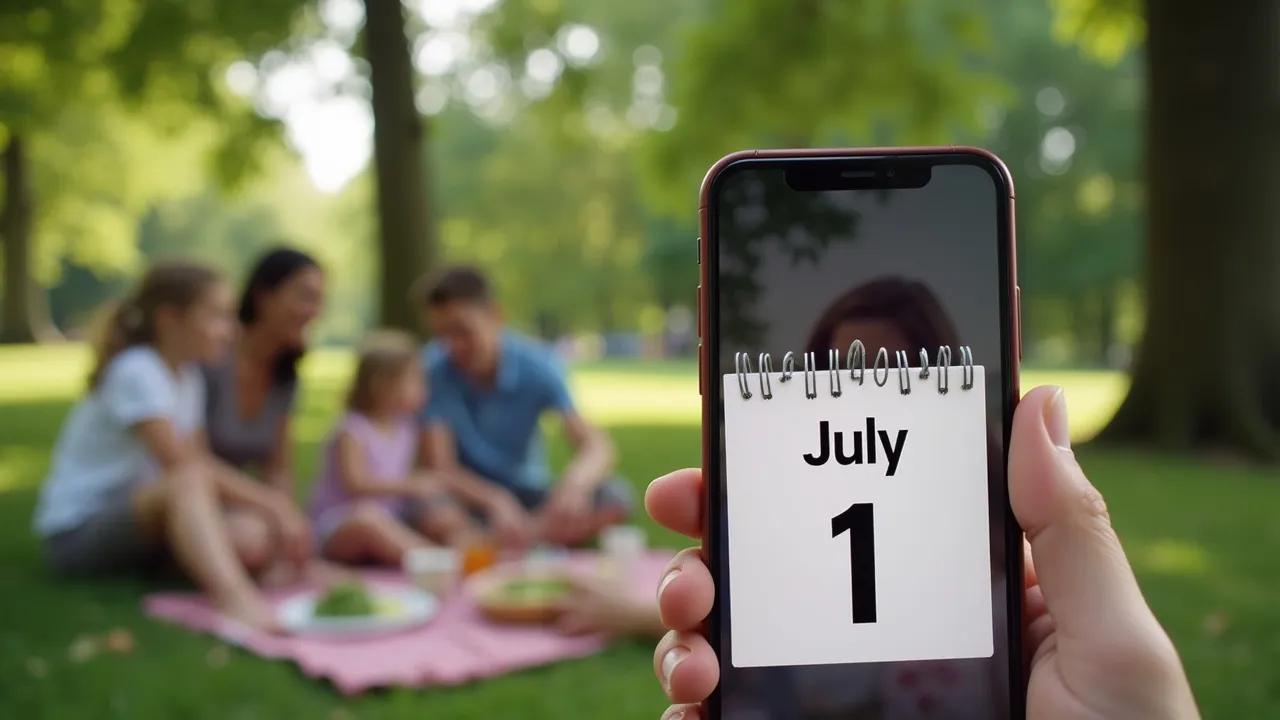
Second Half of the Year Day, observed on July 1st, marks the exact midpoint of the calendar year. It is a day to reflect on the past six months and set renewed goals for the months ahead.
The Historical Origins & Evolutionary Journey
The concept of marking the midpoint of the year predates formal calendars. Ancient civilizations, such as the Egyptians and Babylonians, divided the year into two halves based on solstices and equinoxes. However, the specific observance of July 1st as the exact halfway point of the Gregorian calendar year emerged with the standardization of the calendar itself.
The Foundational Catalyst
The Julian calendar, introduced by Julius Caesar in 45 BCE, first fixed January 1 as the start of the year, making July 1 the 182nd day (or 183rd in leap years) of a 365-day year. This mathematical midpoint became a natural reference point for agricultural, fiscal, and personal planning. By the Middle Ages, European almanacs often listed July 1 as the Midsummer Day in some regions, blending with existing solstice traditions.
The Legislative/Official Adoption
Though never officially legislated as a public holiday, the midyear point gained informal recognition in the business world during the Industrial Revolution. Companies began conducting mid-year stocktakes and financial audits on July 1. In 1752, Britain's adoption of the Gregorian calendar solidified July 1 as a consistent half-year marker. The United Nations and many international organizations use July 1 as the start of the fiscal year for member states, further embedding the date in global administration.
Modern Global Legacy
In the 20th century, the rise of corporate culture and personal self-help movements popularised the idea of the midpoint of the year as an opportunity for reflection and renewal. Books like The 7 Habits of Highly Effective People encouraged periodic reviews, and July 1 became a symbolic date for setting second-half goals. Today, social media hashtags like #SecondHalfOfTheYear and #MidYearReview trend annually, uniting millions in a global moment of recalibration.
How to Celebrate Second Half of the Year Day
Celebrating July 1st as the start of the second half of the year involves both personal introspection and collective events. The day is about taking stock and refocusing. Here are actionable strategies for individuals, schools, and organizations.
For Individuals
- Mid-Year Review: Write down the top goals you set on January 1. Rate your progress from 1 to 10 and identify obstacles.
Tip: Use a physical journal or a digital tool like Notion. - Reset Your Resolutions: Adjust unrealistic targets. Replace them with specific, measurable goals for the remaining 184 days.
Example: Change 'lose weight' to 'exercise 3 times per week'. - Declutter Your Space: Spend 30 minutes clearing out one drawer or digital folder. Symbolic of making room for new opportunities.
- Plan a Mini-Vacation: Schedule a short getaway over the next weekend to recharge. Even a day trip can reset your mindset.
For Schools and Educational Institutions
- Mid-Year Reflection Assembly: Host a half-day event where students review their academic progress and set goals for the second semester. Include workshops on study skills.
- Goal-Setting Workshops: Teachers guide students to create SMART goals for the rest of the year. Use graphic organizers (e.g., vision boards).
- Buddy Check-Ins: Pair students to support each other's goals, meeting weekly until December.
For Organizations and Companies
- Mid-Year Performance Reviews: Conduct structured feedback sessions focused on achievements and areas for growth, aligning with annual objectives.
- Team-Building Activities: Organize outdoor or virtual events that emphasize collaboration for the second half. Example: department offsite with problem-solving challenges.
- Employee Wellness Initiatives: Launch a 6-month wellness challenge (e.g., step counting or meditation minutes) starting July 1, with rewards at year-end.
Across cultures, different regions have unique traditions. In the Southern Hemisphere, where July is mid-winter, some celebrate with indoor cozy gatherings and hot drinks. In Scandinavian countries, midsummer traditions extend into July 1 with bonfires and song. In the United States, the proximity to Independence Day (July 4) often merges celebrations.
The Psychological Significance of the Midyear Mark
The second half of the year carries profound psychological weight. Behavioral scientists call this the fresh start effect—the tendency to engage in goal-pursuit at temporally meaningful landmarks. July 1 is a prime example, offering a natural reset button six months before the New Year.
Why It Works
Psychologists from the University of Pennsylvania found that temporal landmarks (like the start of a new month or after a birthday) create mental accounting periods that help people compartmentalize time. The midpoint of the year feels less daunting than a full year and more actionable than a daily prompt. Additionally, contrasts with the past failures of the first half often motivate individuals to try new strategies.
Impact on Productivity
Studies show that midyear goal-setting increases productivity by up to 30% compared to waiting until December. Companies that implement mid-year reviews often see higher employee engagement. The day also reduces the procrastination spiral: because it is exactly halfway, people feel an urgency to act before the year ends.
Cultural Therapy Movement
In the last decade, mental health advocates have sponsored Mid-Year Check-In Day—an offshoot of Second Half of the Year Day—promoting therapy sessions, self-care routines, and community support groups. The day has become a gentle reminder to assess emotional well-being alongside achievements.
Global Impact and Regional Variations
While July 1 is the anchor date in the Gregorian calendar, other calendar systems also mark midyear at different times. This section explores how various cultures observe a 'half-year' moment, and the global economic and social effects of the July 1 pivot.
Fiscal Year Alignments
July 1 is the start of the fiscal year for many countries, including the United States federal government, India, and Bangladesh. This triggers a wave of budget announcements, policy changes, and tax adjustments, making it a major day for public administration. In corporate finance, Q3 and Q4 planning intensifies around this date.
Southern Hemisphere Reversal
In Australia, New Zealand, and South America, July 1 falls in deep winter. Celebrations often focus on indoor reflection, with popular traditions like midyear retreats and winter solstice-style feasts. Schools in the southern hemisphere use July 1 as the end of the first semester, aligning perfectly with the half-year concept.
Traditional Midyear Festivals
- Canada Day (July 1): In Canada, July 1 is also a national holiday, blending with the second-half spirit through parades and fireworks.
- Keti Koti (Suriname, July 1): Celebrates the abolition of slavery, emphasizing freedom and new beginnings—a fitting parallel to second-half renewal.
- Midsummer Festivals (Scandinavia): While midsummer is June 21, some communities extend festivities to July 1 with maypoles and flower crowns.
The global interconnectedness means that July 1 is a day when many international organizations publish mid-year reports, creating a wave of data-driven reflections on topics from climate change to economic growth.
Corporate and Social Rituals on July 1st
Beyond personal reflection, Second Half of the Year Day has evolved into a structured ritual in corporate and social contexts. This section details how businesses, non-profits, and community groups leverage the date.
Corporate Mid-Year Reviews
Most large corporations schedule performance reviews around July 1. This aligns with semiannual budgeting and goal cascades. HR departments often issue mid-year pulse surveys to gauge employee satisfaction. Many companies also hold town hall meetings to communicate strategic pivots for the remainder of the year.
Non-Profit Campaign Launches
Charities time their second-half fundraising drives to start on July 1. For example, the #MidYearMatch campaign encourages donors to double their contributions by matching the first half-year total. The date also marks the beginning of many athletic charity events, such as the Biggest Loser workplace challenges.
Social Media Movements
Twitter, Instagram, and LinkedIn see a surge in posts using hashtags like #SecondHalfGoals, #MidYearCheck, and #JulyFirst. Lifestyle influencers publish mid-year bucket list templates. Fitness communities start 6-month transformation challenges on July 1, capitalizing on the fresh-start effect.
Educational Institutions
Schools and universities use July 1 as a deadline for summer session registration or as the start of the academic calendar in some countries (e.g., Japan and India). This reinforces the day as a transition point.
Future Trends and the Evolution of Midyear Observance
As society becomes more data-driven and wellness-focused, Second Half of the Year Day is likely to gain even more prominence. Predictions and emerging trends include:
Integration with Digital Calendars
Tech companies like Google and Apple may introduce automated mid-year review prompts in their calendar apps. Such features could recommend goal checklists or connect with habit-tracking apps. Already, many productivity apps (e.g., Todoist, Asana) have mid-year templates.
Corporate Policy Standardization
More organizations are adopting a mid-year shutdown (a four-day break around July 1) to combat burnout. This trend, seen in European companies, may spread globally. Similarly, legislation could formalize July 1 as a mental health day in some jurisdictions.
Cultural Shifts Toward Reflection
The rise of 'slow living' and 'mindfulness' movements aligns with the day's introspective nature. Expect more guided meditations, journaling prompts, and community events centered on the second half. The date may become a de facto national 'check-in' day in various countries.
Astronomical Connections
While the Gregorian midpoint is fixed, some propose linking the observance to the astronomical midpoint between solstices, which varies. Future celebrations could be more dynamic, tied to solar calendar events to enhance astrological significance.
Historical Timeline
Julius Caesar introduces the Julian calendar, fixing January 1 as the start of the year, making July 1 the 182nd day and the halfway point.
The British Empire adopts the Gregorian calendar, shifting the start of the year to January 1 and reinforcing July 1 as the midyear point.
The U.S. Constitution takes effect, establishing a federal fiscal year that begins on July 1 in later years.
The American Institute of Certified Public Accountants recommends July 1 as the start of the fiscal year for many corporations, standardizing midyear audits.
The first recorded use of the phrase 'Second Half of the Year Day' in a self-help book by motivational speaker Earl Nightingale, who encouraged mid-year goal reviews.
Social media platforms like Yahoo! Groups and early forums begin hosting mid-year resolution threads, popularizing the date online.
Hashtag #SecondHalfOfTheYear trends on Twitter for the first time, with over 100,000 posts globally on July 1.
In response to the COVID-19 pandemic, many organizations use July 1 for mid-year mental health check-ins, expanding the observance's focus to wellness.