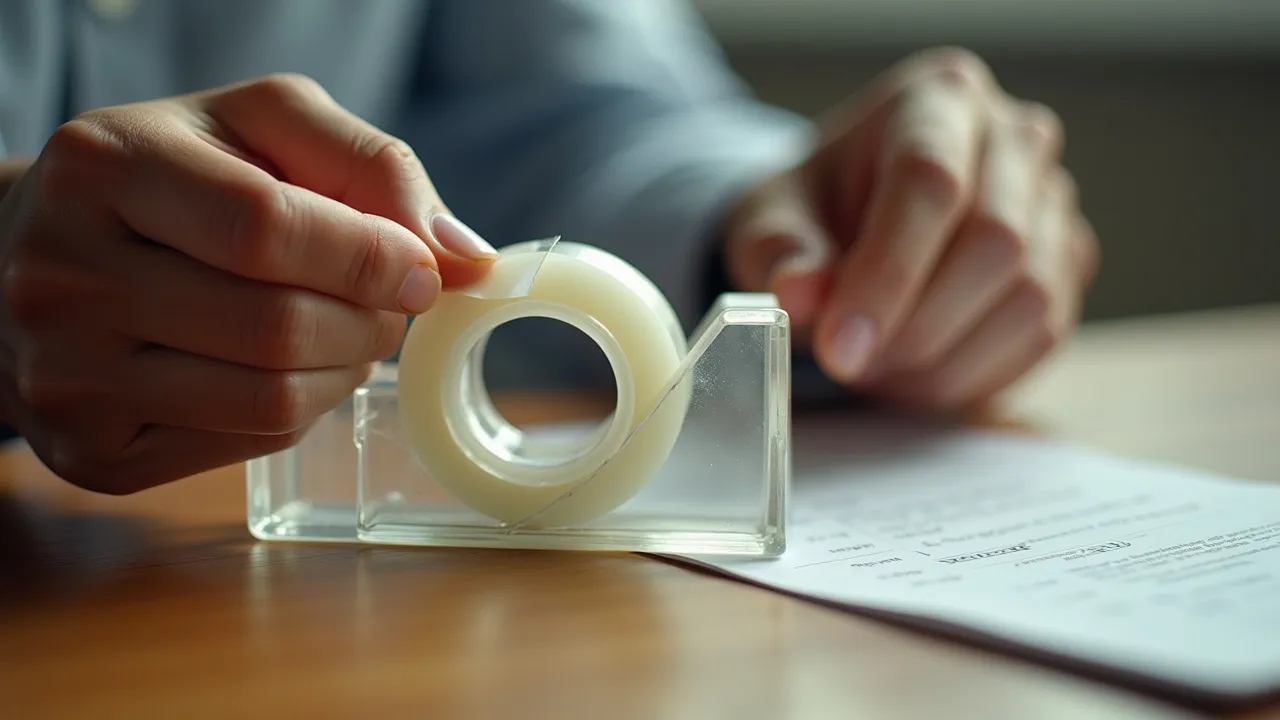
Scotch Tape Day, observed January 31st, celebrates the invention of the iconic adhesive tape by Richard Drew and 3M. It honors a simple yet indispensable tool that transformed everyday life.
The Historical Origins & Evolutionary Journey
Scotch Tape Day, observed each year on January 31st, pays homage to one of the most ubiquitous office supplies in history: Scotch Tape. The story begins in the late 1920s when Richard Drew, a young engineer at the Minnesota Mining and Manufacturing Company (3M), sought to create a waterproof adhesive tape for the burgeoning automotive industry. His early failures led to the invention of the first transparent, pressure-sensitive tape in 1930. The name 'Scotch' originates from a derogatory term used by automakers who complained the tape lacked adhesive—a reference to supposed Scottish stinginess. Instead of insulting, 3M embraced the name.
The Foundational Catalyst
In 1925, Richard Drew was testing a new adhesive for sandpaper when he noticed that auto painters struggled to create clean two-tone paint jobs. They used surgical tape that often peeled off fresh paint. Drew invented a masking tape in 1925, but it was not transparent. The real breakthrough came in 1930 when he developed the first transparent cellophane tape, marketed as Scotch Brand Cellulose Tape. It quickly became a hit during the Great Depression for wrapping packages and repairing items.
The Legislative/Official Adoption
Scotch Tape Day began as an informal observance promoted by 3M employees and enthusiasts. While there is no official proclamation, the day gained traction through social media and corporate recognition. 3M itself has celebrated the day by sharing history and encouraging creative uses. It is now widely listed on national day calendars as January 31st, commemorating the tape's original patent date in 1930.
Modern Global Legacy
Today, Scotch Tape is a genericized trademark in many countries, used to refer to any adhesive tape. Its impact extends beyond office supplies to arts, crafts, science, and even space missions. The day serves as a reminder of how a simple invention can revolutionize human efficiency.
How to Celebrate Scotch Tape Day
Scotch Tape Day offers endless possibilities for celebration, from quiet home crafting to large corporate events. Below are actionable ideas for individuals, schools, and organizations.
For Individuals
- Fix Something: Use Scotch tape to repair a torn book page, a broken toy, or a hanging decoration. Embrace the tape's utility.
- Create Art: Make tape-based sculptures or collages. Artists like Mark Jenkins use tape as a medium.
- Record Memories: Decorate scrapbooks or journal pages with Scotch tape to add texture and preserve photos.
- Gift Wrap Creatively: Use patterned or colored Scotch tapes to add unique touches to gifts.
For Schools and Offices
- Office Challenge: Host a 'tape tower' competition where teams build the tallest structure using only pencils and Scotch tape.
- Classroom Activity: Teach students about adhesion science with simple experiments, such as testing which surfaces tape sticks to best.
- Appreciation Notes: Create gratitude notes and seal them with tape to spread positivity.
Global Traditions
While primarily a US observance, other countries have adopted similar days. In Japan, where Scotch tape is known as 'セロハンテープ' (cellophane tape), fans share craft ideas on social media. In Germany, DIY communities celebrate with tape art projects. Some regions observe on alternative dates, such as May 27th, but January 31st remains the most recognized.
The Science Behind the Stickiness
Scotch Tape owes its remarkable adhesive properties to a combination of chemistry and engineering. The tape consists of three layers: a backing film (typically cellophane or polypropylene), an adhesive coating, and a release liner. The adhesive is a pressure-sensitive acrylic formula that flows slightly under pressure to bond with surfaces through van der Waals forces.
Adhesive Technology
The key to Scotch Tape's stickiness is its viscoelasticity. When pressed onto a surface, the adhesive deforms to maximize contact area. It then resists separation through energy dissipation. The adhesive is designed to be removable without leaving residue on many surfaces, though aging can cause bond strengthening.
Innovations Over Time
- 1940s: Development of heat-resistant tapes for military use.
- 1960s: Introduction of double-sided tape.
- 1990s: Eco-friendly tapes with reduced solvents.
- 2000s: Nanotechnology-enhanced adhesion and UV-resistant tapes.
Recent research involves bio-inspired adhesives mimicking gecko feet, which could lead to even stronger, reusable tapes.
Scotch Tape in Popular Culture
Scotch Tape has permeated movies, art, and memes, symbolizing quick fixes and creativity. In film, it appears in countless scenes from wrapping packages to restraining characters. Artists like Mark Khaisman create elaborate tape-on-glass installations, while Nina Katchadourian uses tape for seatback art on airplanes.
Notable Appearances
- MacGyver: The iconic TV hero once used Scotch tape to disarm a bomb.
- Art Installations: The 'Tape Art' movement uses Scotch tape as the primary medium for large-scale murals.
- Internet Memes: 'Duct tape fixes everything' but Scotch tape is often joked about for temporary repairs.
Scotch Tape also appears in literature, from children's books to business case studies on innovation.
The Global Impact of the Adhesive Tape Industry
The adhesive tape industry, catalyzed by Scotch Tape's success, is a multi-billion dollar global market. Key players include 3M, Tesa (Germany), Nitto Denko (Japan), and Avery Dennison. The industry serves sectors from healthcare to aerospace.
Economic Contributions
- Employment: Millions of jobs worldwide in manufacturing, distribution, and retail.
- Innovation: Continuous R&D for specialized tapes, such as electrical, medical, and double-sided tapes.
- Supply Chain: Tapes are essential for packaging, sealing shipments, and logistics.
Regional Variations
In the US, Scotch Tape holds a dominant brand share. In Europe, Tesa and Sellotape compete. Asia is the fastest-growing market due to e-commerce demand. Scotch Tape Day highlights the importance of this everyday product in global trade.
Environmental Considerations and Sustainability
As awareness of plastic waste grows, the Scotch Tape industry faces pressure to develop eco-friendly alternatives. Traditional tapes are non-recyclable due to the adhesive residue. However, 3M and others have launched recycled-content tapes and plant-based adhesives.
Green Innovations
- Paper-based tape: Reinforced with natural rubber adhesives.
- Water-activated tape: Made from kraft paper, recyclable with cardboard.
- Biodegradable cellophane: Derived from renewable cellulose.
Scotch Tape Day can be an opportunity to encourage responsible use—reusing tape scraps, choosing eco-labels, and supporting recycling initiatives. The future of adhesive tape lies in circular economy principles.
Fun Facts and Trivia
First Roll: The first Scotch Tape roll was sold in 1930 for $0.30.
Mistake Turned Success: The name 'Scotch' came from a complaint that the tape had 'too little' adhesive, a pun on Scottish frugality.
Space Use: Scotch Tape was used on the Apollo 11 mission to secure equipment and documents.
Not just Office: It was used to mend broken eggs during wartime shortages.
Art Medium: There are international tape art festivals.
Record Holders: The longest tape sculpture measured over 200 feet.
Historical Timeline
Richard Drew invents masking tape at 3M, laying groundwork for transparent tape.
Scotch Brand Cellulose Tape is patented and first sold; it becomes a commercial success.
Scotch tape used extensively during World War II for waterproofing ammunition cases.
Introduction of Scotch Magic Tape, nearly invisible on paper.
Scotch tape dispensers become standard office equipment.
3M launches Scotch Eco-Friendly Tape with recycled content.
Social media campaigns popularize Scotch Tape Day as an annual event.
Scotch tape production adapts to pandemic demands for home office supplies.