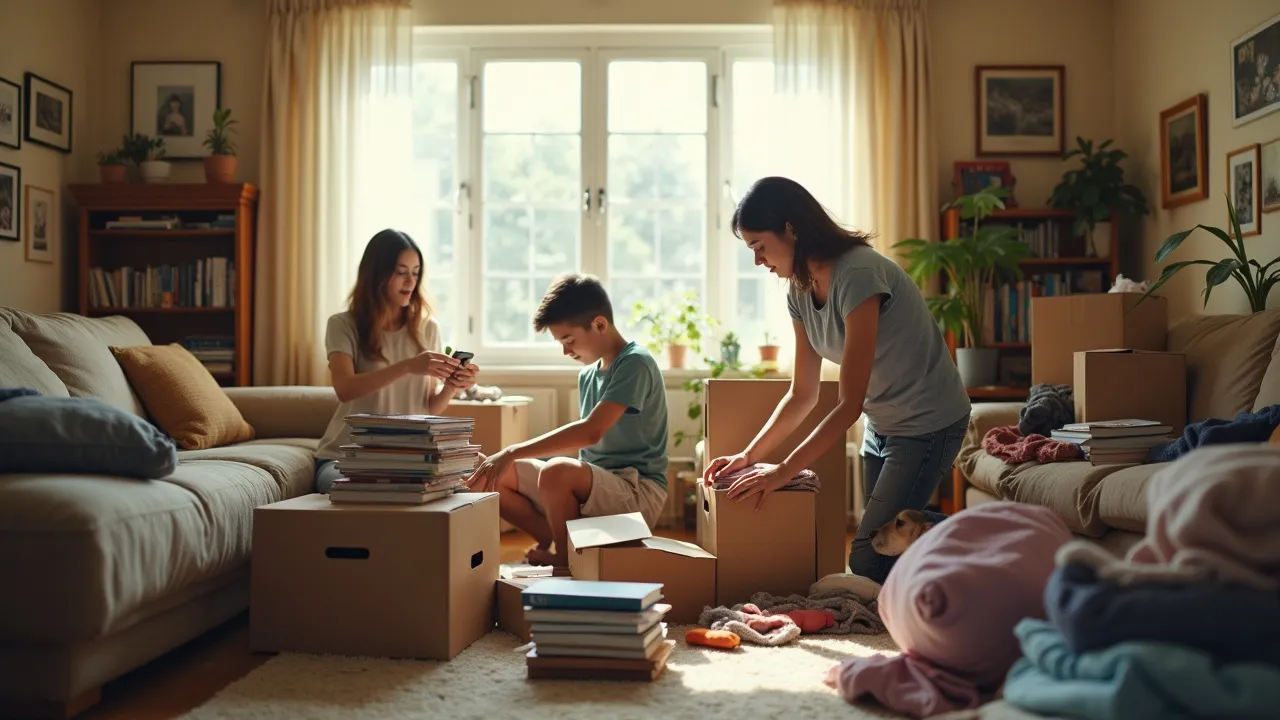
Organize Your Home Day on January 14th inspires millions to declutter and systematize their living spaces. Celebrated annually, it promotes productivity, mental clarity, and sustainable home management.
The Historical Origins & Evolutionary Journey
Organize Your Home Day was conceived in 2005 by the National Association of Productivity & Organizing Professionals (NAPO) to raise awareness about the profound impact of organized living. The day emerged from growing societal clutter crises fueled by post-war consumerism and the rapid expansion of mass retail.
The Foundational Catalyst
By the early 2000s, the average American home contained over 300,000 items, according to the UCLA Center on Everyday Lives of Families. This overload triggered mental health concerns, prompting professionals to advocate for systematic decluttering. NAPO, founded in 1985, seized the opportunity to establish a dedicated day.
Legislative & Official Adoption
While not a government holiday, Organize Your Home Day gained official recognition through NAPO's advocacy and partnerships with major home improvement retailers. By 2010, over 40 states had issued proclamations supporting the day, encouraging citizens to embrace organized lifestyles.
Modern Global Legacy
Today, the observance has crossed borders, inspiring similar movements in Japan (herishoku) and Scandinavia (less is more). Social media campaigns like #OrganizeYourHomeDay generate millions of impressions annually, turning January 14th into a global decluttering phenomenon.
How to Celebrate Organize Your Home Day
Organize Your Home Day is best celebrated by taking actionable steps toward a clutter-free environment. Below are proven strategies for individuals, schools, and organizations.
For Individuals & Families
- Start with one zone: Focus on a single drawer, shelf, or counter to avoid overwhelm.
- Use the 4-box method: Categorize items into keep, donate, recycle, and trash.
- Digitize paperwork: Scan important documents and shred unnecessary papers.
- Implement storage systems: Use clear bins, labels, and vertical shelving.
For Schools & Community Centers
- Organize supply drives for underfunded classrooms.
- Host decluttering workshops with professional organizers.
- Create 'exchange bins' for students to swap used books and toys.
For Corporations
Encourage employees to clean and organize workstations. Provide free shredding services and donate surplus office supplies to local charities. Some companies offer half-day leave for home organization tasks.
Global Traditions
In Japan, families practice "dan-shari" (reject, dispose, separate) during early January. Scandinavian celebrations emphasize minimalism with "hygge"-focused simplification. Australia aligns the day with summer cleaning before the school year begins.
The Profound Benefits of an Organized Home
Research consistently shows that organized environments directly improve mental and physical health. Below are key advantages backed by science.
Mental Clarity & Reduced Stress
A study from the Princeton University Neuroscience Institute found that visual clutter competes for attention, increasing cognitive load and stress levels. Organized spaces reduce cortisol production and enhance focus.
Increased Productivity
According to the National Association of Professional Organizers, the average person wastes 55 minutes per day searching for misplaced items. Systematic organization can reclaim up to 30 hours monthly, boosting efficiency.
Financial Savings
Organized homes prevent duplicate purchases. A Deloitte survey revealed that organized households save 20% on annual household goods costs by keeping track of inventory.
Improved Physical Health
Clean, clutter-free spaces reduce allergens, dust, and mold. The American Lung Association recommends regular decluttering to improve indoor air quality.
Room-by-Room Organization Strategies
Each room presents unique challenges. Tailor your approach with these expert tips.
Kitchen
- Group like items (pots, spices, utensils).
- Use drawer dividers and shelf risers.
- Purge expired foods and duplicate gadgets.
Bedroom
- Implement a capsule wardrobe to reduce clothing clutter.
- Use under-bed storage for off-season items.
- Keep nightstands minimal: only lamp, book, and phone station.
Home Office
Create a paper-flow system: inbox, action, archive. Digitize receipts and use cable management solutions to reduce desk clutter.
Garage & Storage
Install pegboards for tools, label all bins clearly, and use vertical wall space for bikes and ladders. Rotate seasonal items to accessible areas.
The Psychology of Clutter and Organization
Understanding why we accumulate clutter is crucial to maintaining an organized home. Psychological principles explain the attachment to objects and the resistance to letting go.
Emotional Attachment
The endowment effect causes us to overvalue items we own, making disposal difficult. Adopt the "joy test" popularized by Marie Kondo: keep only what sparks joy.
Decision Fatigue
Organizing requires dozens of small decisions, leading to fatigue. Break tasks into 15-minute sessions using a timer (Pomodoro technique) to maintain momentum.
Future Self Bias
We often keep items for a "future self" that may never need them. Challenge this by asking: "If I needed this, would I remember I have it?"
Hoarding Tendencies
For those struggling with hoarding disorder, professional help is essential. The International OCD Foundation provides resources for cognitive-behavioral therapy tailored to clutter.
Sustainable Organization: Eco-Friendly Decluttering
Organize Your Home Day aligns with environmental consciousness. Responsible disposal and reuse reduce landfill waste.
Donation Networks
Partner with charities like Goodwill, Salvation Army, and Habitat for Humanity Restore. Many offer pickup services.
Recycling Protocols
Electronic waste (e-waste) must be handled separately. Use certified recyclers like Best Buy or Earth911 for electronics. Textiles can be dropped at H&M or North Face recycling bins.
Upcycling Ideas
Transform old jars into storage containers, repurpose wooden pallets into shelving, and sew fabric scraps into cleaning rags. Upcycling reduces demand for new materials.
Mindful Purchasing
Prevent future clutter by adopting a one-in-one-out rule: for every new item brought in, one must leave. Prioritize quality over quantity and choose multi-functional furniture.
Historical Timeline
NAPO (National Association of Professional Organizers) is founded, laying the groundwork for a national organizing awareness day.
Organize Your Home Day is first observed on January 14th, initiated by NAPO to promote the benefits of decluttering.
Over 40 U.S. states officially proclaim January 14th as Organize Your Home Day, boosting media coverage and public participation.
The day gains international traction as organizing professionals in Canada, UK, and Australia adopt the date.
Social media campaigns using #OrganizeYourHomeDay reach 10 million impressions, making it a trending topic on Twitter.
Marie Kondo's Netflix series "Tidying Up" premieres, sparking a global organizing frenzy and boosting Organize Your Home Day awareness.
During the COVID-19 pandemic, organzing home becomes a coping mechanism; virtual workshops and decluttering challenges see record attendance.
Organize Your Home Day is recognized by the United Nations as a day to promote sustainable consumption via home organization.