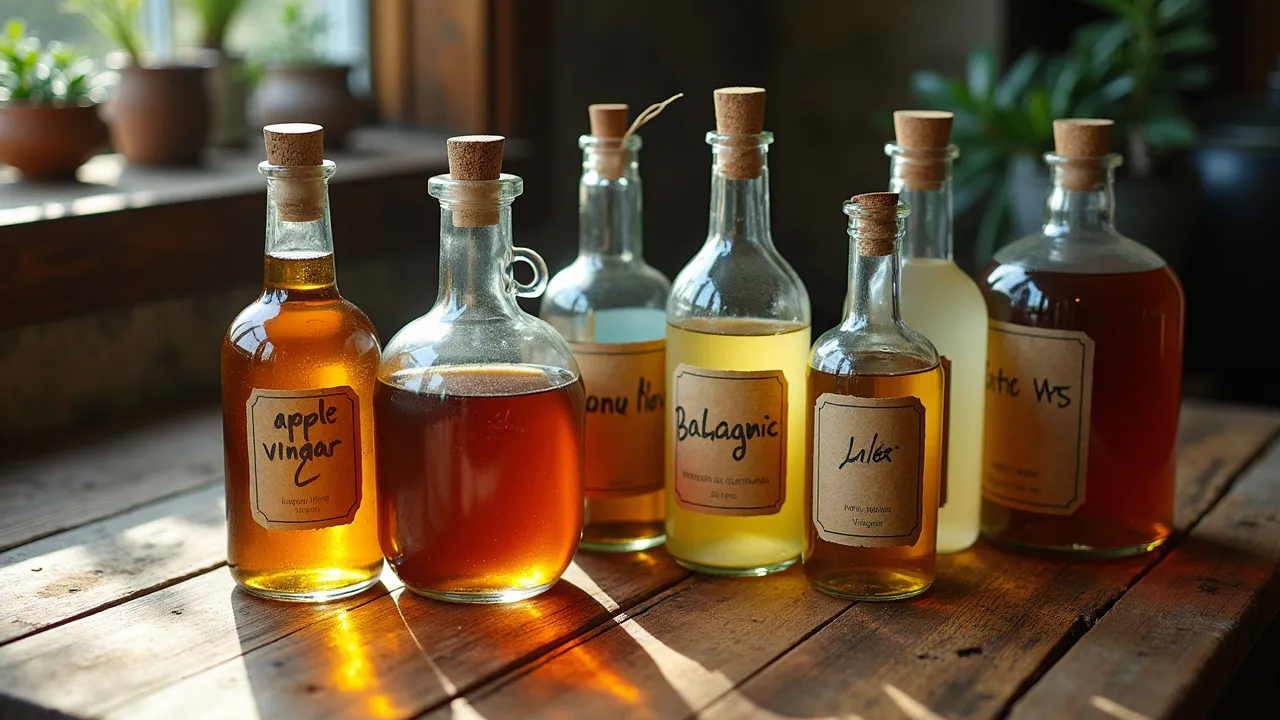
Celebrated on November 1st, National Vinegar Day honors the ancient condiment with a rich history spanning thousands of years. From culinary uses to health benefits and industrial applications, explore the multifaceted world of vinegar.
The Historical Origins & Evolutionary Journey of National Vinegar Day
National Vinegar Day, observed annually on November 1st, was established by The Vinegar Institute in 2010 to promote awareness and appreciation of vinegar's diverse roles. The date was chosen to mark the start of the holiday season when vinegar is heavily used in cooking and preservation.
The Foundational Catalyst: Vinegar's Ancient Roots
Vinegar's history predates recorded civilization. Discovered accidentally when wine fermented too long, it was used by ancient Babylonians (5000 BC) as a preservative and condiment. Hippocrates prescribed it for medicinal purposes, and Roman soldiers drank it as a refreshing beverage. The word 'vinegar' derives from French 'vin aigre' meaning sour wine.
Legislative/Official Adoption of the Day
The Vinegar Institute, a trade association representing vinegar producers, launched National Vinegar Day to educate consumers about vinegar types and uses. The day gained recognition through social media campaigns and partnerships with food bloggers. While not a federal holiday, it is widely observed by culinary enthusiasts and health advocates.
Modern Global Legacy
Today, National Vinegar Day is celebrated with cooking demonstrations, DIY cleaning workshops, and health seminars. The day also highlights vinegar's role in sustainable living—from natural household cleaners to organic gardening weed killers. International variations exist, such as Japan's 'Su no Hi' (Vinegar Day) on July 4th, and World Vinegar Day on the first Saturday of May. However, November 1st remains the primary US date.
Regional differences are significant: In the Philippines, vinegar is a key ingredient in adobo, and National Vinegar Day there aligns with local harvest festivals. In Mediterranean countries, balsamic vinegar festivals occur in fall, near November 1st. These diverse traditions underscore vinegar's universal appeal.
How to Celebrate National Vinegar Day
National Vinegar Day offers endless opportunities to explore this versatile liquid. Whether through cooking, cleaning, or gardening, here are actionable ways to mark the day.
Culinary Celebrations
- Vinegar Tasting Party: Sample different vinegars—apple cider, balsamic, rice, red wine—with pairing foods like olive oil, cheeses, and fruits.
- Pickle Everything: Try quick pickling cucumbers, onions, carrots, or even watermelon rinds. Use a brine of vinegar, water, salt, and spices.
- Elevate Dressings: Make homemade vinaigrettes with flavored vinegars, herbs, and mustard. Ratio: 3 parts oil to 1 part vinegar.
- Fermentation Fun: Start a batch of kombucha or fire cider—a spicy vinegar-based tonic.
Household & Personal Care
- Natural Cleaning: Mix equal parts water and vinegar to clean windows, countertops, and bathroom fixtures. Add essential oils for scent.
- Laundry Boost: Add half a cup of vinegar to rinse cycle to soften clothes and remove odors.
- Hair Rinse: Apple cider vinegar diluted with water can restore pH balance and add shine.
Educational & Community Events
Schools and community centers can host workshops on vinegar's history, science (the acetic acid fermentation process), and uses. Virtual events like webinars with vinegar producers are popular. Social media challenges encourage sharing vinegar recipes with #NationalVinegarDay.
International Traditions
In Italy, balsamic vinegar producers host tastings. In the US, The Vinegar Institute offers discounts on vinegar products. In Asia, rice vinegar is used in sushi-making demonstrations. These variations show vinegar's global footprint.
Health Benefits & Scientific Insights
Vinegar has been used medicinally for centuries, and modern research supports several benefits.
Blood Sugar Control
Studies show vinegar can improve insulin sensitivity by 34% after high-carb meals, making it useful for type 2 diabetes management.Weight Management
Acetic acid in vinegar may suppress appetite and reduce fat storage. A tablespoon before meals can increase feelings of fullness.Antimicrobial Properties
Vinegar kills pathogens like E. coli and Salmonella, making it a traditional food preservative. It also treats fungal infections like athlete's foot.Heart Health
Animal studies suggest vinegar lowers cholesterol and triglycerides, though human evidence is mixed. Important: Always dilute vinegar before consumption; undiluted acetic acid can damage tooth enamel and esophagus. Consult a healthcare provider before using vinegar therapeutically.Types of Vinegar and Their Unique Uses
The world of vinegar is diverse, with types defined by base ingredient and fermentation method.
| Type | Base | Best Uses |
|---|---|---|
| Balsamic | Grape must | Dressings, reductions, desserts |
| Apple Cider | Apple juice | Health tonics, marinades, cleaning |
| White Distilled | Grain alcohol | Cleaning, pickling, cooking |
| Rice | Fermented rice | Sushi, stir-fries, dipping sauces |
| Red Wine | Red wine | Salad dressings, sauces |
| Malt | Barley malt | Fish and chips, British condiment |
Vinegar in Industry & Sustainability
Beyond the kitchen, vinegar plays a vital role in agriculture, manufacturing, and environmental sustainability.
Agricultural Uses
As a natural herbicide, acetic acid in vinegar can kill weeds when sprayed directly. It also adjusts soil pH for acid-loving plants like blueberries.Industrial Applications
Vinegar is used in textile dyeing, rubber production, and as a solvent for certain chemicals. The global vinegar market exceeds $2 billion, with growth driven by organic and flavored varieties.Sustainable Living
Vinegar's biodegradable nature makes it an eco-friendly alternative to harsh chemicals. It reduces plastic waste when used with reusable spray bottles. Many zero-waste advocates recommend vinegar as a single-ingredient cleaner, replacing multiple commercial products. Fact: Vinegar can deodorize, disinfect, and descale without toxic residues.Vinegar in Culture & Folklore
Vinegar appears in idioms and traditions worldwide.
Proverbs & Sayings
The phrase 'you can catch more flies with honey than vinegar' emphasizes persuasion over negativity. In Chinese, 'eating vinegar' means jealousy.Historical Curiosities
Roman legionnaires consumed 'posca'—a vinegar and water drink—for endurance. In the Middle Ages, vinegar was used to prevent plague (ineffective).Superstitions
Some cultures believe spilling vinegar brings back luck, while others place a bowl of vinegar in a room to absorb negative energy. These beliefs, though not scientific, highlight vinegar's symbolic resonance.Historical Timeline
Ancient Babylonians use vinegar as a preservative and condiment, one of the earliest recorded uses.
Hippocrates prescribes vinegar for medicinal purposes, including treating coughs and sore throats.
Louis Pasteur discovers the role of bacteria (Acetobacter) in vinegar fermentation, laying the foundation for modern vinegar production.
Commercial vinegar production scales up with the development of the 'Orleans process' and submerged fermentation.
The Vinegar Institute establishes National Vinegar Day on November 1st to promote vinegar awareness in the United States.
Social media campaigns cause a surge in vinegar DIY skincare and cleaning tutorials, popularizing National Vinegar Day globally.
Pandemic-era interest in natural cleaning boosts vinegar sales; National Vinegar Day trends online with millions of impressions.