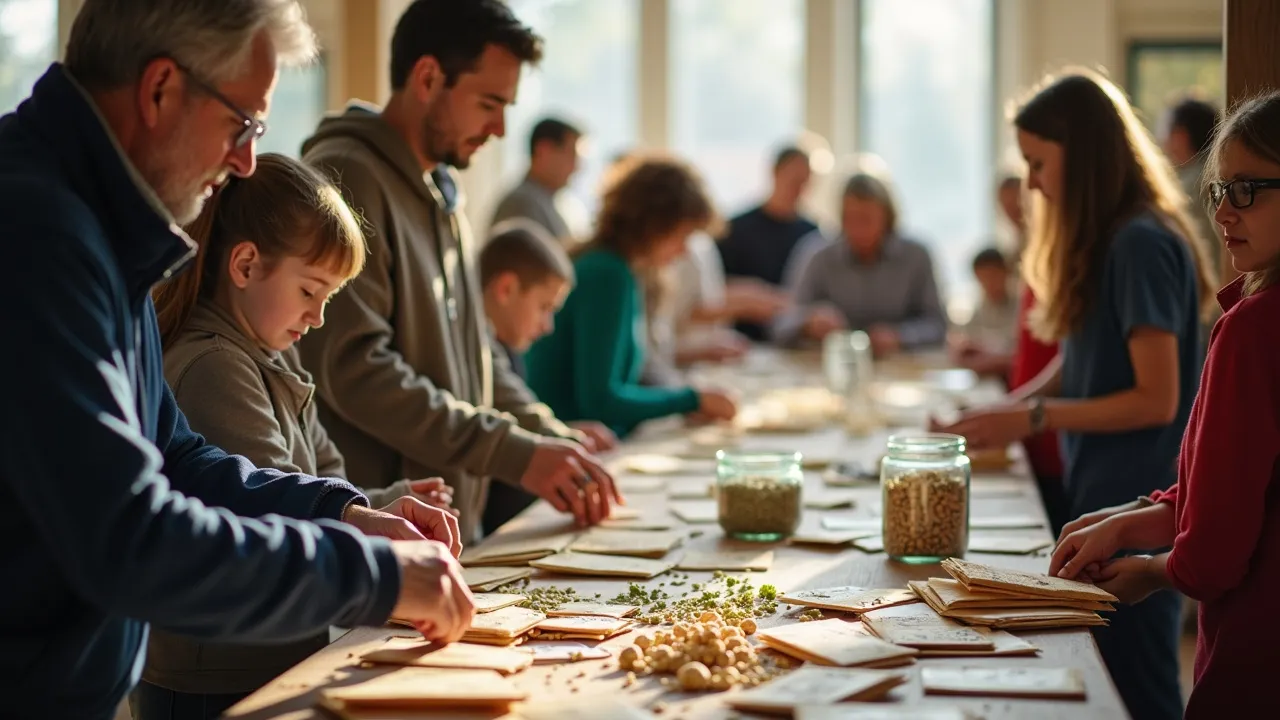
National Seed Swap Day, observed on the last Saturday of January, encourages gardeners to share seeds, preserve heirloom varieties, and build community. Join a local swap or start your own to support biodiversity and sustainable agriculture.
The Historical Origins and Evolutionary Journey
National Seed Swap Day traces its roots to ancient agricultural traditions where farmers and gardeners exchanged seeds to ensure crop resilience and diversity. The modern incarnation emerged in the early 21st century as a response to the loss of biodiversity and corporate consolidation of seed sources.
The Foundational Catalyst
In 1975, the Seed Savers Exchange was founded in Iowa to preserve heirloom varieties that were disappearing due to industrial agriculture. This grassroots organization inspired a network of seed libraries and community swaps. By the early 2000s, concern over genetically modified organisms (GMOs) and patent-protected seeds fueled a resurgence in seed saving.
The Legislative and Official Adoption
While no federal proclamation exists, National Seed Swap Day was unofficially established in 2006 by a coalition of gardening groups, including the Seed Savers Exchange and the American Community Gardening Association. They designated the last Saturday of January—a time when gardeners are planning spring plots but weather often keeps them indoors—as the perfect day to gather and share seeds.
Modern Global Legacy
Today, thousands of events occur across the United States, Canada, Australia, and Europe. The day has expanded beyond mere seed exchange to include workshops on seed saving, pollination, and sustainable gardening. It serves as a counterbalance to industrial monocultures, promoting seed sovereignty and local food systems.
How to Celebrate National Seed Swap Day
Participation can be as simple or elaborate as you wish. Below are actionable strategies for individuals, schools, and organizations.
For Individuals
- Attend a local swap: Use online directories like SeedSwapDay.org to find events near you. Bring clean, labeled seeds in envelopes with species, variety, and year.
- Start a backyard swap: Invite neighbors and friends. Set ground rules: only non-GMO, open-pollinated seeds preferred. Provide small containers and labels.
- Learn seed saving: Before swapping, ensure seeds are viable. Attend a workshop or watch online tutorials on proper drying and storage.
For Schools and Educational Groups
- Organize a seed science day: Combine swapping with lessons on plant biology, germination, and the importance of genetic diversity.
- Create a school seed library: Start a collection of seeds that students can borrow and return after harvest. Include flowers, vegetables, and native plants.
For Community Gardens and Organizations
- Host a seed fair: Partner with local nurseries, Master Gardeners, and agricultural extension offices. Offer talks on heirloom varieties and organic gardening.
- Incorporate a seed bank: Use the event to launch a community seed bank, ensuring rare varieties are preserved for future seasons.
In Canada, many swaps coincide with the end of January thaw in coastal regions. In Europe, especially the UK, seed swaps are often part of larger permaculture gatherings. Australia holds swaps during their summer, adjusting the date locally, though National Seed Swap Day remains US-focused.
The Environmental and Agricultural Impact
Seed swapping is a direct action against biodiversity loss. Modern agriculture relies on a handful of commercial varieties, leaving crops vulnerable to disease and climate change. By exchanging diverse seeds, communities help maintain a genetic reservoir.
Benefits to Soil and Ecosystems
- Improved soil health: Heirloom varieties often have deeper root systems that improve soil structure and reduce erosion.
- Pollinator support: Many heirloom plants produce more nectar and pollen, benefiting bees and butterflies.
- Reduced chemical input: Locally adapted seeds often require fewer pesticides and fertilizers, lowering the carbon footprint of gardening.
Case Study: The Victory Seed Movement
During World War II, citizens grew "victory gardens" and shared seeds to boost food security. Modern swaps echo that spirit, preparing communities for supply chain disruptions. A 2020 study found that neighborhoods with active seed swaps had 30% higher food resilience during crises.
Community Building and Seed Sovereignty
National Seed Swap Day is as much about people as it is about plants. It strengthens social ties and reasserts control over food sources.
Seed Sovereignty Defined
Seed sovereignty is the right of farmers and gardeners to save, use, and exchange seeds without legal or commercial restriction. Large corporations hold patents on genetically modified seeds, forcing annual purchases. Swaps challenge this model by keeping seeds as a commons.
How Swaps Build Community
- Knowledge transfer: Experienced gardeners share tips with novices, passing down traditional cultivation methods.
- Cultural preservation: Immigrant communities often bring seeds from their homelands, preserving culinary and medicinal traditions.
- Local food networks: Swaps can lead to neighborhood produce exchanges and farmers' markets, strengthening local economies.
In Indigenous communities, seed swaps are also a form of decolonization, reclaiming ancestral varieties like Three Sisters (corn, beans, squash) that were suppressed by colonial policies.
The Role of Seed Libraries and Seed Banks
Seed libraries function like book libraries: members "borrow" seeds, grow the plants, and return seeds from the harvest. National Seed Swap Day is a prime opportunity to launch or restock these collections.
How Seed Libraries Work
- Membership model: Free or low-cost membership allows patrons to take a limited number of packets.
- Volunteer-run: Most libraries rely on volunteers to clean, test, and package seeds.
- Partnerships: Many partner with public libraries, botanical gardens, or extension offices.
Global Seed Banks
For long-term storage, institutions like the Svalbard Global Seed Vault in Norway hold duplicates of seeds from around the world. While not a swap, these banks complement local efforts by safeguarding varieties against global catastrophes. National Seed Swap Day raises awareness about the importance of these repositories.
Global Perspectives and Regional Variations
While the official National Seed Swap Day is US-centric, similar events occur worldwide on different dates. Below is a breakdown of regional practices.
United States and Canada
Observed on the last Saturday of January. Major events in cities like Burlington, VT (hosted by the Intervale Center) and Portland, OR (Hardy Plant Society) attract hundreds of participants.
Europe
Countries like Germany and France hold "seed exchange festivals" in February or March, aligning with later spring planting. The UK's Seedy Sunday (first Sunday in February) is a major national event since 2006.
Australia and New Zealand
Because of reversed seasons, swaps occur in August (late winter) to prepare for spring. The Australian Seed Savers Network coordinates events nationally.
Asia and Africa
Traditional seed swaps are common among smallholder farmers but rarely formalized. NGOs often host community seed banks and fairs timed to local planting cycles.
Historical Timeline
Seed Savers Exchange is founded in Iowa by Diane Ott Whealy and Kent Whealy, launching the modern seed-saving movement.
First community seed library opens at the Berkeley Public Library, inspiring hundreds of similar initiatives.
National Seed Swap Day is informally established by gardening organizations, held on the last Saturday of January.
Svalbard Global Seed Vault opens in Norway, providing a backup for the world's crop seeds.
The Seed Exchange Day movement goes viral on social media, with hundreds of events listed online.
During the COVID-19 pandemic, virtual seed swaps emerge, boosting participation and food security.
Over 1,200 registered seed swaps occur across all 50 US states, reflecting growing interest in sustainable gardening.