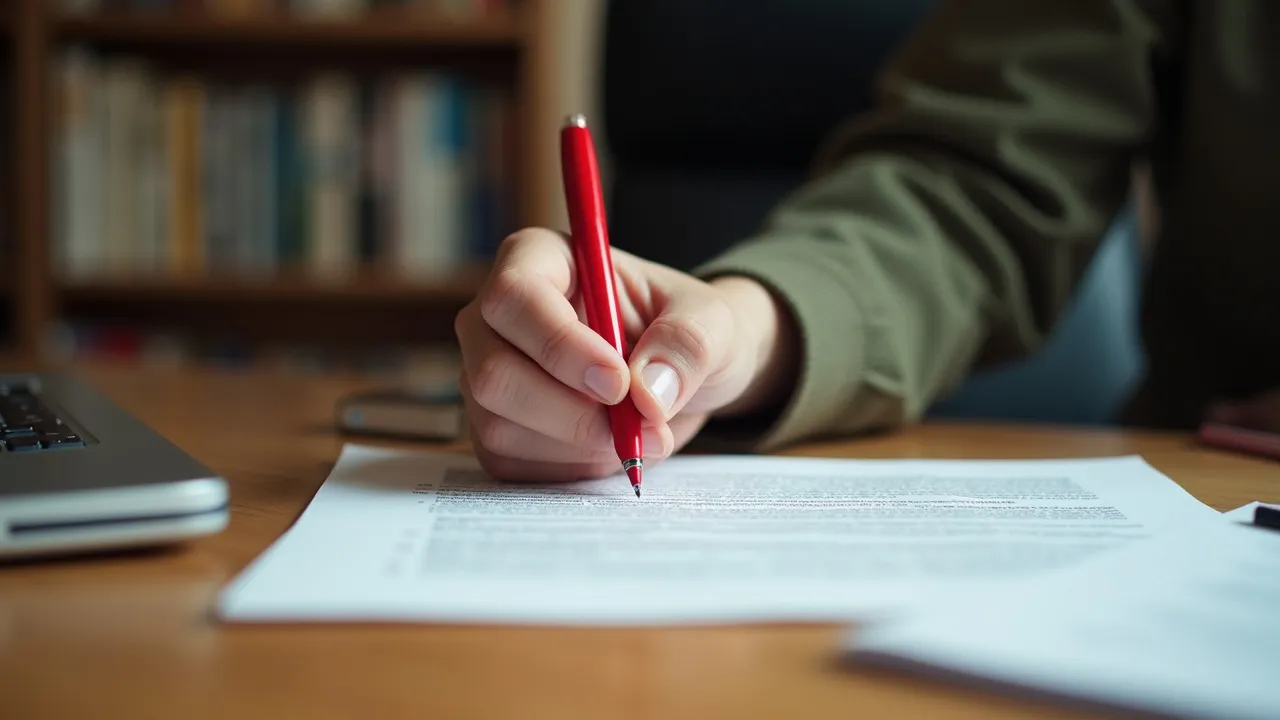
National Proofreading Day on March 8th encourages everyone to review their writing for errors. Founded by proofreader Judy Beaver in 2011, the day promotes clear, accurate communication.
The Historical Origins & Evolutionary Journey
National Proofreading Day, observed annually on March 8th, traces its origins to a simple but powerful idea: the importance of clear, error-free communication. The day was founded by Judy Beaver, a professional proofreader, in 2011. Beaver was inspired by her mother, who was also a proofreader, and chose March 8th to coincide with her mother's birthday.
The Foundational Catalyst
Judy Beaver, a long-time proofreader for a publishing house, was constantly dismayed by the sheer number of typos, grammatical errors, and formatting inconsistencies she encountered in daily life—from restaurant menus to corporate memos. She felt that many people simply did not take the time to review their writing. In 2010, Beaver decided to create a day dedicated to raising awareness about the importance of proofreading. She launched National Proofreading Day on March 8, 2011, with a mission to encourage everyone to double-check their work before hitting send or publish. The date was chosen not only for its personal significance but also because it falls between two other communication-related observance days, making it a natural fit for a focused campaign.
The Official Adoption and Growth
While National Proofreading Day has not been adopted as an official federal holiday, it has gained widespread recognition through online communities, educational institutions, and publishing professionals. Social media platforms like Twitter and LinkedIn saw a surge in posts using #NationalProofreadingDay, leading to increased visibility. Many schools and universities now incorporate proofreading exercises into their curriculum on this day, and businesses encourage employees to take extra time to review documents. The day has also been recognized by several professional writing organizations, which issue annual tips and host webinars on proofreading best practices.
Modern Global Legacy
Today, National Proofreading Day is celebrated not only in the United States but also in many English-speaking countries around the world. It serves as a reminder that careful attention to detail can prevent misunderstandings, enhance credibility, and improve overall communication. The day has also sparked discussions about the role of automated tools like spell-checkers versus human proofreading, emphasizing that technology is not infallible. In the digital age, where content is produced rapidly, the day reminds us that a few extra minutes of review can make a significant difference in the quality of our writing.
How to Celebrate National Proofreading Day
National Proofreading Day is a call to action for individuals, schools, and organizations to prioritize careful review of written content. Here are specific ways to celebrate:
For Individuals
- Review a past document: Choose an email, report, or social media post you have written recently and read it aloud. Reading aloud helps catch awkward phrasing and errors you might otherwise miss.
- Use a checklist: Create a proofreading checklist covering common errors such as subject-verb agreement, punctuation, homophones (e.g., 'their/there/they're'), and spelling.
- Peer review exchange: Swap a document with a friend or colleague and review each other's work. A fresh pair of eyes often spots mistakes the original writer overlooked.
For Schools and Educational Institutions
- Proofreading workshops: Organize an interactive workshop where students practice proofreading exercises. Include real-world examples like menus, advertisements, or news articles with intentional errors.
- Bulletin boards: Create a display highlighting common grammar mistakes and their corrections. Use colorful visuals to engage students.
- Classroom competition: Hold a proofreading contest with small prizes for students who find the most errors in a given text.
For Organizations and Businesses
- Team challenge: Encourage employees to submit a paragraph of their work for a 'best proofread' award. Recognize the winner in a company newsletter.
- Proofreading tips session: Host a lunch-and-learn where a professional editor shares techniques for effective self-editing.
- Document audit: Spend part of the day auditing company documents such as client emails, reports, and marketing materials to ensure they are error-free.
Global Celebrations
While National Proofreading Day originated in the U.S., it has spread worldwide via social media. In India, writing societies often conduct online proofreading quizzes. In the UK, publishing houses use the day to launch internal quality checks. In Australia, schools incorporate proofreading into literacy programs. The day's universal appeal lies in its focus on improving written communication across cultures.
The Importance of Proofreading in the Digital Age
In an era of rapid digital communication, proofreading has never been more critical. A single typo in an email can damage professional credibility; a grammatical error in a marketing headline can undermine brand trust. National Proofreading Day highlights the value of careful editing in an environment where first impressions are often formed through written text.
Impact on Professional Credibility
Studies show that 75% of people judge a company's credibility based on its written content. Errors in business communications, such as proposals, websites, or social media posts, can lead to lost clients and revenue. Proofreading ensures that messaging is polished and professional, reinforcing trust and authority.
Role in Education
In academic settings, proofreading is essential for clear expression of ideas. It helps students avoid point deductions for careless mistakes and teaches them the importance of revision. Many universities now require proofreading courses as part of their writing programs.
Psychological Benefits
Taking the time to proofread can also reduce anxiety about one's writing. Knowing that your work has been carefully checked boosts confidence when submitting or publishing. It also fosters a mindset of continuous improvement and attention to detail.
Common Proofreading Techniques and Tools
Effective proofreading requires a combination of traditional techniques and modern tools. Here are the most widely used methods:
Manual Techniques
- Read aloud: Hearing the words helps identify awkward sentence structures and missing words.
- Print it out: Reviewing a physical copy often reveals errors missed on screen.
- Read backward: Start from the last word of the document and read each word individually to focus on spelling.
- Use a ruler: Place a ruler under each line to slow down your reading and avoid skipping.
Digital Tools
- Grammarly: Checks grammar, punctuation, style, and tone. Offers suggestions for clarity.
- Hemingway Editor: Highlights complex sentences and passive voice, promoting readability.
- ProWritingAid: Provides in-depth reports on overused words, sentence length, and readability.
- Google Docs spell-check: Basic but effective for catching obvious errors.
While tools are helpful, they are not foolproof. Homophones and context-specific errors often slip through. Therefore, human review remains indispensable.
The Psychology of Error-Free Writing
Writing is a cognitive process that involves multiple brain functions. Errors often occur due to cognitive overload or familiarity bias—where the writer's brain autocorrects what it expects to see. National Proofreading Day encourages an understanding of these psychological factors.
Why We Miss Our Own Mistakes
The brain processes familiar text efficiently, sometimes filling in gaps without conscious awareness. This is why we can read a sentence multiple times without noticing a missing word. Proofreading forces us to slow down and engage the analytical part of the brain.
Strategies to Overcome Bias
Taking a break before reviewing, changing the font or background color, and using text-to-speech software are techniques that help break familiarity. By stepping out of the writer's mindset, we become more objective reviewers.
The Satisfaction of Perfection
Submitting error-free work provides a sense of accomplishment and reduces future stress. It also reflects respect for the reader's time and intelligence. National Proofreading Day celebrates this dedication to quality.
National Proofreading Day: Impact on Industries
Proofreading is essential across multiple industries, from publishing to healthcare, where accuracy can have serious consequences.
Publishing and Journalism
In publishing, a single typo can lead to costly reprints or damage an author's reputation. Newspapers and online media rely heavily on proofreaders to ensure factual and grammatical accuracy before publication.
Legal and Financial Sectors
In legal documents, a misplaced comma can change the meaning of a contract. In finance, errors in reports can lead to regulatory fines or misinformed investment decisions. Proofreading in these fields is a critical risk management practice.
Healthcare and Pharmaceuticals
Patient safety depends on accurate medical records and prescription instructions. Errors in dosage information or patient notes can have life-threatening consequences. National Proofreading Day reinforces the importance of vigilance in healthcare writing.
The Future of Proofreading: AI and Human Collaboration
As artificial intelligence advances, the role of proofreading is evolving. National Proofreading Day provides an opportunity to reflect on how technology and human skills can work together.
AI-Assisted Proofreading
AI tools like GPT-based editors can catch errors and suggest improvements at unprecedented speeds. They are particularly useful for large volumes of text and routine corrections.
Limitations of AI
AI still struggles with nuance, irony, and context-specific errors. It cannot fully replace the human ability to understand intent, tone, and cultural references.
Hybrid Approach
The most effective proofreading combines automated tools for first-pass checks with human review for final quality assurance. This synergy ensures efficiency without sacrificing depth. National Proofreading Day encourages embracing technology while maintaining the human touch.
Historical Timeline
Judy Beaver founds National Proofreading Day on March 8th, inspired by her mother's birthday and career as a proofreader.
First official celebration; social media campaigns using #NationalProofreadingDay begin to gain traction.
The day is increasingly adopted by schools and universities for proofreading exercises and workshops.
Virtual events and webinars become popular due to the pandemic, emphasizing the importance of error-free digital communication.
National Proofreading Day is recognized by several professional writing organizations, and annual tips are widely shared.