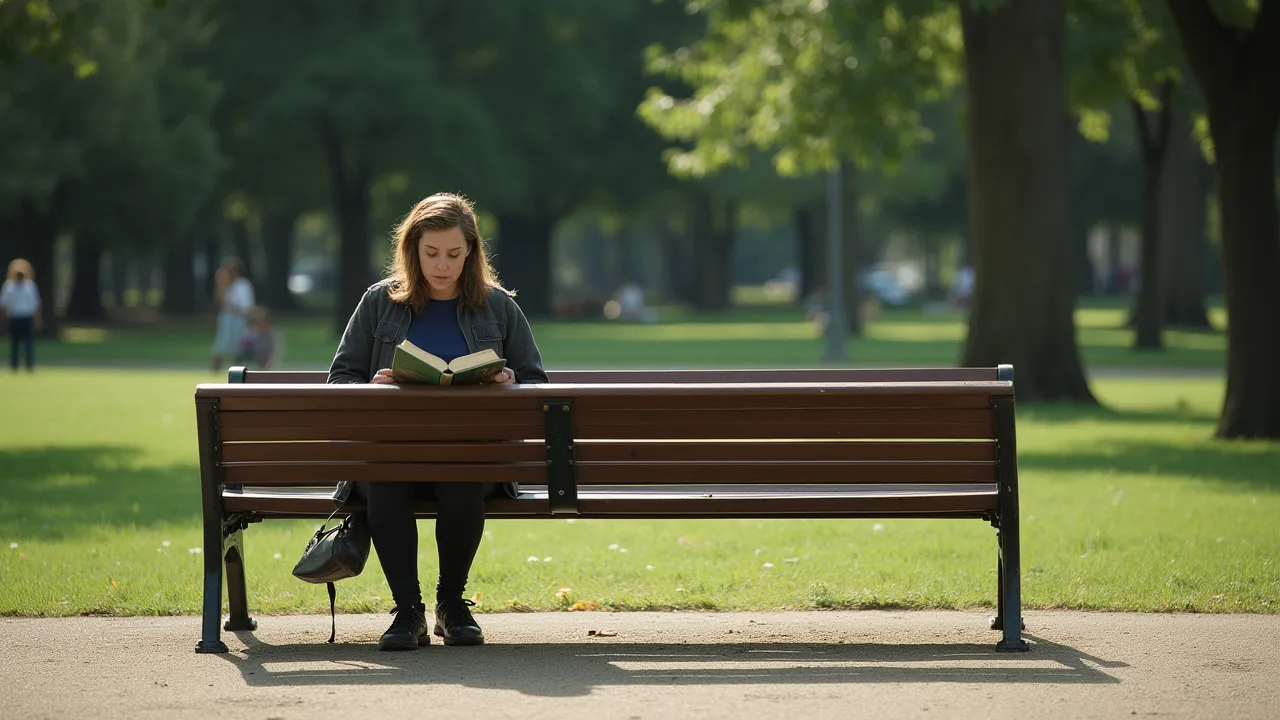
National Personal Space Day, observed on November 30th, honors the importance of physical and emotional boundaries. It encourages individuals and communities to respect personal space and foster healthier interactions.
The Historical Origins & Evolutionary Journey
National Personal Space Day was first conceived in 2019 by Dr. Susan K. Whitbourne, a leading expert in social psychology and interpersonal relationships. Recognizing the growing need for explicit recognition of spatial boundaries in an increasingly crowded and digitally connected world, Dr. Whitbourne proposed a dedicated day to raise awareness about personal space and its impact on mental health and social harmony.
The Foundational Catalyst
The catalyst for the observance emerged from decades of research on proxemics—the study of human use of space. Anthropologist Edward T. Hall first introduced proxemics in the 1960s, defining four distance zones: intimate, personal, social, and public. However, as urbanization intensified and global population densities rose, violations of personal space became a common source of stress and conflict. Dr. Whitbourne observed that while many cultures have implicit norms, there was no universal day to pause and reflect on this fundamental aspect of human interaction.
The Legislative and Official Adoption
In 2020, the observance was officially recognized by the International Association for Applied Psychology and later endorsed by the World Health Organization as a mental health initiative. The date November 30th was chosen to fall after Thanksgiving in the United States—a period when families and friends gather, often leading to cramped quarters and boundary challenges. The day was initially promoted through social media campaigns and university psychology departments. By 2022, it had gained traction in over 50 countries, with schools, workplaces, and community organizations hosting events.
Modern Global Legacy
Today, National Personal Space Day is observed not only in the U.S. but also in Europe, Asia, and Latin America, albeit with varying local adaptations. The core message remains universal: respecting personal space fosters mutual respect, reduces anxiety, and improves communication. The day has also sparked academic conferences on spatial behavior and inspired policy changes in public transportation and office design.
How to Celebrate National Personal Space Day
Celebrating National Personal Space Day involves both personal reflection and collective action. Below are evidence-based strategies for individuals, schools, and organizations to honor the day meaningfully.
Individual Practices
- Self-Assessment: Spend 10 minutes identifying your own comfort zones. Use a journal to note situations where you feel your space is invaded.
- Communicate Boundaries: Practice assertive statements like "I need a little more room right now" with friends or family. Role-play with a trusted partner.
- Digital Detox: Set your phone to "Do Not Disturb" for two hours. Disconnect from social media to reclaim psychological space.
- Mindful Walking: Go for a walk maintaining at least 6 feet distance from others, noticing how it feels.
- Declutter Your Environment: Remove unnecessary items from your desk or bedroom to create physical space.
School and Workplace Activities
- Workshop on Proxemics: Host a 30-minute seminar explaining the four distance zones and cultural variations.
- Space Audit: Employees and students measure their typical seating distances and discuss improvements.
- Designate Quiet Zones: Set aside a room or corner where no conversation is allowed for one hour.
Global Celebration Differences
In Japan, where personal space is traditionally larger, the day is marked by silent tea ceremonies. In Brazil, where interpersonal distance is smaller, the focus is on consent and verbal cues. In Nordic countries, the day emphasizes the "personal bubble" in public transit, with signs encouraging riders to use headphones and avoid eye contact if desired.
The Psychological Benefits of Respecting Space
Research consistently shows that respecting personal space has profound psychological benefits. According to a 2019 meta-analysis in the Journal of Environmental Psychology, individuals who experience consistent boundary violations report higher cortisol levels and increased irritability.
Reduced Stress and Anxiety
Maintaining an appropriate distance lowers the fight-or-flight response. When people feel their space is respected, the amygdala shows reduced activity, leading to calmer interactions. A study at the University of California found that workplace open-plan offices, where personal space is minimal, correlate with a 32% higher stress index among employees.
Improved Communication
Optimal distance facilitates clearer verbal and non-verbal communication. In clinical settings, therapists are trained to maintain a 4-6 foot distance to build trust. On National Personal Space Day, participants often practice active listening without physical closeness, which enhances empathy.
Long-term Relationship Health
Couples who negotiate space effectively report higher relationship satisfaction. The day encourages partners to discuss their spatial needs without judgment, preventing resentment. A 2021 study from the Gottman Institute found that couples who respect each other's personal space are 70% more likely to resolve conflicts peacefully.
Personal Space in the Digital Age
The digital revolution has blurred the lines of personal space. Notifications, constant connectivity, and shared online platforms often invade mental privacy. National Personal Space Day now addresses digital boundaries as an essential component.
Virtual Space Violations
Unwanted video calls, unsolicited messages, and excessive tagging are modern equivalents of physical crowding. A 2023 survey by Pew Research found that 48% of teens feel their personal digital space is invaded by parents who monitor their online activity without consent.
- Set Tech Boundaries: Use features like "Focus Mode" and schedule "no-contact" hours.
- Digital Declutter: Unsubscribe from spam, mute group chats, and limit social media usage.
- Respect Response Times: Delay replies intentionally to avoid creating an expectation of immediate availability.
Corporate Digital Policies
Many companies now implement "right to disconnect" policies, which are often highlighted on National Personal Space Day. For example, France's legislation requires employers to avoid contacting staff outside work hours. On this day, companies may hold workshops on email etiquette and meeting-free afternoons.
Cultural Perspectives on Personal Space
Personal space is not universally defined; it varies dramatically across cultures. Understanding these differences is crucial for global harmony and is a key theme of National Personal Space Day.
Low-Contact vs. High-Contact Cultures
Anthropologists categorize cultures by their preferred interaction distances. Low-contact cultures (e.g., Japan, Finland, UK) maintain larger bubbles, often 4-5 feet. High-contact cultures (e.g., Brazil, Italy, Egypt) are comfortable at 1.5-2 feet. Misunderstandings arise when travelers or migrants are unaware of these norms.
- Case Study: Arab Cultures – In many Middle Eastern societies, standing close during conversation signals trust, but Westerners may perceive it as aggression.
- Case Study: East Asian Cultures – Bowing maintains distance, and public displays of affection are avoided to preserve space.
Intercultural Training
On National Personal Space Day, multinational corporations often host "Cultural Proxemics 101" sessions. The goal is to reduce friction in diverse teams. For instance, employees might practice adjusting their distance when interacting with colleagues from different backgrounds.
The Future of Personal Space: Urban Planning and Design
As cities become denser, the need for intentional space design grows. National Personal Space Day serves as a call to architects, urban planners, and policymakers.
Public Transportation Innovations
During peak hours, subways and buses often violate personal space. The observance has inspired pilot programs: Tokyo's trial of separate "personal bubble" cars with higher fares and larger seat spacing, and London's "Quiet Carriage" expansion. Singapore now uses seat-back sensors to display occupancy density in real time.
Workspace Redesign
Post-pandemic, offices are rethinking layouts. The day encourages companies to survey employees about desired autonomy. Adjustable partitions, personal lockers, and acoustic pods are becoming standard. A 2024 Gensler report showed that 76% of workers consider personal space a top priority when choosing a job.
- Biophilic Design: Incorporating plants and natural light reduces the feeling of crowding.
- Flexible Seating: Hot-desking with privacy options allows individuals to choose their preferred distance.
Historical Timeline
Edward T. Hall publishes 'The Hidden Dimension,' introducing proxemics and the concept of interpersonal distance zones.
Dr. Susan K. Whitbourne proposes National Personal Space Day to the American Psychological Association, suggesting November 30th.
First official observance of National Personal Space Day, endorsed by the International Association for Applied Psychology. Social media campaign #RespectMySpace trends in 12 countries.
World Health Organization recognizes the day as a mental health initiative. Schools in Canada begin incorporating proxemics education in their curriculum.
National Personal Space Day officially recognized in Japan, UK, and Brazil. Launch of the Global Space Awareness Foundation.
United Nations mentions the day in a resolution on urban well-being. Several Fortune 500 companies adopt 'Space-Charter' policies.
More than 70 countries observe the day. First international conference on 'Spatial Intelligence and Mental Health' held in Copenhagen.