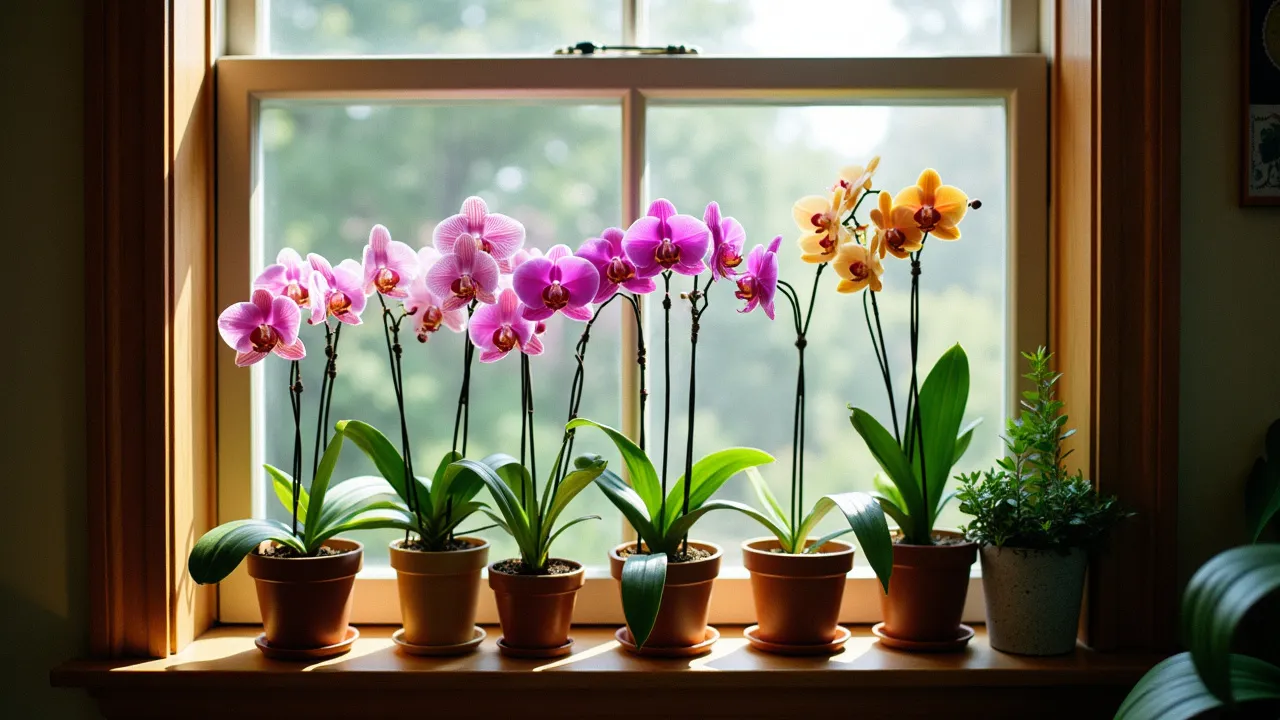
National Orchid Day on April 16th celebrates the exquisite beauty, diversity, and cultural significance of orchids worldwide, honoring their role in horticulture, art, and conservation.
The Historical Origins & Evolutionary Journey
National Orchid Day, observed annually on April 16th, was established in 2015 by the American Orchid Society (AOS) to promote the appreciation and conservation of orchids. This date was chosen to coincide with the peak blooming season of many orchid species in the Northern Hemisphere, making it an ideal time for enthusiasts to showcase their collections.
The Foundational Catalyst
The inception of National Orchid Day arose from a growing need to raise public awareness about orchids—the largest family of flowering plants, with over 28,000 species. The AOS, founded in 1921, had long been a hub for orchid education, but a dedicated day allowed for broader outreach. The catalyst was the increasing threat to orchid habitats from deforestation and illegal trade, prompting conservationists to seek a platform for advocacy.
The Legislative/Official Adoption
While not a federal holiday, National Orchid Day gained official recognition through proclamations by state governments and botanical institutions. In 2016, the AOS launched a petition that garnered support from orchid societies worldwide, leading to its inclusion in many horticultural calendars. Key milestones include the first official celebration at the Smithsonian Gardens in Washington, D.C., where rare orchids were displayed.
Modern Global Legacy
Today, National Orchid Day is celebrated in over 40 countries, with events ranging from orchid shows in Thailand to conservation workshops in Brazil. The day has evolved to highlight not only ornamental beauty but also orchids' roles in medicine (e.g., vanilla from Vanilla planifolia) and scientific research (e.g., their symbiotic relationships with fungi).
How to Celebrate National Orchid Day
Celebrating National Orchid Day can be as simple as admiring a bloom or as involved as starting a conservation project. Here is a definitive guide to observing the day with depth and meaning.
For Individuals
- Visit a local orchid show or botanical garden. Many institutions offer free admission on April 16th.
- Start your own orchid collection with beginner-friendly species like Phalaenopsis. Attend a workshop on basic care.
- Share your orchid photos on social media using #NationalOrchidDay to connect with fellow enthusiasts.
For Schools and Educational Groups
- Organize a classroom presentation on orchid diversity and pollination strategies (e.g., mimicry, scent).
- Conduct a hands-on activity: dissecting an orchid flower to understand its unique reproductive structures.
- Launch a fundraising campaign for orchid conservation, such as supporting the Orchid Conservation Coalition.
For Organizations and Businesses
- Host a public orchid exhibition highlighting rare and endangered species from your region.
- Offer discounts on orchid plants and supplies to encourage adoption.
- Partner with local conservation groups to restore orchid habitats in parks or nature reserves.
Global Variation Notes
In countries with distinct orchid seasons, local celebrations may shift: for example, Singapore celebrates its National Orchid Day in October to coincide with its annual orchid show, and parts of Australia observe it in September during spring. Always check regional orchid society calendars.
The Cultural & Horticultural Significance of Orchids
Orchids have captivated human culture for centuries, symbolizing love, luxury, and strength. In ancient Greece, orchids were associated with fertility; in Victorian England, they became a status symbol for the elite. Today, National Orchid Day underscores their ecological importance as bioindicators and their economic value as a multibillion-dollar floriculture industry.
Symbolism Across Cultures
- China: Orchids represent integrity and elegance, often depicted in traditional paintings.
- Japan: The samurai viewed orchids as symbols of bravery.
- Aztec civilization: Mixed vanilla orchids with cocoa to create a royal drink.
Horticultural Achievements
Modern hybridization has produced over 100,000 registered cultivars, with the moth orchid (Phalaenopsis) being the most popular houseplant. National Orchid Day encourages growers to explore heirloom species and support sustainable practices like using biodegradable pots.
Orchid Diversity & Conservation Efforts
Orchids are found on every continent except Antarctica, with the highest diversity in tropical regions. However, many species face extinction due to habitat loss and over-collection. National Orchid Day highlights critical conservation initiatives.
Threats to Orchids
- Deforestation: 70% of orchid species grow in trees; logging destroys their habitats.
- Illegal trade: Rare orchids are poached for private collections despite CITES regulations.
- Climate change: Altered rainfall and temperature patterns disrupt pollination cycles.
Success Stories
Programs like the Orchid Seed Store Project at the Royal Botanic Gardens, Kew, have cryopreserved seeds of 200+ species. In Singapore, the National Orchid Garden serves as a living seed bank. National Orchid Day promotes participation in citizen science projects, such as documenting wild orchid populations via iNaturalist.
Economic Impact & Global Trade
The orchid industry generates over $1.5 billion annually, with the Netherlands, Thailand, and Taiwan leading exports. National Orchid Day sheds light on the economic importance of orchids, from cut flowers to potted plants.
Key Markets
- Cut flowers: Dendrobium and Cymbidium are top sellers for bouquets.
- Pot plants: Phalaenopsis accounts for 80% of retail sales.
- Vanilla: Vanilla planifolia is the second most expensive spice after saffron.
Ethical Considerations
The day encourages consumers to buy from certified sustainable growers and avoid wild-collected specimens. Initiatives like the Orchid Fair Trade label help ensure fair wages for farmers in developing countries.
Scientific Research & Medicinal Applications
Orchids are not just ornamental; they hold significant potential in medicine and biotechnology. National Orchid Day highlights research into their unique adaptations.
Traditional Medicine
In Ayurveda, orchids like Vanda roxburghii are used to treat inflammation and wounds. Chinese medicine employs Dendrobium nobile to boost immunity and hydration.
Modern Discoveries
Anti-cancer compounds: Some orchid alkaloids show promise against tumor cells.
Symbiosis studies: Orchid mycorrhizal fungi help crops like wheat resist drought.
Biomimicry: Orchid petal microstructures inspire water-repellent materials.
Global Traditions & Regional Celebrations
National Orchid Day is observed with unique local traditions worldwide, reflecting the cultural importance of orchids.
Thailand
Thailand celebrates with massive orchid parades and floating markets decorated with flowers. The day is tied to the 'Amazing Thailand Orchid Festival', which attracts tourists.
Brazil
Brazil hosts orchid rescue events where volunteers save plants from deforestation sites. Native species like Cattleya labiata are spotlighted.
United States
Major botanical gardens, such as the New York Botanical Garden, offer orchid tours and lectures. Many orchid societies hold annual auctions to raise funds for conservation.
Singapore
Though celebrated on a different date (October), Singapore's National Orchid Day includes the naming of new hybrid cultivars after VIPs, a tradition since 1956.
Historical Timeline
Carl Linnaeus publishes 'Species Plantarum', officially classifying the orchid genus (Orchis).
John C. Hare, a renowned orchid collector, begins mass hybridization, leading to modern orchid varieties.
Founding of the American Orchid Society (AOS) in Boston to promote orchid education and culture.
First synthetic orchid seed germination achieved, revolutionizing propagation.
CITES lists all orchid species in Appendix I or II, regulating international trade.
First official National Orchid Day celebration on April 16, initiated by the AOS.
Virtual orchid shows replace in-person events due to the COVID-19 pandemic, expanding global participation.