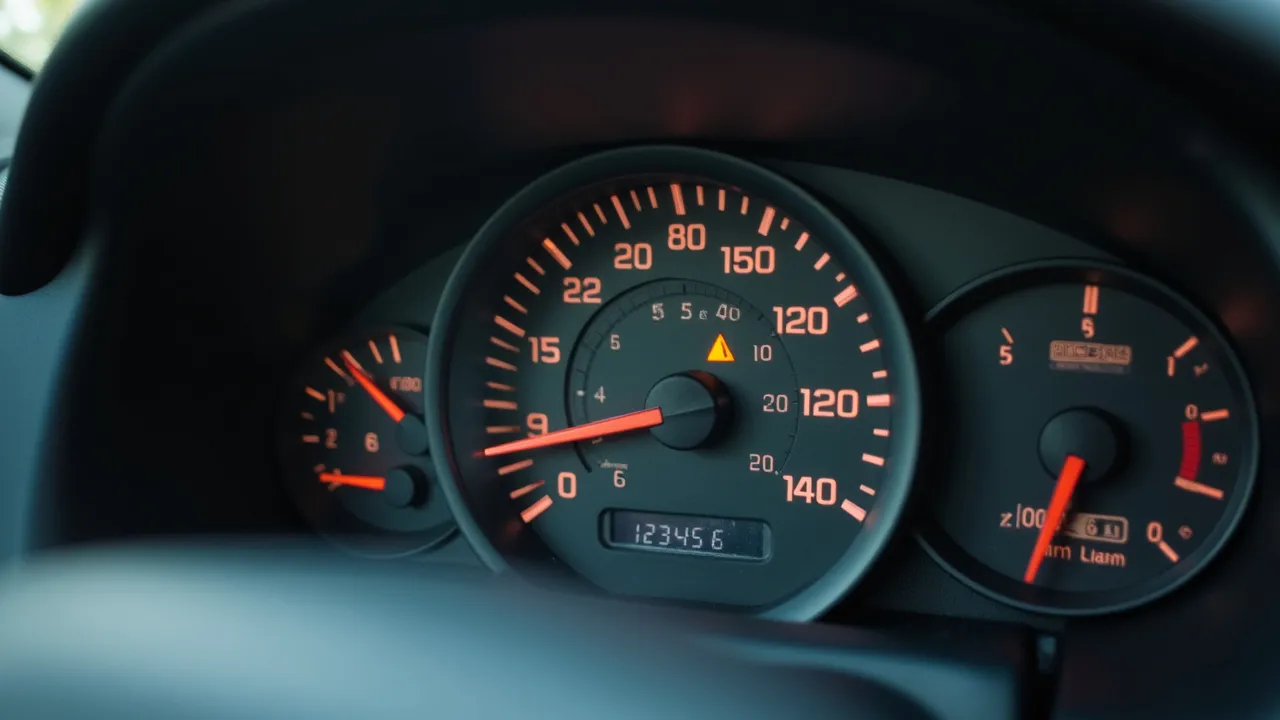
National Odometer Day on May 12th celebrates the invention of the odometer, a device that measures distance traveled. Learn about its history from ancient Greek origins to modern digital displays, and how to honor this essential automotive tool.
The Historical Origins & Evolutionary Journey of the Odometer
National Odometer Day, observed annually on May 12th, honors one of the most underappreciated yet essential devices in transportation—the odometer. From its rudimentary beginnings in ancient Greece to the sophisticated digital systems in modern vehicles, the odometer has played a pivotal role in commerce, travel, and even law enforcement. This section delves into the rich history of the odometer, tracing its development across millennia.
The Foundational Catalyst: Ancient Inventions
The concept of measuring distance dates back to antiquity. The first known odometer was described by the Roman engineer Vitruvius around 27 BC, but it was the Greek inventor Hero of Alexandria (circa 10–70 AD) who refined the design. Hero's odometer used a series of gears and a water clock to record distance traveled. The device was often used in chariots and surveyor's carts. This early mechanism set the stage for all future mileage tracking.
The Legislative/Official Adoption: Patents and Standardization
For centuries, odometers remained mechanical curiosities. The industrial revolution spurred practical applications. In 1847, Mormon pioneer William Clayton invented a “roadometer” to measure distances on the westward trail. However, the modern automotive odometer was patented by Arthur Herman on May 12, 1906—a date now recognized as National Odometer Day. This patent standardized the design for automobiles, enabling accurate mileage recording and fostering the used car market.
Modern Global Legacy
Today, odometers are mandatory in most countries for vehicle registration and resale. Digital technology replaced mechanical gears, and GPS-based systems now track mileage with unprecedented accuracy. Yet, the core principle remains unchanged: counting rotations to derive distance. The observance day has grown to include awareness campaigns against odometer fraud, a crime that costs consumers billions annually.
How to Celebrate National Odometer Day
National Odometer Day offers a unique opportunity to appreciate the technology that tracks every mile. Whether you're a car enthusiast, a history buff, or a commuter, there are many ways to mark this observance. Below are actionable strategies for individuals, schools, and organizations.
Individual Celebrations
- Check Your Odometer: Take a photo of your odometer reading at a milestone (e.g., 100,000 miles). Share it on social media with #NationalOdometerDay.
- Learn the History: Watch documentaries or read articles about the evolution of odometers, focusing on Hero of Alexandria and Arthur Herman.
- Prevent Fraud: Educate yourself on how to spot odometer tampering—common signs include misaligned numbers or loose dashboard panels.
School and Educational Activities
- Build a Simple Odometer: Use materials like a wheel, counting device, and axle to demonstrate the principle. Great for STEM clubs.
- Class Presentation: Assign students to research the history of distance measurement and present their findings.
- Field Trip: Visit a local car museum or a mechanic to see vintage odometers.
Corporate and Organizational Events
- Employee Mileage Challenge: Encourage staff to log their commutes, with prizes for the most miles traveled sustainably (walking, biking).
- Charity Drive: Donate a portion of sales from used car lots on this day to organizations combatting odometer fraud.
- Workshop: Host a webinar on the importance of accurate mileage for fleet management and environmental reporting.
Around the world, different cultures mark this day uniquely. In Japan, some garages offer free odometer inspections. In Germany, historical vehicle clubs hold rallies celebrating the precision of mechanical odometers. No matter where you are, the spirit of the day is about appreciating the journey measured.
The Critical Role of Accurate Mileage in Modern Society
An odometer's primary function is to measure distance, but its implications extend far beyond a simple number. Accurate mileage is crucial for several sectors:
Automotive Resale Market
The value of a used car heavily depends on its mileage. Lower mileage typically commands higher prices. National Odometer Day highlights the need for honesty in advertising, as odometer fraud can inflate a vehicle’s value by thousands of dollars. Federal laws in many countries impose severe penalties for tampering.
Fleet Management and Logistics
Companies that operate fleets rely on odometer readings for maintenance schedules, fuel tax reporting, and driver accountability. Accurate data prevents premature wear and tear, reducing operational costs.
Environmental Monitoring
Mileage is directly linked to carbon emissions. Governments use aggregate odometer data to estimate national fuel consumption and set environmental policies. Individuals can reduce their footprint by tracking driving habits.
Odometer Fraud: A Persistent Threat
Despite legal safeguards, odometer fraud remains a multimillion-dollar industry. The practice involves rolling back or replacing an odometer to show lower mileage. National Odometer Day serves as a reminder to protect consumers.
How Fraud Occurs
- Mechanical Tampering: Disconnecting the cable or using a drill to spin back the gears—common in older vehicles.
- Digital Manipulation: Using software to reprogram electronic odometers, often requiring specialized equipment.
- Entire Replacement: Swapping the instrument cluster with a lower-mileage unit from a scrapped car.
Detection Tips
- Check service records and compare mileage stamps.
- Inspect the odometer digits for alignment or discoloration.
- Use vehicle history reports from services like Carfax.
Legislation such as the Truth in Mileage Act (USA) requires mileage disclosure at title transfer. Penalties for fraud can include fines up to $10,000 and imprisonment.
Technological Evolution: From Gears to GPS
The odometer has undergone a dramatic transformation over centuries. This section traces its technical lineage.
Mechanical Era (Ancient – 1980s)
Early designs used a series of gears that counted wheel rotations. The mechanical odometer, still found in many classic cars, uses a worm gear and a set of drums. These devices are remarkably precise but prone to wear.
Digital Transition (1980s – 2000s)
The advent of microprocessors led to digital odometers, which store mileage in memory chips. These are harder to tamper with but not immune to hacking. Digital displays also allow for trip meters and multiple distance logs.
Modern GPS and Telematics
Today, many vehicles use GPS data to calculate distance, often integrated with navigation systems. Telematics platforms transmit real-time mileage to fleet managers. Despite precision, GPS odometers can be less accurate in tunnels or dense urban areas. The future promises blockchain-based odometer records for unassailable security.
Global Impact and Cultural Perceptions of Odometers
Odometers are ubiquitous, but their cultural significance varies. In the United States, the "mileage" has become synonymous with a vehicle's life story. Low-mileage cars are cherished, while high-mileage vehicles boast reliability. In Europe, kilometers are the norm, and odometer readings are strictly checked during vehicle inspection. In developing countries, old vehicles with manually corrected odometers are common, leading to unique market dynamics. National Odometer Day, though primarily US-focused, has inspired international events.
In some cultures, reaching 100,000 miles (or 100,000 km) is a celebrated milestone, sometimes marked with a small ceremony or a sticker. The day also fosters discussions about alternative odometers in other transport modes—like bicycle computers and marine logs.
Fun Facts and Trivia for National Odometer Day
- The word "odometer" comes from the Greek words "hodos" (path) and "metron" (measure).
- The first known odometer was built by Vitruvius around 27 BC, used by Roman surveyors.
- In 1847, William Clayton invented the “roadometer” while traveling to Salt Lake City, which measured miles by counting the revolutions of a wagon wheel.
- Arthur Herman's patent (US Patent 820,626) for an odometer was filed on May 12, 1906.
- Some luxury cars have odometers that cannot be rolled back without destroying the instrument cluster.
- The most miles ever recorded on a single vehicle? A 1966 Volvo P1800 has over 3 million miles.
- In many states, tampering with an odometer is a felony punishable by up to 10 years in prison.
- GPS-based odometers are accurate within 0.1% under ideal conditions.
These facts underline why National Odometer Day is more than a quirky observance—it's a celebration of human ingenuity and the fundamental need to measure our journeys.
Historical Timeline
Roman engineer Vitruvius describes the first known odometer, using a wheel and gears to measure distance.
Greek inventor Hero of Alexandria writes about a sophisticated odometer that uses a water clock and advanced gearing.
Mormon pioneer William Clayton invents the 'roadometer' to measure distances along the Mormon Trail, helping map the West.
Arthur Herman patents the first automotive odometer on May 12, later recognized as National Odometer Day.
Digital odometers begin appearing in cars, replacing mechanical drums and offering higher accuracy and anti-tampering features.
U.S. passes the Truth in Mileage Act, requiring odometer statements for title transfers to combat fraud.
Electronic odometer fraud becomes a concern, leading to complex encryption in vehicle computers.
GPS-based mileage tracking emerges, enabling real-time distance logging and integration with telematics systems.
First official National Odometer Day celebrations recorded, with automotive groups promoting awareness of fraud.