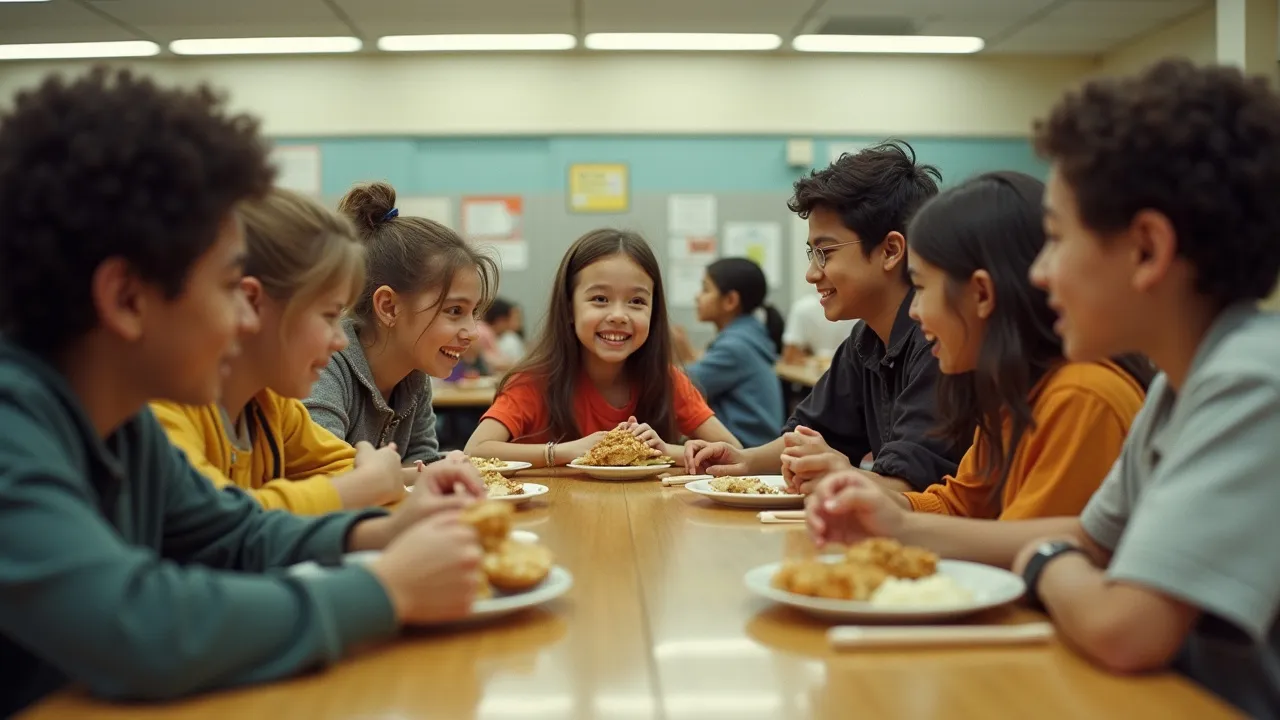
National No One Eats Alone Day, observed on the second Friday in February, is a national initiative founded by Beyond Differences to combat social isolation and promote inclusive school environments where every student feels welcomed during lunch.
The Historical Origins & Evolutionary Journey
The Foundational Catalyst
National No One Eats Alone Day was launched in 2012 by the nonprofit organization Beyond Differences, headquartered in San Rafael, California. The idea grew out of the tragic story of Lili Smith, a teenager who was bullied and socially isolated, leading to severe depression. Her mother, Laura Smith, co-founded the organization with the goal of ending social isolation among middle school students. The first celebration began in just a handful of California schools, but the concept resonated deeply with educators and parents nationwide.
The Legislative/Official Adoption
While not a federally recognized holiday, the day has received proclamations from governors and mayors across the United States. Beyond Differences provides free toolkits and resources to schools, making it easy for any school to participate. The movement quickly spread through grassroots efforts, social media campaigns, and partnerships with educational associations. By 2015, over 5,000 schools had registered to participate, and the day has continued to grow each year.
Modern Global Legacy
Though primarily a U.S. observance, the concept has inspired similar initiatives in Canada, Australia, and the United Kingdom. Schools worldwide have adopted the principles of inclusive lunchtime practices, adapting them to local cultures. The day now serves as a springboard for year-round anti-isolation programs, such as the "Be the One" campaign and "Start with Hello" week. Beyond Differences has also expanded its focus to include digital inclusion, addressing online isolation as well.
How to Celebrate National No One Eats Alone Day
The core mission of National No One Eats Alone Day is simple: ensure that every student has a companion at lunch. Below are actionable strategies for individuals, schools, and organizations to participate effectively.
For Individuals and Students
- Take the Pledge: Commit to sitting with someone new during lunch or inviting a classmate who is sitting alone to join your table.
- Start a Conversation: Use conversation starters provided by Beyond Differences to break the ice, such as asking about hobbies or favorite music.
- Be an Observer: Notice who is eating alone each day and make an effort to reach out, not just on the official day but regularly.
For Schools and Educators
- Register for Free Resources: Visit the Beyond Differences website to download the official activity toolkit, which includes lesson plans, posters, and discussion guides.
- Host a Mix-It-Up Lunch: Arrange tables by random criteria (birthday months, favorite colors) to encourage cross-clique friendships.
- Create a Buddy Bench: Install a bench in the cafeteria where students can sit if they want to be paired with a buddy.
- Incorporate into Curriculum: Use the day to discuss empathy, social dynamics, and mental health in health classes or advisory periods.
For Organizations and Communities
- Partner with Schools: Local businesses can sponsor lunches or provide volunteers to help facilitate activities.
- Launch a Social Media Campaign: Use hashtags like #NoOneEatsAlone to share stories and spread awareness beyond school walls.
- Extend to Adult Workplaces: Adapt the concept to office lunchrooms to foster inclusion among employees from different departments.
Regional Variations
While the official U.S. date is the second Friday in February, some international schools have shifted the date to synchronize with local lunch period schedules. For example, in the UK, some schools observe a "No One Eats Alone Week" in early March to avoid conflicts with half-term. In Canada, the province of Ontario has integrated the day into its "Bullying Awareness and Prevention Week" in November. Regardless of date, the core practice of intentional inclusion remains consistent.
Global Impact and Societal Themes
Addressing Social Isolation in Schools
Social isolation among adolescents is linked to increased risks of depression, anxiety, and even suicide. National No One Eats Alone Day directly combats this by creating structured opportunities for connection. A 2019 study published in the Journal of Youth and Adolescence found that school lunchtime interventions significantly reduced feelings of loneliness among participants. The program also helps break down social cliques and reduces bullying by fostering a culture of inclusivity.
Mental Health Awareness
The observance aligns with global mental health advocacy movements. By normalizing conversations about loneliness, schools become safe spaces for students to disclose mental health struggles. Beyond Differences reports that 78% of participating schools saw improved peer relationships within the first year of implementation.
Educational Equity and Inclusion
The day highlights disparities in social capital. Students from marginalized backgrounds—including racial minorities, LGBTQ+ youth, and students with disabilities—are more likely to eat alone. The initiative provides a low-cost, scalable way for schools to actively promote equity. Many districts have adopted the program as part of their anti-bullying and social-emotional learning (SEL) curriculum.
Core Themes and Cultural Shifts
From Bystander to Upstander
The day encourages a shift from passive bystander behavior to active "upstander" intervention. Students learn that sitting with someone is a simple yet powerful act of kindness. This concept has been reinforced through celebrity endorsements and social media challenges.
Beyond the Cafeteria
The principles of No One Eats Alone Day have expanded beyond lunch. Schools now organize "No One Walks Alone" for hallway transitions, "No One Plays Alone" for recess, and "No One Learns Alone" for group projects. This holistic approach reinforces inclusive behaviors throughout the school day.
Technology and Inclusion
In the digital age, isolation often continues online. Beyond Differences has launched "No One Logs On Alone" to address cyberbullying and promote positive digital citizenship. Students are encouraged to include classmates in group chats and gaming sessions.
Industry Transformations in Education
EdTech Innovations
The growing focus on social-emotional learning has spurred EdTech companies to develop tools that support inclusion. Apps like Lunchtable and Together use algorithms to randomly pair students for lunch, mirroring the physical mix-it-up concept. These tools are often integrated with school management systems.
Teacher Training and Professional Development
School districts now require training on recognizing and addressing social isolation. Organizations like Beyond Differences offer webinars and workshops for educators. The day has become a key component of SEL professional development, with many schools designating a "Social Inclusion Coordinator".
Corporate Social Responsibility
Corporations, especially those with youth-oriented products, have partnered with Beyond Differences. For example, a major food service provider now donates lunches on the day and includes conversation starters on tray liners. These partnerships have increased funding and awareness for the cause.
Long-Term Effects and Future Directions
Sustaining Momentum Year-Round
While the single day is highly impactful, Beyond Differences emphasizes the need for ongoing programs. Many schools have implemented "No One Eats Alone" clubs that meet weekly. The organization also offers a "Be the One" campaign that encourages students to become mentors for younger peers.
Research and Evaluation
Ongoing studies by universities like Stanford and UCLA are measuring the long-term effects of the initiative on school climate and academic performance. Preliminary data shows a 40% reduction in reported bullying in schools that actively practice year-round inclusion strategies.
Global Expansion
Plans are underway to translate materials into Spanish, French, and Mandarin to facilitate adoption in non-English-speaking countries. The United Nations' Sustainable Development Goal 4 (Quality Education) and Goal 3 (Good Health and Well-being) underpin this expansion, with pilot programs running in Kenya, India, and Mexico.
Historical Timeline
Beyond Differences founded by Laura Smith and a group of parents after the tragic story of Lili Smith. The first National No One Eats Alone Day is held in a few California schools.
The initiative expands to 500 schools across the United States, supported by an online tool kit and media coverage.
More than 5,000 schools officially register to participate. Governors of several states issue proclamations supporting the day.
Beyond Differences launches the "Be the One" mentorship program, extending inclusion efforts beyond lunchtime.
National No One Eats Alone Day reaches international schools in Canada, the UK, and Australia.
During the COVID-19 pandemic, the day adapts to virtual formats, encouraging students to eat together via video calls.
The 10th anniversary of the day; over 10,000 schools participate. Beyond Differences releases digital inclusion resources.
Plans announced to officially designate the day as a nationally recognized observance through congressional resolution.