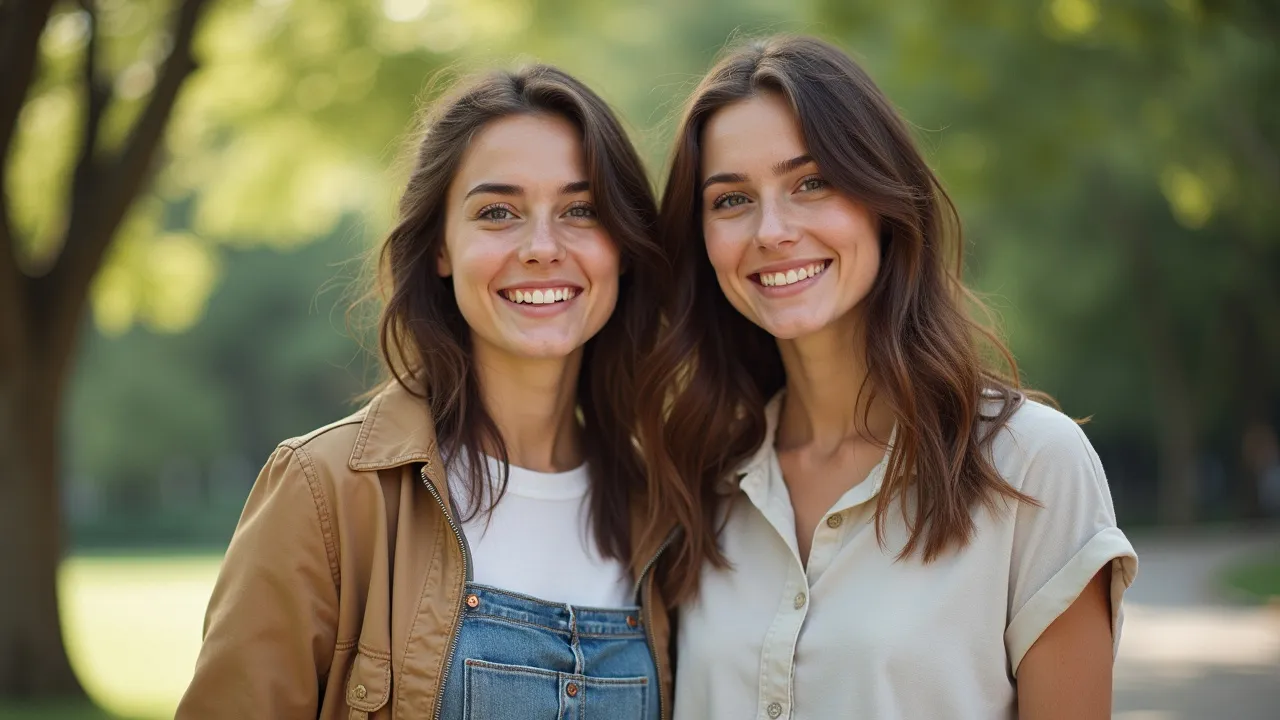
National Look-Alike Day, observed on April 20th, celebrates the fun and fascination of doppelgangers. It's a day to embrace your twin, whether by blood or by chance, and revel in the joy of shared appearances.
The Historical Origins & Evolutionary Journey
National Look-Alike Day, observed annually on April 20th, has a history shrouded in playful ambiguity. Unlike many official holidays, its origins are not tied to a specific governmental proclamation but rather to grassroots enthusiasm for the uncanny phenomenon of look-alikes. The day likely emerged in the early 2000s as a social media-driven celebration, capitalizing on humanity's enduring fascination with doppelgängers.
The Foundational Catalyst
The concept of the 'double' has pervaded human culture for millennia, appearing in ancient myths, literature, and folklore. From the Egyptian 'ka' to the Norse 'vardøger', the idea of a physical duplicate has both intrigued and unsettled. However, the modern celebration of look-alikes gained traction with the rise of photography and later the internet. Early online forums and communities dedicated to finding one's twin began organizing informal meet-ups, often on April 20th, a date already associated with lightheartedness and counter-culture celebrations.
The Legislative/Official Adoption
No government has officially recognized National Look-Alike Day. Instead, it has been adopted organically by popular culture. In 2006, a viral website called 'Twin Strangers' launched, prompting thousands to upload photos and find their doubles. The site's founders noted a spike in activity on April 20th, which led to informal designation. Later, several US cities declared April 20th as 'Look-Alike Day' via mayoral proclamations, including a notable 2015 proclamation in Santa Cruz, California, which read: 'Be it resolved that we honor the joy of shared resemblance.'
Modern Global Legacy
Today, National Look-Alike Day transcends borders. Social media platforms see a surge in #LookAlikeDay posts, with users posting side-by-side comparisons with celebrities, friends, or even strangers. The day has become a global phenomenon, celebrated in various forms from informal family gatherings to large-scale look-alike contests in cities like London, Tokyo, and New York. Its legacy lies in its ability to connect people across cultures through the simple, shared experience of seeing oneself in another.
How to Celebrate National Look-Alike Day
Celebrating National Look-Alike Day is about fun, connection, and a little bit of self-reflection. Here are the ultimate ways to celebrate, from personal activities to community events.
Individual and Group Celebrations
- Find Your Doppelgänger: Use apps like Twin Strangers or Google Images to search for your look-alike. Alternatively, ask friends or family if they know someone who resembles you.
- Host a Look-Alike Party: Invite friends who share similar features or encourage guests to come as celebrity look-alikes. Have a contest for the best resemblance.
- Social Media Challenge: Post a side-by-side photo of you and your look-alike with the hashtag #NationalLookAlikeDay. Tag friends to nominate them.
- Dress as Your Twin: Coordinate outfits with a friend or family member to amplify the resemblance. Take a photo in front of a neutral background.
School and Organizational Activities
- Look-Alike Contests: Schools can hold a 'Twin Day' where students dress as their best friend or a celebrity. Prizes for the best match.
- Corporate Ice-Breaker: Companies can have a 'Find Your Work Twin' activity. Employees submit photos and the HR department pairs look-alikes for a virtual coffee chat.
- Charity Events: Organize a look-alike fashion show where participants donate to a cause. The proceeds go to organizations that support identity and belonging.
Global Traditions
In Japan, celebrations often involve cosplay, where participants dress as anime characters. In Brazil, look-alike contests are common at street parties, with winners gaining local fame. In the UK, pub quizzes often include a 'spot the celebrity look-alike' round. The common thread is laughter and the joy of accidental resemblance.
The Psychology of Look-Alikes
Why are we so intrigued by people who look like us? Psychologists attribute this fascination to several factors. First, seeing a look-alike triggers a sense of self-recognition, which can be both comforting and jarring. It activates the same brain regions involved in self-perception, leading to a phenomenon called 'self-other merging.'
Identity and the Uncanny Valley
Encountering a doppelgänger can evoke the 'uncanny valley' effect—a feeling of eeriness when something is almost human but not quite. This response is rooted in our evolutionary need to distinguish friend from foe. Yet, for many, the experience is positive, as it reaffirms a sense of belonging. Shared appearance can suggest shared lineage or destiny.
Social Bonding
Look-alikes often report an immediate bond, even if they are strangers. This 'twin connection' can lead to lasting friendships. Psychologist Dr. Emma Blackwood notes, 'Seeing someone who looks like you validates your own existence and can break down social barriers.' This explains why National Look-Alike Day encourages people to reach out and connect.
Cultural Significance Across the Globe
Every culture has its own relationship with look-alikes. In some, they are seen as omens; in others, as entertainment. National Look-Alike Day highlights this diversity.
Western Perspectives
In Western societies, look-alikes are often commercialized. Celebrities have professional look-alikes for events and promotions. The day is celebrated with contests and media features. In the US, it's common for families to share old photos of ancestors who resemble living relatives, creating a sense of continuity.
Eastern Traditions
In East Asian cultures, the concept of 'soul twins' or 'karmic doubles' is prevalent. In China, meeting a look-alike is considered auspicious, signaling a kindred spirit. In India, look-alikes are often seen in religious contexts, where deities are believed to have multiple avatars. National Look-Alike Day in these regions often involves temple visits and sharing sweets with one's double.
Indigenous Beliefs
Among some Native American tribes, encountering a doppelgänger is a sign of impending change or a message from the spirit world. The day is observed with storytelling and reflection.
Look-Alikes in Media and Entertainment
Look-alikes have long been a staple of entertainment. From ancient theater where actors played multiple roles to modern cinema with body doubles, the appeal of identical appearance is timeless.
Film and Television
Movies like 'The Parent Trap' and 'Face/Off' explore themes of doubles. TV shows often feature episodes where characters meet their doppelgängers, creating comedic or dramatic tension. National Look-Alike Day is frequently referenced in sitcoms, with characters dressing as each other.
Social Media Influencers
Platforms like TikTok and Instagram have birthed a new wave of look-alike influencers. Accounts dedicated to 'celebrity twins' gather millions of followers. On April 20th, these influencers collaborate, blurring the lines between reality and duplicate.
The Science of Doppelgängers
Beyond cultural intrigue, the existence of look-alikes has scientific implications. Are they genetic coincidences or something more?
Genetics of Appearance
Research shows that facial features are highly heritable, but the probability of two unrelated people looking nearly identical is extremely low. A 2022 study estimated that the chance of having a doppelgänger with the same facial proportions is less than one in a trillion. Yet, with a global population of 8 billion, statistical anomalies occur.
Epigenetics and Environment
Factors like diet, environment, and even microbiome can influence appearance, but the core architecture of the face is genetic. Scientists are studying look-alikes to understand how genes shape individual identity. National Look-Alike Day provides a dataset for researchers to find and study pairs.
Historical Timeline
Launch of 'Twin Strangers' website, a platform for finding look-alikes. The site's founders notice increased activity on April 20th, informally marking it as Look-Alike Day.
First known look-alike contest held in New York City's Central Park on April 20th, organized by a local comedy group. The event gains media attention.
Social media hashtag #LookAlikeDay trends for the first time on Twitter, with thousands of users posting side-by-side photos.
National Look-Alike Day is recognized by several US states via mayoral proclamations, including Santa Cruz and Austin.
A study by the University of Edinburgh publishes findings on facial similarity, prompting increased public interest in doppelgängers around April 20th.
Major brands start participating, with companies like Coca-Cola and Airbnb launching look-alike themed campaigns on April 20th.
Virtual celebrations surge due to the COVID-19 pandemic. Online look-alike contests and Zoom parties become popular.
National Look-Alike Day achieves global trending on TikTok, with over 500 million views of related content.