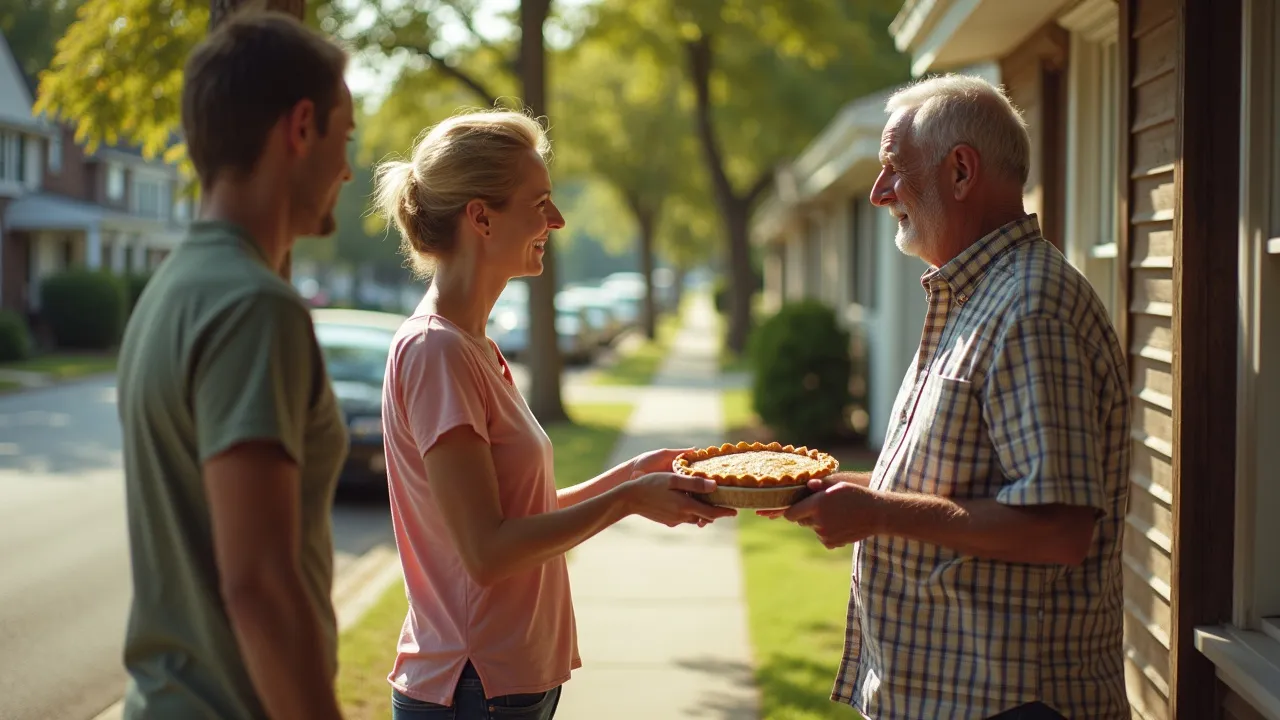
National Good Neighbor Day, celebrated on September 28th, fosters kindness and community bonds. It encourages acts of neighborly goodwill, from small gestures to organized events, strengthening local ties and promoting a spirit of togetherness.
The Historical Origins & Evolutionary Journey
National Good Neighbor Day, observed annually on September 28th, traces its roots to the vision of one woman—Becky Mattson of Lakeside, Montana. In the early 1970s, Mattson recognized a growing disconnection among neighbors in her small community and sought to promote friendliness and mutual care.
The Foundational Catalyst
Mattson's idea was simple yet profound: designate a day where people consciously reach out to their neighbors. She began a grassroots campaign, writing letters to state and national leaders. Her persistence gained traction when Montana Governor Thomas Lee Judge issued a proclamation for a state-level Good Neighbor Day in 1977.
Legislative/Official Adoption
The national momentum built quickly. In 1978, the U.S. Senate passed a resolution designating the fourth Sunday of September as National Good Neighbor Day. However, it was President Jimmy Carter's 1978 proclamation that truly cemented its place in American culture. Carter urged citizens to "reach out in friendship and understanding" to their neighbors.
Later, in 2003, President George W. Bush issued a formal proclamation for September 28th as the official date, urging Americans to celebrate neighborliness. Since then, the day has become a widely recognized occasion for community-building events.
Modern Global Legacy
While primarily observed in the United States, the spirit of Good Neighbor Day has inspired similar initiatives worldwide. Countries like Canada and the United Kingdom have adopted local versions, emphasizing cross-cultural neighborliness. The day's evolution reflects a growing awareness of the importance of social capital and local resilience.
How to Celebrate National Good Neighbor Day
National Good Neighbor Day offers endless opportunities to foster kindness and connection. Here are actionable ideas for individuals, schools, and organizations:
Individual Actions
- Introduce yourself to a neighbor you haven't met.
- Bake or cook something to share— like cookies or a meal.
- Offer help with yard work, pet care, or errands.
- Write a note of appreciation and leave it at their door.
- Organize a block party or potluck dinner.
School & Community Group Ideas
- Neighborhood clean-up or beautification project.
- Card-making for elderly neighbors in nursing homes.
- Tool-sharing or skill-sharing workshops (e.g., gardening, cooking).
- Safety walk to discuss community concerns and strengthen bonds.
Corporate/Organizational Involvement
Businesses can sponsor community events, offer volunteer time off for employees to participate, or launch a "Neighbor of the Month" award. Real estate companies often host open houses with neighbor networking mixers.
Global Practices
In Canada, similar initiatives occur on Neighbour Day in April. The United Kingdom celebrates The Big Lunch annually, encouraging street parties. In Australia, Neighbour Day is observed on the last Sunday of March, focusing on reducing loneliness. Always check local guidelines and adapt traditions to your community's culture.
The Social Impact: Strengthening Community Fabric
National Good Neighbor Day is more than a feel-good event; it has profound social implications. Research consistently shows that strong neighborly ties reduce crime, improve mental health, and increase civic engagement.
Crime Reduction
Neighbors who know each other are more likely to watch out for suspicious activity, creating a natural neighborhood watch. Studies by the National Crime Prevention Council indicate that communities with higher social cohesion experience lower rates of burglary and vandalism.
Mental Health & Loneliness
Simple acts of kindness combat isolation. A 2020 survey by the Pew Research Center found that 29% of Americans reported feeling lonely; neighborly interactions can significantly buffer this. Celebrating Good Neighbor Day normalizes reaching out, which can be particularly beneficial for seniors or new residents.
Civic Engagement
Neighborly connections often lead to broader community involvement—volunteering, voting, and participation in local governance. The day serves as a catalyst for building social capital, a concept championed by sociologist Robert Putnam in his book Bowling Alone.
Economic Benefits
Strong neighborhoods attract homebuyers and businesses. A 2018 study from Nextdoor found that active neighborhood engagement increases property values by fostering a sense of safety and belonging.
Cultural Variations: Good Neighbor Practices Worldwide
While National Good Neighbor Day is rooted in the United States, many cultures have unique neighborly traditions that align with its spirit.
Japanese Tonarigumi
In Japan, traditional neighborhood associations called tonarigumi organize mutual aid, clean-ups, and festivals. Good Neighbor Day resonates with their concept of kizuna (bonds) and omoiyari (consideration for others).
Scandinavian Nabofred
In Norway and Denmark, "neighbor peace" emphasizes quiet enjoyment and respectful boundaries, but also includes borrowing sugar and helping with snow removal. Good Neighbor Day can be an occasion to strengthen these balanced relationships.
Mexican Vecinos Culture
Mexican communities often hold posadas and block parties. The day might involve sharing traditional foods like tamales or hosting a convivio (social gathering).
Indian Pada Yatra
In India, neighbors often participate in pada yatras (neighborhood walks) and share meals during festivals. National Good Neighbor Day can be adapted to include diya lighting or chai meetups.
Environmental Benefits: Neighborhood Stewardship
Good Neighbor Day also promotes environmental sustainability through collective action.
Community Gardens & Green Spaces
Neighbors collaborating on gardens or park clean-ups foster both social ties and ecological health. Pollinator-friendly gardens, tree planting, and composting projects are popular activities.
Tool Libraries & Sharing Economy
Sharing lawnmowers, ladders, and other tools reduces consumption and waste. Good Neighbor Day is an ideal time to start a neighborhood tool library or a "buy nothing" group.
Emergency Preparedness
Neighbors who know each other can coordinate during natural disasters. The day can include workshops on emergency kits, CPR training, or creating a neighborhood communication plan. This was highlighted after events like Hurricane Katrina and the COVID-19 pandemic.
Technology and Modern Neighborliness
In the digital age, platforms like Nextdoor, Facebook Groups, and WhatsApp have transformed how neighbors interact. National Good Neighbor Day now has a digital dimension.
Virtual Events
During the pandemic, many communities held virtual coffee hours, online game nights, or neighborhood Zoom calls. These can supplement in-person gatherings.
Social Media Campaigns
Using hashtags like #GoodNeighborDay or #NationalGoodNeighborDay, people share stories of kindness, tag neighbors, and spread awareness. This amplifies the day's reach beyond physical boundaries.
Apps for Neighborly Acts
Apps like Neighbors (by Ring) or Citizen can be used to organize positive actions rather than just security alerts. However, privacy concerns remain; the day encourages mindful digital neighborliness.
Legislative Recognition and Future Outlook
National Good Neighbor Day enjoys bipartisan support and has been recognized by multiple presidents and governors. In 2003, President George W. Bush issued a proclamation emphasizing that "neighbors are the people who make our neighborhoods safe and our communities strong."
Looking ahead, the day may expand to include more formal educational curricula, corporate involvement, and global partnerships. There is potential for a United Nations resolution to promote neighborliness worldwide, though currently it remains a voluntary observance.
Efforts continue to have the day permanently enshrined as a national holiday, though proponents focus on grassroots participation rather than government mandates. The future of Good Neighbor Day lies in its adaptability—empowering every community to celebrate in its own way.
Historical Timeline
Becky Mattson of Lakeside, Montana, begins a campaign to create a day celebrating neighborliness.
Montana Governor Thomas Lee Judge issues the first state-level Good Neighbor Day proclamation.
The U.S. Senate passes a resolution designating the fourth Sunday of September as National Good Neighbor Day.
President Jimmy Carter issues a proclamation urging citizens to foster neighborly goodwill.
President George W. Bush officially designates September 28th as National Good Neighbor Day.
Annual proclamations by governors and mayors; growth of community events and social media campaigns.