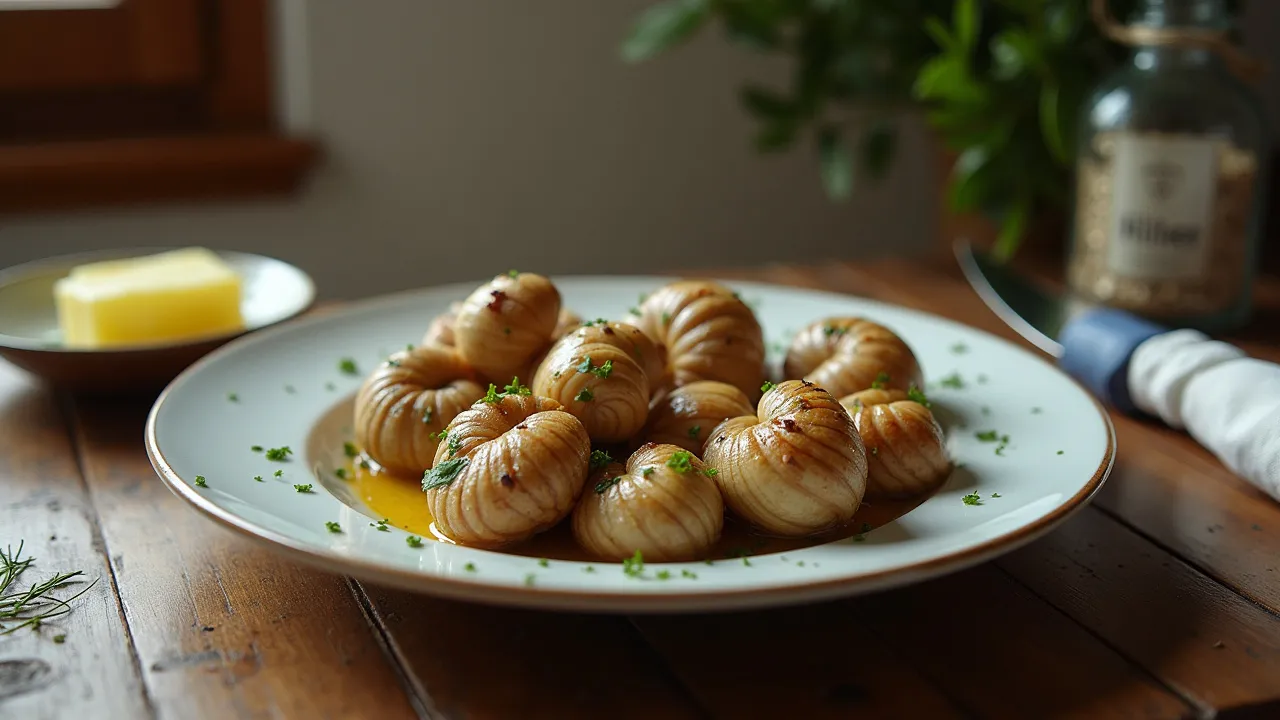
National Escargot Day on May 24th celebrates the culinary tradition of eating snails, a delicacy often prepared with garlic butter and herbs. This day honors the rich history of escargot in French cuisine and encourages people to try this unique appetizer.
The Historical Origins & Evolutionary Journey
National Escargot Day, observed on May 24th, is a celebration of one of the world's oldest and most refined delicacies: the edible land snail. While the day itself is a recent invention, the practice of eating snails dates back millennia, with deep roots in ancient gastronomy and cultural evolution.
The Foundational Catalyst
The consumption of snails can be traced to prehistoric times, as evidenced by archaeological finds in Europe and North Africa. The Romans were among the first to farm snails systematically, establishing snail gardens called cochlearia and fattening them on wine and meal for better flavor. This practice spread across the Roman Empire, embedding snails into the culinary traditions of many regions.
In France, the tradition evolved into the iconic dish known as escargot, typically prepared with garlic, parsley, and butter. The modern version became popular in the 19th century, particularly in Burgundy, where escargots de Bourgogne (Helix pomatia) are harvested. The catalyst for National Escargot Day likely emerged from the growing interest in artisanal foods and heritage dining in the late 20th century, though the exact founder remains unknown.
The Legislative/Official Adoption
Unlike many national food holidays, National Escargot Day did not originate through legislative action or official proclamation. Instead, it was adopted informally by culinary enthusiasts, snail farmers, and food bloggers who sought to elevate the status of this often-overlooked protein. Social media and food calendars helped standardize the date as May 24th, and it has since been recognized by organizations like the National Day Calendar (a US-based registry). However, it lacks any government or UNESCO endorsement, remaining a grassroots celebration.
Modern Global Legacy
Today, National Escargot Day is observed not only in France and the United States but also in many countries with a taste for adventure dining. The day has spurred a revival of snail farming (heliciculture) as a sustainable protein source, and chefs worldwide experiment with fusion preparations, such as escargot ravioli, escargot tacos, or escargot paired with Asian flavors. The legacy of National Escargot Day lies in its role as a bridge between ancient culinary heritage and modern gastronomic innovation.
How to Celebrate National Escargot Day
Celebrating National Escargot Day is an opportunity to explore the world of snails in a delicious and educational way. Whether you're a seasoned gourmet or a curious beginner, there are many ways to honor this unique delicacy. Below are actionable strategies for individuals, schools, and organizations.
For Individuals and Families
- Dine at a French restaurant: Many bistros offer special escargot menus on May 24th. Order a classic dozen with garlic butter and a glass of Chablis or Sancerre.
- Cook at home: Purchase canned or fresh snails from specialty stores. Follow a trusted recipe, such as Escargots à la Bourguignonne. Serve with crusty bread for dipping.
- Host an escargot tasting party: Prepare snails in different styles—Burgundy, Provençal, or Asian fusion—and invite friends to vote on their favorite.
- Watch a documentary: Learn about snail farming and the history of escargot with films like Mollusks: The Forgotten Protein.
For Schools and Educational Institutions
- Organize a culinary workshop: Teach students about snail biology, farming, and cooking. Use it as a gateway to discuss sustainable food systems.
- Create a tasting station: Partner with a local chef to offer samples. Discuss the cultural significance of snails in French, Roman, and Mediterranean cuisines.
- Field trip to a snail farm: Many heliciculture farms offer tours. Students can see snail life cycles and harvesting methods.
For Organizations and Restaurants
- Feature a special escargot dish: Restaurants can create a limited-time offering. Pair it with a themed wine or cocktail like the "Snail Sling."
- Social media campaign: Use hashtags like #NationalEscargotDay, #EscargotLove, or #SnailSavvy. Share fun facts, recipes, and customer photos.
- Collaborate with snail farmers: Highlight the sustainability of snails as a low-impact protein. Donate a portion of proceeds to heliciculture research.
Remember, the key to celebration is open-mindedness and a willingness to try something new. Escargot is not just a dish—it's a connection to millennia of culinary history.
The Art of Snail Farming: Heliciculture
Heliciculture, the farming of edible snails, is a practice that dates back to Roman times but has seen a resurgence due to interest in sustainable protein. On National Escargot Day, it's worth understanding how snails are raised and harvested.
Species and Rearing
The most common species for escargot are Helix pomatia (Burgundy snail), Helix aspersa (garden snail), and Achatina fulica (giant African snail, often used in other cuisines). Snails are kept in pens with controlled humidity, temperature, and diet (often a mix of grains, herbs, and calcium). They are harvested after reaching maturity, typically at 6-8 months.
Sustainability Benefits
- Low environmental impact: Snails require minimal feed and water compared to cattle or pigs.
- High nutritional value: Rich in protein, iron, and Omega-3 fatty acids, low in fat.
- Waste reduction: Snails can be fed on vegetable scraps, making them ideal for integrated farming.
Farmers must adhere to strict hygiene and processing standards to ensure food safety. Snails are purged (starved for a few days) before cooking, then blanched and removed from shells.
Regional Variations and Global Traditions
While National Escargot Day is primarily observed in the United States on May 24th, many cultures have their own snail-eating traditions, often on different dates. Here are notable regional practices:
France
France is the epicenter of escargot culture. Snails are eaten year-round, but special dishes are common during Christmas and New Year's Eve. In Burgundy, the Fête de l'Escargot is celebrated in August, featuring snail races and tastings.
Spain & Portugal
Iberian cuisine includes caracoles (small snails) often cooked in spicy tomato or paprika sauces. In Andalusia, snails are a popular tapas item during summer festivals.
Africa
In Nigeria and Ghana, giant land snails (Archachatina marginata) are a key protein source, used in soups and stews. Snail festivals occur in October in some regions.
Asia
In Vietnam, snails are stir-fried with lemongrass and chili, served as street food. China and Thailand also have diverse snail dishes, though they are less associated with National Escargot Day.
Wine Pairings and Culinary Science
Pairing wine with escargot enhances the dining experience. The classic combination is white Burgundy, such as Chablis or Meursault, which complements the buttery, garlicky flavors. Alternatively, a dry Riesling or Sauvignon Blanc works well. For red wine lovers, a light Pinot Noir can be a surprising match.
The science behind the pairing involves balancing acidity and fat. The high acidity in white wines cuts through the butter, while the minerality echoes the snail's earthy notes. On National Escargot Day, many wine shops and restaurants offer curated pairings.
Alternative Beverages
- Champagne: A brut nature or extra brut adds elegance.
- Cider: Dry apple cider from Normandy pairs nicely.
- Herbal tea: For non-alcoholic options, thyme or fennel tea can cleanse the palate.
Health Benefits and Nutritional Profile
Escargot is not just a delicacy; it also offers nutritional advantages. A 100g serving of cooked snails contains:
- Protein: 16-18g, comparable to chicken.
- Iron: 5-7mg, contributing to red blood cell formation.
- Magnesium: Important for muscle and nerve function.
- Omega-3 fatty acids: Beneficial for heart health.
Snails are also low in fat (about 2g per serving) and contain no carbohydrates, making them suitable for keto and paleo diets. However, they are high in cholesterol (50mg per serving), so moderation is advised. On National Escargot Day, health-conscious eaters can indulge without guilt.
Historical Timeline
Archaeological evidence shows humans consuming land snails in the Mediterranean region, indicating early gastronomic use.
Roman author Pliny the Elder describes snail farming (cochlearia) in his work <em>Natural History</em>, noting that snails were fattened on milk and wine.
French chef Marie-Antoine Carême popularizes escargot in haute cuisine, serving snails in pastry cases with garlic and herbs.
The first commercial snail canning operations begin in France, making escargot accessible globally.
Snail farming (heliciculture) experiences a revival as a sustainable protein, with farms emerging in the US, UK, and Australia.
May 24th begins to appear on online food calendars as National Escargot Day, likely promoted by food bloggers and snail industry groups.
National Escargot Day gains wider recognition through social media campaigns, with over 50,000 posts using #NationalEscargotDay on Instagram.