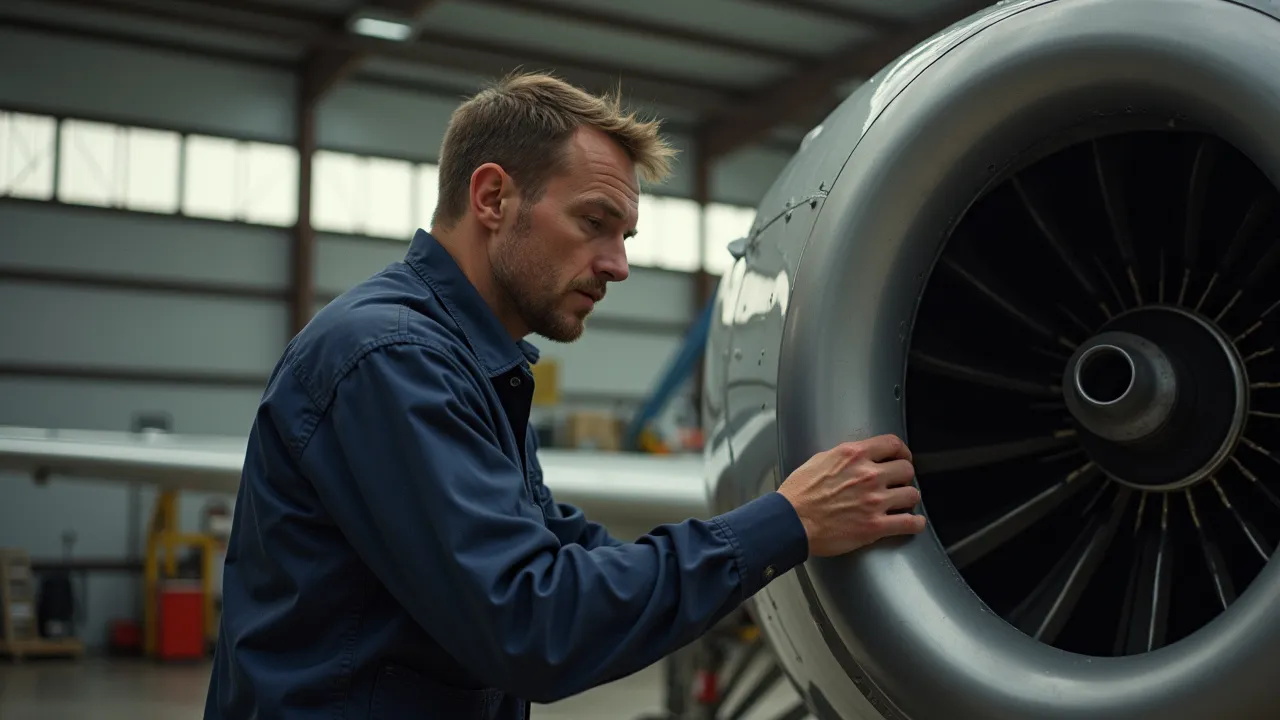
Aviation Maintenance Technician Day on May 24th honors Charles Taylor, the first aviation mechanic. It recognizes the vital role of AMTs in aviation safety and reliability.
The Historical Origins & Evolutionary Journey
Aviation Maintenance Technician Day, observed annually on May 24th, commemorates the birth of Charles Edward Taylor, the first aviation mechanic. Taylor built the engine for the Wright Brothers' historic 1903 flight, establishing the foundation for aircraft maintenance as a recognized profession. The day was officially designated by the U.S. Congress in 2009 and signed into law by President George W. Bush, with the first official observance in 2010. It honors the contributions of Aviation Maintenance Technicians (AMTs) who ensure aircraft airworthiness and safety.
The Foundational Catalyst: Charles Taylor
Charles Taylor was born on May 24, 1868, in Cerro Gordo, Illinois. He began as a bicycle and engine mechanic, eventually working for the Wright brothers. When Orville and Wilbur needed a lightweight, powerful engine for their aircraft, Taylor designed and built it from scratch in just six weeks. The engine produced 12 horsepower and weighed only 180 pounds, enabling the first powered flight on December 17, 1903. Taylor's ingenuity and craftsmanship set the standard for aviation maintenance, and he continued to support the Wright brothers' later innovations.
The Legislative/Official Adoption
The push for a national day began with advocacy from aviation maintenance organizations, including the Professional Aviation Maintenance Association (PAMA) and the Aircraft Mechanics Fraternal Association (AMFA). In 2009, Senators Jerry Moran and Richard Burr introduced Senate Resolution 70, which passed unanimously. The resolution recognized Taylor's contributions and called for observance of Aviation Maintenance Technician Day on May 24th. President Obama continued the tradition in later proclamations, emphasizing the critical role of AMTs in aviation safety.
Modern Global Legacy
Today, Aviation Maintenance Technician Day is celebrated across the United States and in many countries worldwide. It serves as a reminder of the professionalism and expertise required in aircraft maintenance. The day is often marked by award ceremonies, educational workshops, and open hangar events. Internationally, countries like Canada and Australia have adopted similar observances, though dates may vary. The core message remains consistent: honoring the skilled technicians who maintain the highest standards of safety in aviation.
How to Celebrate Aviation Maintenance Technician Day
Aviation Maintenance Technician Day offers a perfect opportunity to recognize the unsung heroes of aviation. Whether you are an individual, part of an organization, or an educational institution, there are many meaningful ways to participate. Below are structured guidelines for celebrating this day effectively.
For Individuals
- Learn about Charles Taylor: Read biographies or watch documentaries about his life and contributions.
- Visit an aviation museum: Many museums have exhibits on early aviation mechanics and engines.
- Thank an AMT: If you know a technician, send a note of appreciation or a small gift.
- Share on social media: Use hashtags like #AMTDay or #AviationMaintenanceTechnicianDay to spread awareness.
For Organizations (Airlines, MROs, Schools)
- Host an award ceremony: Recognize outstanding AMTs with certificates or plaques.
- Open house events: Invite the public to see maintenance facilities and learn about the profession.
- Workshops and seminars: Offer continuing education on new technologies or safety protocols.
- Scholarship programs: Announce or fund scholarships for aspiring AMTs.
Global Celebrations and Regional Variations
In the United States, the day is widely observed by major airlines, the FAA, and maintenance schools. In Canada, the Canadian Aviation Maintenance Council (CAMC) promotes a similar day on May 24th. In the United Kingdom, the Royal Aeronautical Society holds events. In Australia, the Australian Licensed Aircraft Engineers Association (ALAEA) organizes activities. Some countries celebrate on different dates, such as the third Friday of May in certain European nations, but May 24th remains the primary date for the global aviation community.
Global Impact of Aviation Maintenance Technicians
Aviation Maintenance Technicians are crucial to the global aviation industry, ensuring that over 100,000 flights operate safely each day. Their work impacts not only passenger safety but also cargo transport, military operations, and emergency services. The demand for skilled AMTs is rising, with the Boeing Pilot and Technician Outlook projecting a need for over 600,000 new technicians by 2040. This growing demand underscores the importance of days like AMT Day in attracting talent to the field.
Economic Contributions
AMTs contribute significantly to the economy. The maintenance, repair, and overhaul (MRO) market is valued at over $80 billion annually. Technician wages are competitive, with median annual salaries around $65,000 in the U.S. The profession supports ancillary industries such as parts manufacturing, tool design, and training schools.
Safety and Reliability
Stringent regulations from authorities like the FAA and EASA require AMTs to undergo rigorous training and certification. Their meticulous inspections and repairs directly reduce accident rates. According to NTSB data, mechanical failures account for a small percentage of aviation incidents, thanks in large part to the expertise of AMTs.
Industry Transformations and Technological Advancements
The field of aviation maintenance is evolving rapidly, driven by technological innovation. This section explores key transformations.
Digitalization and Predictive Maintenance
The adoption of digital tools, such as electronic logbooks and predictive analytics, is revolutionizing maintenance practices. Sensors on aircraft transmit real-time data, allowing AMTs to predict failures before they occur. This shift reduces downtime and enhances safety.
Electric and Hybrid Aircraft
As the industry moves toward sustainable aviation, electric and hybrid aircraft are entering service. These aircraft require new skill sets, including knowledge of high-voltage systems and battery management. AMT Day serves as a platform to discuss training needs for these emerging technologies.
Additive Manufacturing (3D Printing)
3D printing is being used to produce aircraft parts on demand, reducing supply chain delays. AMTs must learn to inspect and certify these parts, which come with new material properties and quality control considerations.
Training, Certification, and Career Pathways
Becoming an AMT requires a combination of education, experience, and certification. This section provides an overview.
Educational Pathways
Most AMTs complete a two-year associate degree in aviation maintenance from an FAA-approved school. Others enter through military training or apprenticeship programs. Core subjects include airframe and powerplant (A&P) mechanics, avionics, and regulations.
Certification Requirements
In the U.S., the FAA issues A&P certificates after candidates pass written, oral, and practical exams. The certification process ensures competence in areas such as sheet metal repair, engine overhaul, and electrical systems. Continuing education is required to maintain the certificate.
Career Advancement
AMTs can advance to lead technician, inspector, or manager roles. Some specialize in avionics, composites, or specific aircraft models. The career offers stable employment with opportunities for travel and international work.
The Future of Aviation Maintenance Technician Day
As aviation evolves, so does the recognition of its maintenance professionals. Aviation Maintenance Technician Day will continue to grow in prominence. Ongoing advocacy aims to make it a global observance recognized by the International Civil Aviation Organization (ICAO). The day is also becoming a platform for addressing workforce shortages, promoting diversity, and highlighting the importance of mental health in high-stress maintenance jobs. Future celebrations will likely incorporate virtual events, live-streamed hangar tours, and international webinars to engage a wider audience.
Historical Timeline
Charles Edward Taylor is born on May 24 in Cerro Gordo, Illinois.
Taylor builds the engine for the Wright brothers' first powered aircraft, the Wright Flyer. The flight takes place on December 17.
Taylor continues to work with the Wright brothers, building improved engines for their military aircraft.
Charles Taylor dies on January 30. His contributions to aviation are later recognized posthumously.
The U.S. Congress passes Senate Resolution 70, designating May 24 as Aviation Maintenance Technician Day. President George W. Bush signs it into law.
The first official observance of Aviation Maintenance Technician Day takes place, with events across the U.S.
The FAA issues a special proclamation recognizing AMT Day, encouraging all aviation stakeholders to participate.
Due to the COVID-19 pandemic, many AMT Day events go virtual, including webinars and online award ceremonies.