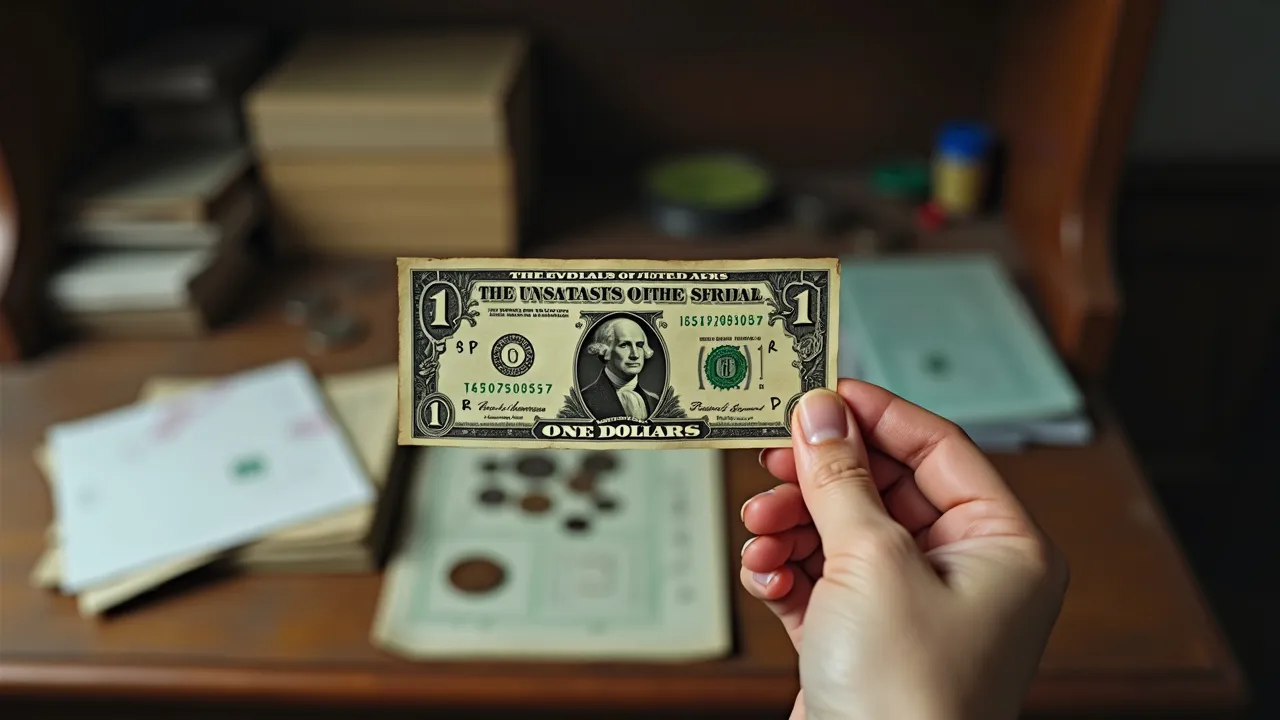
National Dollar Day, observed on August 8th, commemorates the establishment of the U.S. dollar as the official currency of the United States in 1786. It celebrates the history, influence, and everyday use of the dollar in global commerce.
The Historical Origins & Evolutionary Journey
National Dollar Day marks a pivotal moment in American financial history: August 8, 1786, when the Continental Congress established the United States dollar as the nation's standard unit of currency. This decision replaced the chaotic mix of foreign coins and state-issued paper money with a unified monetary system, laying the foundation for the world's most influential currency.
The Foundational Catalyst
After the American Revolution, the fledgling nation faced severe economic instability. The Continental Congress, under the Articles of Confederation, lacked the power to tax and relied on printed paper money that quickly depreciated. In 1785, Congress adopted the dollar as the monetary unit, based on the Spanish milled dollar widely used in the colonies. On August 8, 1786, they formally defined the dollar in terms of silver and gold, setting the stage for the Coinage Act of 1792.
The Legislative Adoption
The Coinage Act of 1792, signed by President George Washington, established the U.S. Mint and created the first federal coinage: gold eagles, silver dollars, and copper cents. The dollar's design has evolved over centuries, featuring iconic figures like Lady Liberty and later presidents. The Federal Reserve Act of 1913 centralized monetary control, and the dollar became the world's primary reserve currency after Bretton Woods.
Modern Global Legacy
Today, the U.S. dollar is used in over 60% of global foreign exchange reserves and is the standard for international trade in commodities like oil and gold. National Dollar Day serves as a reminder of the currency's enduring trust and stability, despite recent debates over fiat money and digital alternatives.
How to Celebrate National Dollar Day
Celebrating National Dollar Day is an opportunity to appreciate the history and utility of money. Whether you're an individual, educator, or business, here are actionable ways to mark the occasion.
Personal Celebrations
- Start a savings jar with dollar bills, reflecting on the power of small savings.
- Visit a local bank or museum to see historical dollar coins or notes.
- Read about the history of the dollar, such as the story of the first U.S. Mint.
- Donate a dollar to a charity, embodying the dollar's role in philanthropy.
School & Educational Activities
- Teach students about the history of currency through interactive lessons.
- Organize a 'dollar hunt' to find different dollar bill designs from various years.
- Discuss the concept of inflation and purchasing power over time.
- Create a mock economy where students earn and spend 'classroom dollars'.
Corporate & Community Observances
- Offer a 'Dollar Day' promotion, e.g., items for $1, to boost local spending.
- Host a financial literacy workshop focusing on budgeting and the value of money.
- Encourage employees to share stories about the most interesting dollar bill they've encountered.
- Support a financial education nonprofit with a $1 per employee donation.
Globally, while the dollar is primarily a U.S. currency, many countries celebrate its influence on trade and economics by holding seminars on global finance.
The Dollar's Impact on Global Economy
The U.S. dollar is the cornerstone of international finance. It serves as the primary reserve currency, meaning central banks around the world hold large reserves of dollars to stabilize their own currencies. This status gives the United States significant economic leverage, often called the 'exorbitant privilege.'
Trade and Commodities
Most global commodities, including oil, gold, and grain, are priced in dollars. This forces even non-U.S. countries to hold dollars for trade, creating consistent demand. The petrodollar system, established in the 1970s, reinforced this by requiring oil exporters to price oil in dollars.
Foreign Exchange Markets
The dollar is involved in about 88% of all currency trades, according to the Bank for International Settlements. Its stability makes it a safe haven during economic crises. However, this can lead to challenges for emerging markets when the dollar strengthens, as their debt denominated in dollars becomes more expensive.
Digital Rivals and the Future
With the rise of cryptocurrencies and central bank digital currencies, some question the dollar's long-term dominance. While alternatives like Bitcoin or China's digital yuan gain traction, the dollar's deep liquidity, legal framework, and global trust suggest it will remain central for decades.
The Evolution of Dollar Design and Security
The physical appearance of the dollar has undergone major transformations since the first Silver Certificate in 1878. National Dollar Day is a perfect time to examine how design and security features have evolved to combat counterfeiting.
Early Designs
The first U.S. paper currency featured intricate engravings and portraits of historical figures like George Washington and Alexander Hamilton. The design was largely monochromatic until the introduction of color in the 1990s.
Modern Security Features
- Watermarks: A faint image of the portrait is visible when held to light.
- Security Threads: Embedded threads glow under UV light and bear text like 'USA 100'.
- Color-Shifting Ink: Numbers change from copper to green when tilted.
- Microprinting: Tiny text visible only with magnification, e.g., 'USA 100' on the $100 note.
The $100 Bill
The $100 bill is the most sophisticated, featuring a 3-D security ribbon with images that shift as the bill is moved. The redesigned note in 2013 added a blue ribbon and raised microprinting to stay ahead of counterfeiters.
Dollar in Popular Culture and Language
The dollar sign ($) is one of the most recognized symbols worldwide. It appears in everything from business logos to slang expressions like 'bucks' or 'greenback.' Its origins trace back to the Spanish peso abbreviation 'Ps,' which evolved into a single S with two vertical strokes.
Idioms and Phrases
- 'Bet your bottom dollar' – meaning absolute certainty, derived from the last coin in a pot.
- 'Sixty-four thousand dollar question' – from a 1940s radio show, meaning a critical unresolved issue.
- 'In for a dime, in for a dollar' – indicating full commitment.
Film and Literature
The dollar has been central to countless films: It's a Wonderful Life shows the value of a dollar in a small town; The Wolf of Wall Street depicts the excesses of dollar wealth. In literature, F. Scott Fitzgerald's The Great Gatsby uses the dollar as a symbol of the American Dream and its corruption.
Controversies and Criticisms of the Dollar System
While the dollar has brought stability, it is not without criticism. National Dollar Day can also be a time to reflect on the flaws in the current monetary system.
Income Inequality
The dollar's power often exacerbates inequality. As the value of the dollar fluctuates, the wealthy can hedge while the poor suffer from inflation. The 'dollar's privilege' allows the U.S. to borrow cheaply, but also encourages unsustainable debt.
Environmental Impact
Producing dollar bills and coins consumes resources. The $1 bill lasts only 6.6 years on average, requiring constant replacement. Critics argue for a shift to polymer notes, which are more durable and recyclable.
Alternatives and Reforms
Some economists advocate for a return to the gold standard or a basket of commodities. Others support digital currencies that reduce transaction costs. However, any transition would be complex, given the dollar's deep entrenchment.
Historical Timeline
The Continental Congress adopts the dollar as the standard monetary unit of the United States, based on the Spanish milled dollar.
On August 8, Congress defines the dollar in terms of silver and gold, laying the foundation for the Coinage Act.
The Coinage Act establishes the U.S. Mint and creates the first federal coinage, including the silver dollar.
To finance the Civil War, the U.S. issues the first paper currency known as 'greenbacks' by the Treasury.
The Federal Reserve Act creates the Federal Reserve System, giving the U.S. a central bank to manage the dollar supply.
The Bretton Woods Agreement makes the U.S. dollar the world's primary reserve currency, convertible to gold.
President Nixon ends dollar convertibility to gold, moving to a fiat currency system.
The U.S. Treasury introduces the new $20 bill with color and enhanced security features, starting a redesign series.
The redesigned $100 bill is released, featuring advanced 3-D security ribbon and microprinting.