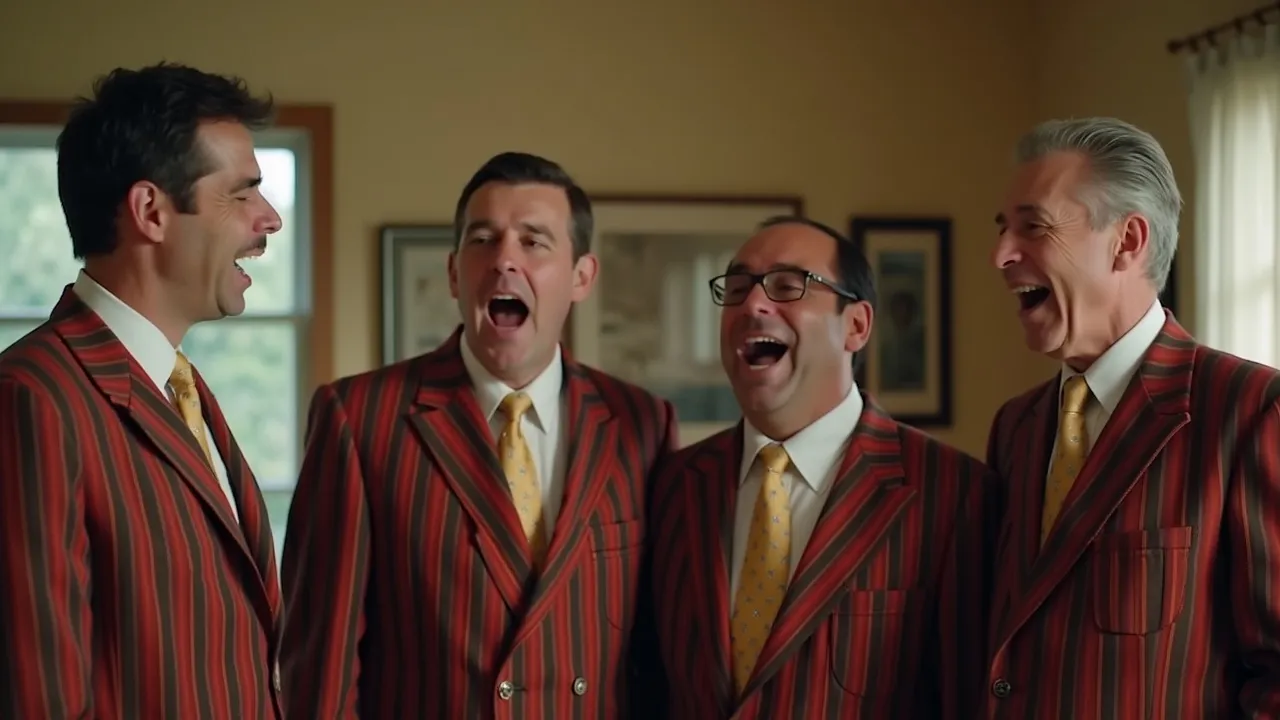
National Barbershop Quartet Day on April 11th celebrates the uniquely American vocal harmony tradition rooted in barbershops. It honors the close harmony, camaraderie, and cultural legacy of barbershop quartets worldwide.
The Historical Origins & Evolutionary Journey
National Barbershop Quartet Day traces its roots to the rich tradition of barbershop harmony singing, a uniquely American art form that emerged in the late 19th century. The observance was officially established by the Barbershop Harmony Society (formerly SPEBSQSA) in 2003 to honor the enduring legacy of four-part a cappella harmony.
The Foundational Catalyst
Barbershop singing originated in African American barbershops, where men would gather to harmonize while waiting for haircuts. The style features four voices: tenor, lead, baritone, and bass, creating a distinctive "ringing" chord known as the "barbershop seventh." This informal social practice spread through minstrel shows and vaudeville, becoming a staple of American popular music by the early 1900s.
The Legislative/Official Adoption
The modern barbershop revival began in 1938 when a group of men in Tulsa, Oklahoma, founded the Society for the Preservation and Encouragement of Barbershop Quartet Singing in America (SPEBSQSA). Renamed the Barbershop Harmony Society in 2013, the organization now boasts thousands of members worldwide. National Barbershop Quartet Day was declared to coincide with the society's annual international convention, typically held in April.
Modern Global Legacy
Today, barbershop harmony is celebrated on every continent. The day serves as a reminder of the genre's inclusive roots and its power to build community through song. Quartets and choruses perform at schools, senior centers, and public venues, keeping the tradition alive for new generations.
How to Celebrate National Barbershop Quartet Day
Whether you are a seasoned singer or a casual listener, there are many ways to participate in National Barbershop Quartet Day. Here is a definitive guide to celebrating the close harmony tradition.
For Individuals and Families
- Attend a local barbershop performance or open rehearsal. Many quartets host free public events on April 11th.
- Host a listening party featuring classic quartets like the Buffalo Bills, The Dapper Dans, or contemporary groups like Vocal Spectrum.
- Try singing barbershop yourself: find sheet music online for simple tags (short songs) and gather three friends to harmonize.
For Schools and Music Educators
- Introduce students to the four voice parts: tenor, lead, baritone, bass. Use visual aids to demonstrate the unique chord structures.
- Organize a school-wide sing-along of classic barbershop songs like "Sweet Adeline" or "Good Night Ladies."
- Invite a local quartet to give a workshop on vocal techniques such as "locking in" chords and vowel matching.
Global Celebrations
While April 11th is the primary date in the United States, Australia and the UK also observe the day on the same date due to coordination with the International Barbershop Harmony Society. In countries like Sweden, Germany, and Japan, barbershop choruses often hold special concerts or social media campaigns. No major regional date variations exist, as the day is largely unified internationally.
The Cultural Impact of Barbershop Harmony
Barbershop harmony has profoundly influenced American music and social history. Emerging from African American communities, it blended with European choral traditions to create a sound that transcends racial and cultural boundaries. The genre's emphasis on community and participation rather than virtuosity made it accessible to all.
Social Bonding and Inclusivity
Barbershop quartets often formed organically in workplaces, churches, and social clubs. The tradition became a powerful bonding tool, especially for men seeking camaraderie during the Great Depression. Today, the Barbershop Harmony Society actively promotes diversity, with female quartets (often associated with Sweet Adelines International) flourishing since the 1940s.
Influence on Popular Music
Barbershop chords and arrangements have influenced everything from doo-wop to modern pop. Artists like The Beatles (their harmonies in "Nowhere Man"), Billy Joel, and even heavy metal bands have cited barbershop as an inspiration. The annual International Barbershop Harmony Convention continues to be a hub for enthusiasts and professional arrangers.
The Musical Structure of Barbershop Quartets
Understanding the music behind National Barbershop Quartet Day deepens appreciation for the art form. Barbershop is characterized by a specific chord structure and performance style.
The Four Voice Parts
- Tenor: The highest voice, harmonizing above the lead. Often playful and light.
- Lead: The melody carrier, usually the second highest part. The lead drives the song.
- Baritone: The harmonic filler, completing chords below or above the lead as needed.
- Bass: The lowest voice, providing rhythmic and harmonic foundation.
The Barbershop Seventh Chord
The hallmark of barbershop harmony is the "barbershop seventh" — a dominant seventh chord with a slightly flattened fifth, creating a resonant "ringing" overtone. Singers aim to achieve "lock and ring," where voices blend so perfectly that additional upper partial harmonics are heard.
Notable Quartets and Landmark Performances
Several quartets have achieved legendary status, shaping the barbershop revival. The Buffalo Bills won the 1950 SPEBSQSA championship and later performed in Broadway's "The Music Man." The Dapper Dans, Disney's resident quartet, have entertained millions at Disney parks since 1959. More recently, Vocal Spectrum (2004 champions) and Signature (2008 champions) have pushed the genre into contemporary music.
Landmark Events in Barbership History
1938: SPEBSQSA founded in Tulsa, Oklahoma.
1950: First international convention in St. Louis.
2003: Inaugural National Barbershop Quartet Day.
2013: SPEBSQSA rebrands as Barbershop Harmony Society.
Modern Adaptations and the Digital Age
In the 21st century, barbershop has found new life online. YouTube and TikTok channels feature quartets performing classic songs and modern hits in barbershop style. The Barbershop Harmony Society offers virtual learning resources, including apps for tuning and ear training. During the COVID-19 pandemic, remote quartet singing became popular using video editing software, demonstrating the flexibility of the art form.
Social media campaigns on #NationalBarbershopQuartetDay encourage users to share their own barbershop experiences, whether singing or listening. The day also sees a surge in Google searches for "barbershop quartet near me" and "how to form a barbershop quartet."
Historical Timeline
Barbershop harmony singing emerges in African American barbershops, blending ragtime and folk melodies with four-part harmony.
Barbershop quartets become popular in vaudeville and early recording industry; songs like 'Down by the Old Mill Stream' are recorded.
Society for the Preservation and Encouragement of Barbershop Quartet Singing in America (SPEBSQSA) founded in Tulsa, Oklahoma by Owen C. Cash and Rupert Hall.
First SPEBSQSA national contest held in St. Louis; The Flat Foot Four win the championship.
Sweet Adelines International founded, promoting barbershop harmony among women.
The Buffalo Bills win SPEBSQSA championship; they later appear on Broadway and in films.
Barbershop quartet featured in Meredith Willson's musical 'The Music Man', sparking mainstream interest.
First National Barbershop Quartet Day proclaimed by SPEBSQSA, observed on April 11.
SPEBSQSA rebrands as Barbershop Harmony Society, reflecting global reach.
20th anniversary of National Barbershop Quartet Day celebrated with online events and community concerts worldwide.