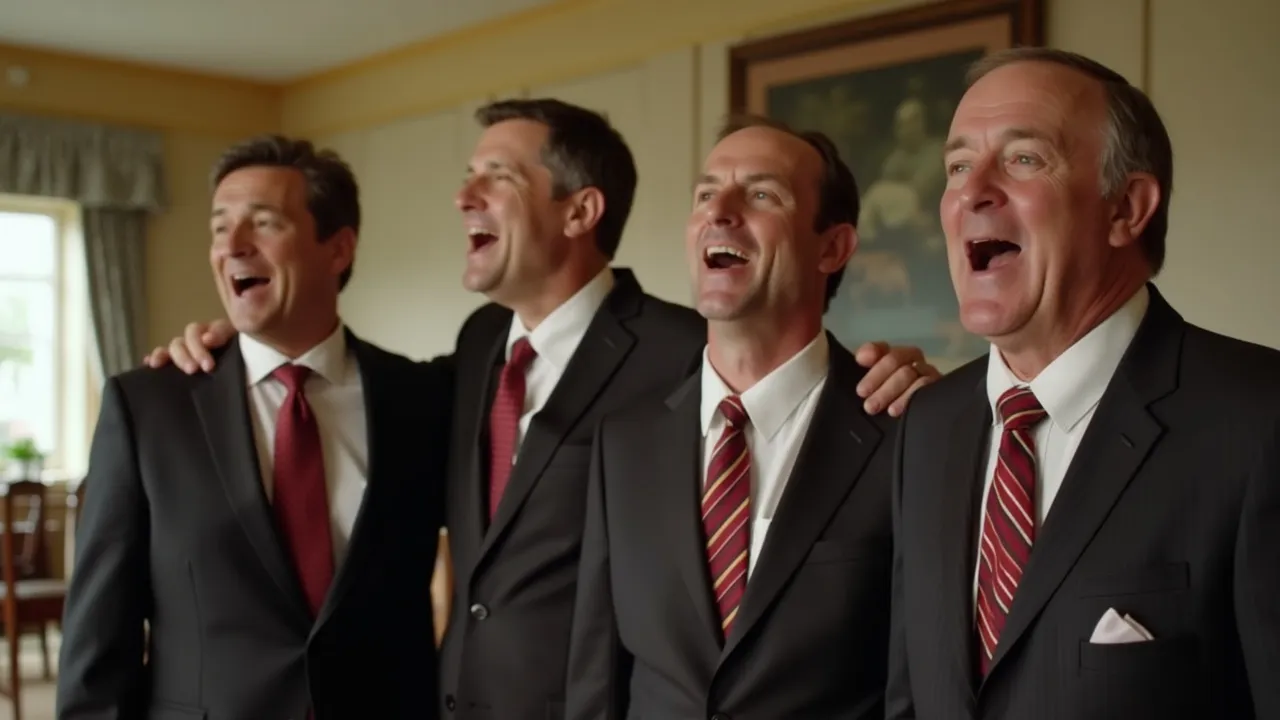
Barbershop Quartet Day on April 11th celebrates the close-harmony singing tradition. Honor the four-part a cappella art form by listening, singing, or attending local performances.
The Historical Origins & Evolutionary Journey
Barbershop Quartet Day, observed annually on April 11th, traces its roots to the early 20th century when barbershop harmony blossomed in the United States. The exact date is tied to the founding of the Society for the Preservation and Encouragement of Barber Shop Quartet Singing in America (SPEBSQSA) in 1938, which later became the Barbershop Harmony Society. This organization standardized the art form and promoted the close-harmony style worldwide.
The Foundational Catalyst
Barbershop singing emerged in the late 1800s, influenced by African American musical traditions, minstrel shows, and vaudeville. Quartets often sang in barbershops, hence the name. The style features four voice parts: lead, tenor, baritone, and bass, creating a distinctive "ringing" chord. By the 1930s, the hobby was fading, prompting SPEBSQSA's formation in Tulsa, Oklahoma, on April 11, 1938.
The Legislative/Official Adoption
While never an official federal holiday, Barbershop Quartet Day gained traction through grassroots efforts. The Barbershop Harmony Society encourages chapters to hold events on April 11 each year. Some states have proclaimed it via gubernatorial decree, recognizing the cultural impact of barbershop harmony. The date symbolizes the society's founding and the preservation of the art.
Modern Global Legacy
Today, barbershop harmony thrives worldwide. The Barbershop Harmony Society boasts over 20,000 members globally. Competitions such as the International Barbershop Quartet Contest showcase top talent. Barbershop Quartet Day now extends beyond the U.S., with events in Canada, the UK, Australia, and New Zealand. It serves as a reminder of the power of four-part harmony and community singing.
How to Celebrate Barbershop Quartet Day
Barbershop Quartet Day offers endless opportunities to engage with the music. Whether you're a seasoned singer or a curious listener, here are actionable strategies to celebrate:
For Individuals
- Listen to classic quartets like The Buffalo Bills, The Dapper Dans, or modern groups like Vocal Spectrum.
- Learn a barbershop song using sheet music or online tutorials. Start with standards like Sweet Adeline or Goodnight, Sweetheart.
- Attend a local chapter meeting of the Barbershop Harmony Society. Many hold open sings on April 11.
For Schools & Educational Institutions
- Host a barbershop workshop teaching the basics of four-part harmony.
- Organize a student quartet competition. Provide coaching on vocal technique and stage presence.
- Include barbershop history in music curriculum, highlighting its African American roots and evolution.
For Organizations & Communities
- Arrange a public sing-along in a park or community center. Invite local quartets to perform.
- Partner with a barbershop chorus for a fundraising concert. Proceeds can support music education.
- Use social media with hashtags like #BarbershopQuartetDay to share videos and spread awareness.
International Variations
While April 11 is widely recognized, some regions celebrate on other dates. In the United Kingdom, the British Association of Barbershop Singers (BABS) sometimes holds events on the nearest Saturday. Australia and New Zealand align with the Southern Harmony Festival. However, the primary observance remains April 11 to honor SPEBSQSA's founding.
The Musical Structure & Harmonic Science
Barbershop harmony is defined by its unique chord structure and overtone production. The core of barbershop is the barbershop seventh chord, a dominant seventh chord that creates a "ringing" effect when sung correctly. This phenomenon, called consonant dissonance, is due to the frequencies aligning to produce an audible third overtone.
The Four Voice Parts
- Lead: Sings the melody, usually in a comfortable mid-range.
- Tenor: Sings above the lead, harmonizing with a light, pure tone.
- Baritone: Fills in the missing notes, often below the lead but can cross above.
- Bass: Provides the foundation, singing the lowest notes.
Chord Ringing & Lock
When all four voices tune precisely, the overtones amplify, producing a "lock" that sounds like a single instrument. This requires ear training and vowel matching. Barbershop singers practice staging (spatial arrangement) and visual presentation to enhance the audience's experience.
Global Impact & Cultural Significance
Barbershop harmony has transcended its American origins to become a global phenomenon. The Barbershop Harmony Society has chapters in over a dozen countries. International contests like the International Barbershop Quartet Contest attract participants from Europe, Asia, and Oceania. The style also influences modern a cappella; groups like Pentatonix draw from barbershop techniques.
Community Building
Barbershop promotes inclusivity. Many groups are community-based and welcome singers of all ages. The hobby strengthens social bonds and provides emotional benefits through group singing. Barbershop Quartet Day amplifies these values, encouraging new members to join.
Preservation of Musical Heritage
The day also serves to preserve early 20th-century popular songs, many of which are kept alive by barbershop groups. By performing standards like Let Me Call You Sweetheart and My Wild Irish Rose, quartets maintain a living history of American music.
Barbershop Quartet Competitions & Events
Competitions are a cornerstone of barbershop culture. The International Barbershop Quartet Contest (held annually by the Barbershop Harmony Society) crowns the world champion quartet. Other major events include:
- Midwinter Convention - Features quartets and choruses in a festive setting.
- District Contests - Regional competitions leading to the international level.
- Sweet Adelines International - A parallel organization for women with its own contests.
Judging Criteria
Quartets are evaluated on singing (pitch, tone, rhythm), presentation (choreography, expression), and music (difficulty, interpretation). Perfecting these elements requires dedicated rehearsal and coaching. Barbershop Quartet Day often sees local contests or showcases.
Famous Barbershop Quartets & Legacy
Several quartets have left an indelible mark on the art form. The Buffalo Bills won the 1950 international contest and later appeared on The Ed Sullivan Show. The Dapper Dans, known for their Disneyland performances, have popularized the style for generations. Modern champions like Vocal Spectrum (2004) and After Hours (2014) push harmonic boundaries.
Media Appearances
Barbershop has featured in films like The Music Man and TV shows such as The Simpsons. The style's nostalgic charm persists, appealing to both older and younger audiences. Barbershop Quartet Day celebrates these contributions and encourages new interpretations.
How to Start Your Own Barbershop Quartet
Forming a barbershop quartet is accessible and rewarding. Follow these steps:
- Find three other singers. Use the Barbershop Harmony Society's chapter locator or post on social media.
- Choose a song. Start with a simple arrangement (e.g., Goodnight, Sweetheart from the society's learning tracks).
- Practice regularly. Focus on tuning, vowels, and blend. Record yourself to improve.
- Perform at local events, open mics, or retirement homes. Barbershop Quartet Day is an ideal debut.
Many quartets find success through coaching and attending workshops. The society offers online resources and certification programs. The key is enthusiasm and a willingness to learn.
Historical Timeline
Barbershop quartet singing emerges as a popular informal pastime, particularly in African American communities. Early quartets perform in barbershops and on street corners.
Barbershop harmony becomes a staple of vaudeville and minstrel shows. Recordings by groups like the Haydn Quartet popularize the sound.
On April 11, the Society for the Preservation and Encouragement of Barber Shop Quartet Singing in America (SPEBSQSA) is founded in Tulsa, Oklahoma, by Owen C. Cash and Rupert Hall.
SPEBSQSA holds the first national barbershop quartet contest, later called the International Quartet Contest. The organization grows rapidly, with chapters nationwide.
The Buffalo Bills win the international contest and later appear on national television, bringing barbershop to a wider audience.
Sweet Adelines International (founded 1947) and the Barbershop Harmony Society (new name in 2000) expand globally. Barbershop becomes popular in the UK, Australia, and New Zealand.
Barbershop Quartet Day begins to be informally celebrated on April 11, coinciding with the society's founding date.
Vocal Spectrum wins the International Quartet Contest, known for pioneering innovative arrangements and high-energy performances.
Barbershop experiences a resurgence through social media and a cappella groups like Pentatonix. The Barbershop Harmony Society modernizes its outreach, embracing diversity and education.