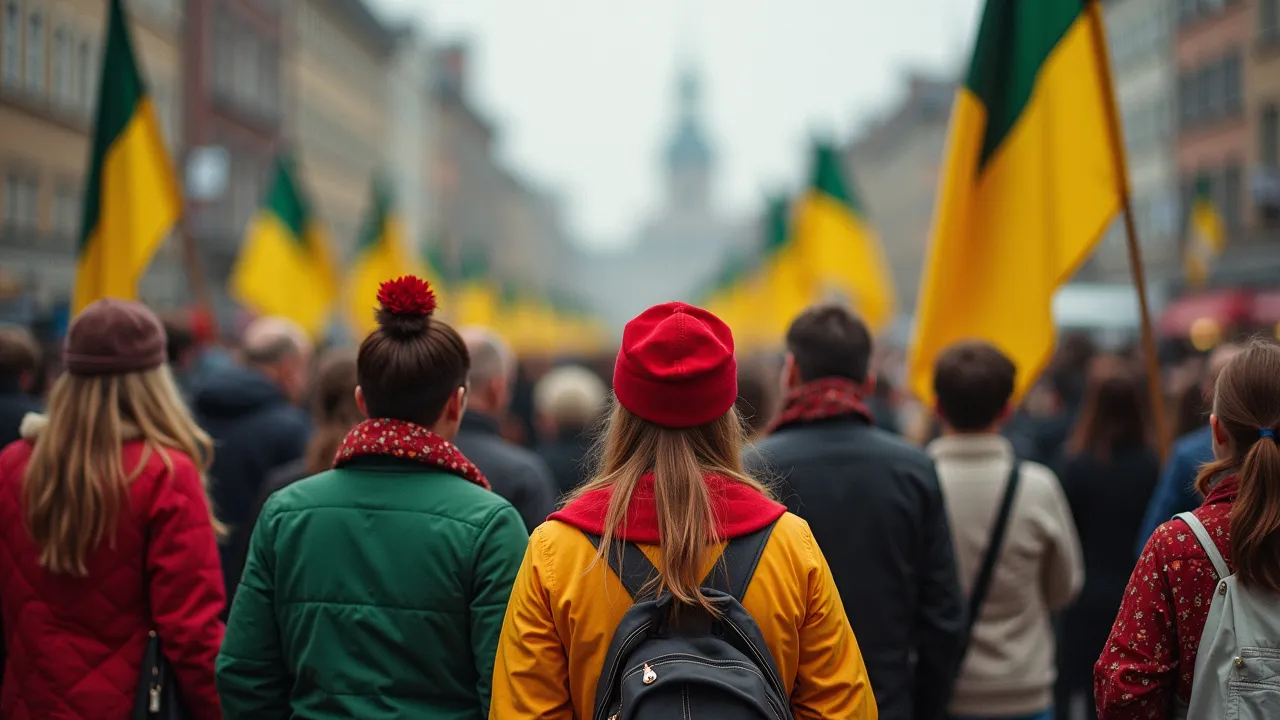
Lithuanian Independence Day, observed on February 16th, commemorates the 1918 Act of Independence that reestablished Lithuania as a sovereign state. It is a national holiday marked by patriotic ceremonies, cultural events, and family gatherings across Lithuania and the diaspora.
The Historical Origins & Evolutionary Journey
Lithuanian Independence Day, celebrated annually on February 16th, marks the signing of the Act of Independence of Lithuania in 1918. This act declared the reestablishment of an independent state, ending over a century of foreign rule. The journey to independence was complex, involving the struggle against the Russian Empire, the rise of national consciousness, and the geopolitical turmoil of World War I.
The Foundational Catalyst
The roots of Lithuanian independence date back to the 19th-century national revival, when intellectuals and activists began promoting the Lithuanian language and culture. The suppression of the Lithuanian press and the ban on Latin script by the Russian Empire spurred a determined underground movement. By 1917, the collapse of the Tsarist regime created a window of opportunity. The Council of Lithuania (Lietuvos Taryba), elected at the Vilnius Conference in September 1917, took up the task of declaring independence.
The Legislative/Official Adoption
On February 16, 1918, the 20 members of the Council of Lithuania signed the Act of Independence in Vilnius. The document proclaimed Lithuania as an independent state, with a democratic government and its capital in Vilnius. The Act was a bold move, as German troops still occupied the territory. Despite initial German opposition, the Act laid the foundation for international recognition. After World War I, Lithuania fought wars of independence against Soviet and Polish forces, securing its sovereignty by 1920.
Modern Global Legacy
Independence Day was celebrated until the Soviet occupation in 1940. During the Soviet era (1944–1990), February 16th was banned but kept alive by diaspora communities and dissidents. When Lithuania restored independence in 1990, the holiday was revived. Today, February 16th is a national holiday, symbolizing resilience and the enduring spirit of the Lithuanian people. Celebrations include flag hoisting, church services, concerts, and parades, both in Lithuania and in Lithuanian communities worldwide.
How to Celebrate Lithuanian Independence Day
Celebration Strategies for Individuals, Schools, and Organizations
- Attend Official Ceremonies: Many cities host flag-raising ceremonies at town squares. In Vilnius, the main event takes place at the Presidential Palace with military honors.
- Participate in Cultural Events: Enjoy concerts featuring Lithuanian folk music, classical compositions, and modern performances. Many museums and galleries offer free admission.
- Host a Traditional Meal: Gather family and friends for a meal featuring Lithuanian dishes like cepelinai, šaltibarščiai, and kugelis. Toast with ‘Lithuanian honey’ vodka or beer.
- Engage in Community Service: Many Lithuanians volunteer or donate to causes that support national identity, such as restoring historical monuments or funding cultural programs.
- Educational Activities: Schools organize lessons on Lithuanian history, hold art contests, and recite poems by national poets. Students may dress in traditional costumes.
- Social Media Campaigns: Share the significance of the day using hashtags like #LietuvosNepriklausomybė or #LithuanianIndependenceDay. Post photos of flag displays or family gatherings.
International Celebrations
Lithuanian diaspora communities in the United States, Canada, United Kingdom, and Australia hold public events such as film screenings, lectures, and church services. In Chicago, home to a large Lithuanian community, a parade and cultural festival are organized. In London, the Lithuanian embassy hosts a reception for dignitaries and community leaders.
Symbolism and Traditions of the Day
Lithuanian Independence Day is rich with symbols. The national flag—yellow, green, and red—represents the sun, nature, and blood shed for freedom. On February 16th, it is displayed prominently on buildings and homes. Another key tradition is the singing of the national anthem Tautiška giesmė, often performed simultaneously by citizens across the country as a symbolic act of unity.
Traditional Foods
Special meals are prepared, including cepelinai (potato dumplings filled with meat), kibinai (pastry turnovers), and šakotis (a spit cake). These dishes connect modern celebrations to rural heritage.
Many Lithuanians also light candles in windows or attend bonfires. The bonfire tradition recalls the ancient practice of signaling across hills during times of war and resistance.
Global Impact and Diaspora Engagement
Lithuanian Independence Day is not only celebrated in Lithuania but also by the Lithuanian diaspora, which numbers over 1 million people. Communities in the United States, Brazil, Argentina, Canada, and the United Kingdom hold events that preserve Lithuanian language and customs. These celebrations often feature folk dance troupes, choir performances, and exhibits of Lithuanian art.
In recent years, the day has gained international recognition through diplomatic events. Embassies and consulates host receptions, highlighting cultural diplomacy. The holiday also fosters tourism, as visitors travel to Lithuania to experience the national pride and historic sites.
The Role of Women in the Independence Movement
Women played a vital yet often overlooked role in the struggle for Lithuanian independence. Figures like Gabrielė Petkevičaitė-Bitė, a writer and activist, and Marytė Melnikaitė, a partisan fighter, are remembered. Women organized underground schools, smuggled books (as knygnešys), and participated in the Council of Lithuania supporting debates. Their contributions are honored through special exhibitions and lectures on Independence Day.
Educational Importance and Preservation of History
Schools dedicate entire weeks to learning about the Act of Independence. Students study the signatories of the Act, such as Jonas Basanavičius and Antanas Smetona, and visit historical sites like the House of Signatories in Vilnius. Museums offer guided tours and workshops. The educational focus aims to instill patriotism and ensure younger generations understand the sacrifices made for freedom.
Universities often hold academic conferences on February 16th, discussing Lithuanian history, international law, and the impact of independence on European stability.
Historical Timeline
On February 16th, the Council of Lithuania signs the Act of Independence, establishing the Republic of Lithuania. The act is signed in Vilnius by 20 council members.
First official celebration of Lithuanian Independence Day on February 16th, despite ongoing wars for territorial integrity.
Lithuania secures international recognition after the war with Soviet Russia. The holiday becomes a symbol of national unity.
Soviet Union occupies Lithuania, banning public celebrations of Independence Day. The day is commemorated secretly by resistance groups.
Lithuania declares restoration of independence on March 11, 1990. February 16th is revived as a national holiday the following year.
Lithuania votes to join the European Union in a referendum on May 10-11, strengthening ties with the West. Independence Day sees renewed significance.
Centennial of the Act of Independence. Major celebrations occur across Lithuania, including a mass flag-raising and a parade with international guests.
Lithuanian Independence Day is marked by increased security due to geopolitical tensions, but public attendance remains high. Diaspora events are held in over 40 countries.