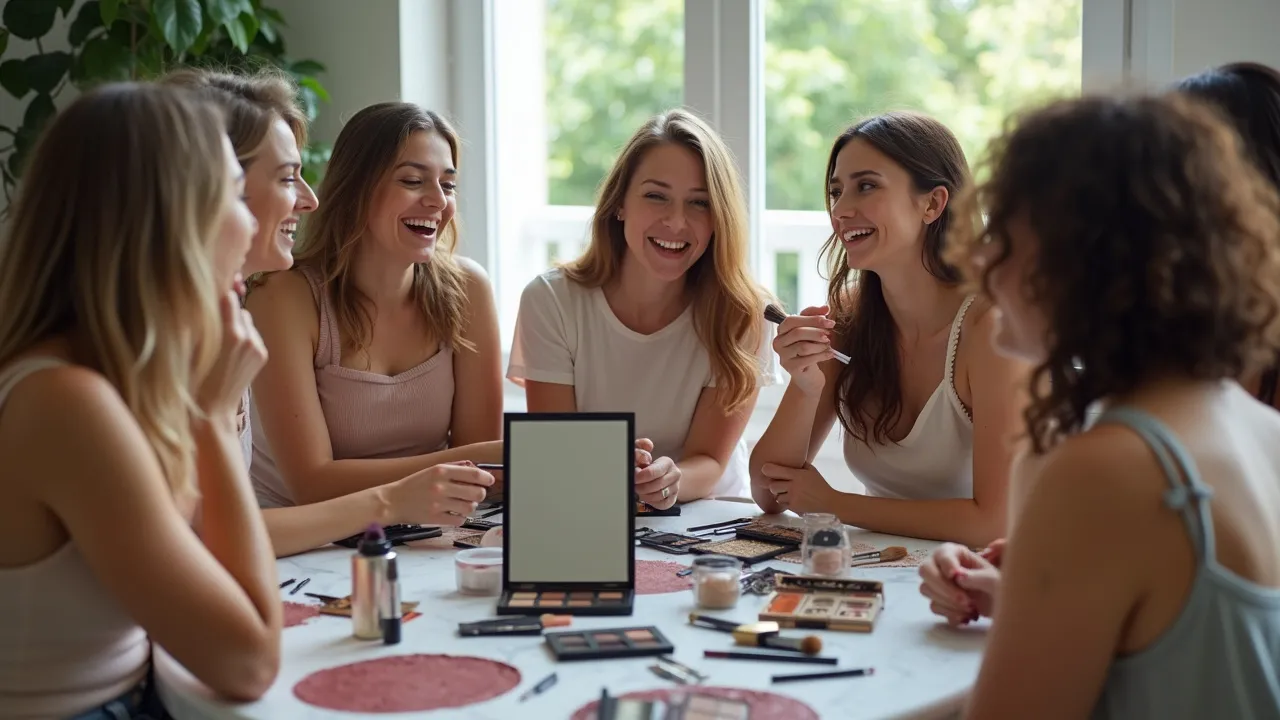
International Makeup Day, observed on September 10th, celebrates the artistry, history, and cultural impact of cosmetics. It honors makeup as a tool for self-expression, empowerment, and creativity worldwide, encouraging everyone to explore their unique beauty.
The Historical Origins & Evolutionary Journey
International Makeup Day traces its roots to a grassroots movement launched by New York makeup artist Michele Andrew in 2014. Andrew, frustrated by the lack of a global day celebrating the transformative power of makeup, started a petition and social media campaign calling for a dedicated observance. The first unofficial event took place on September 10, 2015, with a small gathering of professionals and enthusiasts in Manhattan. By 2017, the day gained international traction through partnerships with major beauty brands, influencers, and nonprofit organizations focusing on self-esteem and education.
The Foundational Catalyst
The concept of a dedicated makeup day emerged during the rise of social media platforms like Instagram and YouTube, where makeup tutorials and transformative looks became viral sensations. Michele Andrew envisioned a day that would not only celebrate artistry but also challenge societal norms around beauty. The catalyst was the 2014 viral campaign #MakeupIsArt, which highlighted the skill involved in makeup application, from simple daily routines to complex avant-garde designs.
Legislative/Official Adoption
While International Makeup Day is not an official government holiday, it received recognition from several industry bodies. In 2018, the Cosmetic, Toiletry, and Fragrance Association (CTFA) officially endorsed the date, and several U.S. states issued proclamations acknowledging September 10 as Makeup Day. The United Nations Educational, Scientific and Cultural Organization (UNESCO) considered recognizing it as a day promoting cultural expression through cosmetics, though no formal declaration has been made.
Modern Global Legacy
Today, International Makeup Day is celebrated in over 50 countries. It has evolved beyond a simple celebration into a platform for discussing inclusivity in beauty standards, the ethical sourcing of ingredients, and the empowerment of marginalized communities through makeup. Major brands host workshops, and influencers create content around themes such as "Makeup for Good" and "My Makeup My Identity."
How to Celebrate International Makeup Day
International Makeup Day offers limitless opportunities for individuals, schools, and organizations to participate. Below are actionable strategies tailored to different contexts.
For Individuals
- Experiment with a New Look: Step out of your comfort zone. Try graphic eyeliner, bold lipstick, or a full contouring routine that you've never attempted before.
- Host a Makeup Swap Party: Gather friends and exchange products you no longer use. Ensure hygiene by sanitizing items. This reduces waste and introduces you to new brands.
- Learn About Ingredients: Research the components of your favorite products. Use this day to transition towards cruelty-free, vegan, or sustainable brands.
- Post a Tutorial: Share your makeup routine on social media using #InternationalMakeupDay. Teach one technique you mastered, from winged liner to gradient lips.
For Businesses and Brands
- Host a Masterclass: Invite a local makeup artist for a live or virtual class. Focus on a trending theme like "skinimalism" or "color theory for makeup."
- Launch a Limited Edition Collection: Create a product drop that donates a portion of sales to a charity supporting women's education or mental health.
- Employee Appreciation: Offer a complimentary makeup touch-up station for staff. Encourage them to share their empowerment stories.
Cultural Variations Worldwide
In Japan, International Makeup Day coincides with the start of autumn, so many celebrate by transitioning to warmer shades of eyeshadow and lip color. In Brazil, the day is often marked by vibrant beach-inspired looks with long-lasting formulas. South Korean celebrations focus on glass skin trends and collaborative brand events. In Nigeria, makeup artists host community workshops promoting the use of bold colors that complement deep skin tones.
The Artistry and Science of Makeup
Makeup is both an art form and a science. Pigment chemistry, light reflection, and skin biology all play crucial roles in product formulation. This section explores the intersection of creativity and technology that defines modern cosmetics.
Color Theory in Practice
Understanding the color wheel is essential for achieving harmonious looks. Complementary colors (e.g., purple and yellow) are used to cancel out unwanted tones in color correcting. Makeup artists apply this principle to neutralize redness or dark circles.
Formulation Innovations
Recent advances include microencapsulated vitamins in foundations that release nutrients over time, and thermochromic pigments that adjust to skin temperature for a custom finish. Long-wear formulas use film-forming polymers that create a flexible layer resistant to sweat and humidity.
The Role of Lighting
Makeup application is highly dependent on lighting. Ring lights with adjustable color temperature have become staple tools for influencers, mimicking natural daylight. Professional artists recommend applying makeup in cool white light to avoid flashback in photographs.
Makeup and Mental Health: Empowerment Through Self-Care
Research indicates that makeup application can positively affect mental well-being. The "lipstick effect"—a term coined during the Great Depression—describes how small indulgences boost mood during economic downturns. Today, psychological studies show that applying makeup can enhance self-perception and reduce anxiety.
Therapeutic Rituals
The repetitive motions of blending and brushing can be meditative. Many individuals use their daily makeup routine as a form of mindfulness, focusing on the present moment. For those with depressive episodes, maintaining a simple skincare and makeup schedule provides a sense of normalcy.
Community and Support
International Makeup Day often collaborates with organizations like the Makeup for Mental Health Alliance, which runs workshops in hospitals and shelters. Participants learn basic techniques while discussing self-esteem and body image.
Inclusivity and Diversity in the Makeup Industry
The push for inclusivity has reshaped the makeup industry over the past decade. International Makeup Day serves as a platform to highlight progress and persistent gaps.
Shade Range Expansion
Before 2018, many brands offered only 10-15 foundation shades. Campaigns like #MakeUpForAll pressured companies to develop inclusive ranges. Today, market leaders like Fenty Beauty and Bobbi Brown offer up to 40 shades. However, 20% of drugstore brands still lack adequate options for deeper skin tones.
Gender Inclusivity
Makeup is increasingly celebrated as gender-neutral. Brands like Milk Makeup feature male and non-binary ambassadors. Drag culture has influenced mainstream trends, with bold contouring and elaborate eye looks crossing over into everyday wear for all genders.
Sustainability and Ethical Practices in Cosmetics
As consumers become more environmentally conscious, the makeup industry faces pressure to adopt sustainable practices. International Makeup Day encourages discussions around green chemistry and ethical sourcing.
Packaging Innovations
Traditional plastic compacts are being replaced with biodegradable bamboo cases and refillable systems like those from Kjaer Weis and RMS Beauty. Brands are also reducing secondary packaging, such as outer boxes, to cut waste.
Cruelty-Free and Vegan Standards
Leaping Bunny and PETA certifications guide consumers. Over 60% of new makeup launches in 2023 were labeled cruelty-free. However, China's animal testing requirements remain a barrier for global brands, though post-2021 reforms are easing restrictions.
Historical Timeline
Michele Andrew starts a social media campaign and petition for a global makeup day, gaining 50,000 signatures within three months.
First unofficial International Makeup Day celebrated on September 10 in New York City, with 200 attendees at a pop-up makeup workshop.
Event expands to five major cities: New York, London, Tokyo, São Paulo, and Sydney. Over 10,000 people participate in local events.
CTFA officially endorses International Makeup Day. Major brands like L'Oréal and MAC launch charitable products with proceeds supporting women's shelters.
Due to COVID-19, celebrations shift to virtual platforms. Record-breaking online tutorials with over 50 million views on YouTube.
UNESCO hosts a panel discussion on makeup as intangible cultural heritage. Several countries issue proclamations recognizing the day.
International Makeup Day reaches 100 countries. The founder launches a scholarship fund for aspiring makeup artists from underrepresented communities.