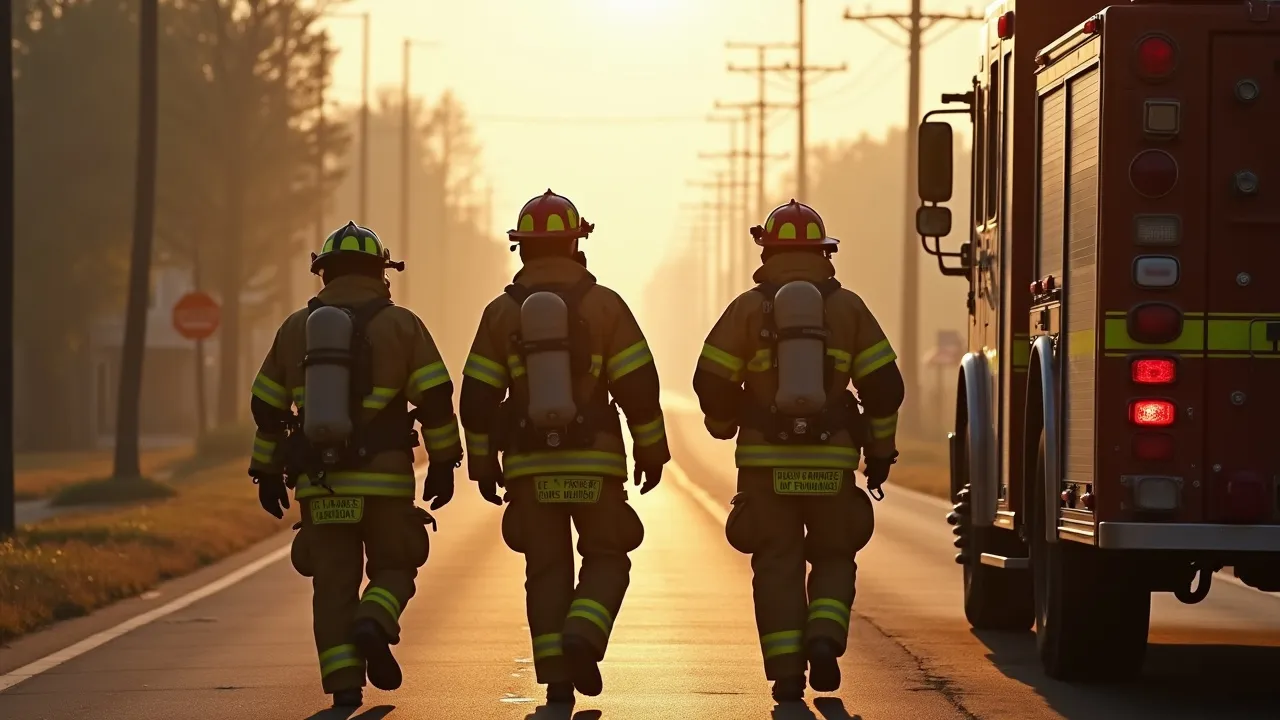
International Firefighters' Day, observed on May 4th, honors the courage and sacrifice of firefighters worldwide. Established in 1999, it commemorates the lives lost in the Linton fire tragedy and promotes fire safety awareness.
The Historical Origins & Evolutionary Journey
International Firefighters' Day traces its roots to a devastating wildfire in Australia. On December 2, 1998, a lightning strike sparked a massive bushfire near Linton, Victoria. The blaze claimed the lives of five volunteer firefighters: Garry Vye, Matthew Armstrong, Jason Thomas, Chris Evans, and Stuart Dawson. This tragedy galvanized the global firefighting community.
The Foundational Catalyst
Lt. JJ Edmondson, a firefighter from Victoria, proposed a day to honor fallen firefighters and show appreciation for those still serving. He chose May 4th, which coincides with Saint Florian's Day—the patron saint of firefighters. Saint Florian, a Roman officer who died for his faith in 304 AD, is revered as the protector against fire. The date symbolizes the eternal duty of firefighters to protect lives and property.
The Legislative/Official Adoption
In January 1999, Edmondson launched a global campaign via email and fire service networks. The response was overwhelming. By May 4, 1999, fire departments across Australia, the United States, Canada, and Europe held commemorative events. The date was formally recognized by the International Association of Firefighters (IAFF) and the National Fire Protection Association (NFPA). Today, it is observed in over 100 countries.
Modern Global Legacy
International Firefighters' Day has evolved into a multifaceted observance. It includes memorial services, fire station open houses, and public education campaigns. Social media amplifies messages of gratitude using hashtags like #InternationalFirefightersDay. The day also serves as a reminder of the physical and mental health risks firefighters face, including cancer, PTSD, and cardiovascular disease. Many organizations use the day to launch initiatives for improved safety equipment and wellness programs.
How to Celebrate International Firefighters' Day
Celebrating International Firefighters' Day involves a mix of gratitude, education, and community engagement. Below are actionable ways individuals, schools, and organizations can participate.
For Individuals
- Visit your local fire station: Many stations host open houses where visitors can see equipment and meet firefighters. Call ahead to schedule.
- Write thank-you notes: A simple letter or card expressing appreciation can boost morale. Deliver them to a nearby station.
- Display red and blue lights: These colors symbolize firefighting. Place a candle or string lights in your window on May 4th.
- Donate to burn foundations: Organizations like the Burn Institute and the IAFF Foundation support firefighters and burn survivors.
- Learn fire safety: Use the day to teach your family about smoke alarms, escape plans, and stop-drop-roll.
For Schools & Organizations
- Host a fire safety assembly: Invite local firefighters to speak about fire prevention and career opportunities.
- Organize a fundraiser: Collect funds for fire departments in need of equipment or for families of fallen firefighters.
- Conduct a drill: Practice fire drills and review emergency procedures. Time the evacuation and discuss improvements.
- Create art projects: Have children draw or paint pictures honoring firefighters, then display them at the school or send them to a station.
Corporate Celebrations
Companies can show appreciation by providing catered meals to fire stations, sponsoring community fire safety fairs, or offering paid volunteer time for employees who assist with fire department events. Social media campaigns recognizing local heroism are also effective.
Traditions Around the World
- Australia: Memorial services at the Linton memorial, plus nationwide fire station open days.
- United States: Many departments hold flag-raising ceremonies and memorial runs. The National Fallen Firefighters Foundation holds a candlelight vigil.
- Canada: Fire departments participate in Fill the Boot campaigns for muscular dystrophy research.
- United Kingdom: The Fire Brigades Union organizes remembrance events and pushes for better working conditions.
- India: Fire safety awareness camps in schools and communities, often organized by municipal fire services.
Global Impact and Firefighter Contributions
Firefighters are on the front line of disasters, both natural and man-made. Their impact extends beyond fire suppression.
Disaster Response
From earthquakes to terrorist attacks, firefighters are often the first responders. They rescue trapped individuals, provide medical aid, and assist in hazardous material containment. The 9/11 attacks in the United States saw over 340 firefighters perish while responding—a stark reminder of the risks.
Wildfire Management
Climate change has increased the frequency and intensity of wildfires. Firefighters in Australia, the United States, and southern Europe battle blazes for weeks on end. Strategies include controlled burns, aerial water drops, and building containment lines. International cooperation, such as the deployment of Canadian firefighters to Australia, highlights solidarity.
Community Education
Firefighters spend significant time on prevention. They teach fire safety in schools, inspect buildings for code compliance, and install smoke alarms in vulnerable neighborhoods. Programs like the Community Risk Reduction (CRR) model in the US aim to proactively reduce fire deaths and injuries.
Firefighter Health, Safety, and Wellness
The physical and mental demands of firefighting are extreme. International Firefighters' Day also serves as a platform to address health concerns.
Occupational Hazards
- Cancer: Exposure to carcinogens in smoke and soot increases the risk of certain cancers. Firefighters are 9% more likely to develop cancer and 14% more likely to die from it than the general population.
- Cardiovascular Disease: Sudden cardiac events account for 45% of on-duty firefighter deaths. Strenuous exertion, heat stress, and toxic exposures contribute.
- Mental Health: PTSD, depression, and substance abuse are common due to traumatic incidents and sleep deprivation. Many departments now offer peer support and counseling.
Preventive Measures
Annual medical screenings, improved protective gear, and mandatory fitness programs are being adopted globally. The NFPA 1582 standard in the US outlines comprehensive medical requirements. Decontamination protocols after fires reduce carcinogen exposure. Mental health initiatives like the Firefighter Behavioral Health Alliance provide critical resources.
Technological Advances in Firefighting
Technology is revolutionizing how firefighters operate. International Firefighters' Day highlights innovations that save lives.
Personal Protective Equipment (PPE)
Modern turnout gear is lighter, more breathable, and offers better thermal protection. Self-contained breathing apparatus (SCBA) systems have longer duration and integrated thermal imaging cameras.
Thermal Imaging Cameras
These devices allow firefighters to see through smoke, locate hidden fires, and find victims in dark environments. New models are compact and mountable on helmets.
Communication Systems
Digital radios with encryption ensure clear communication during large incidents. GPS tracking helps incident commanders monitor crew locations in real time, enhancing accountability and safety.
Predictive Modeling
Wildfire behavior models using satellite data and weather forecasts help fire managers allocate resources effectively. Machine learning algorithms predict fire spread and intensity, enabling early evacuations.
Community Engagement and Volunteerism
Volunteer firefighters constitute a significant portion of the workforce, especially in rural areas. In the United States, about 65% of firefighters are volunteers. International Firefighters' Day celebrates their selfless service and encourages community support.
Benefits of Volunteer Fire Departments
- Cost savings for local governments.
- Deep community knowledge and rapid response.
- Opportunities for citizens to serve their neighbors.
How Communities Can Support
- Attend fundraisers like pancake breakfasts and car washes.
- Advocate for funding for equipment and training.
- Participate in fire department events to build camaraderie.
- Encourage recruitment by sharing stories of service.
Historical Timeline
December 2: Linton bushfire in Victoria, Australia, kills five volunteer firefighters. This tragedy inspires the creation of International Firefighters' Day.
January: Lt. JJ Edmondson proposes May 4th as International Firefighters' Day. The date is chosen to align with Saint Florian's Day.
May 4: The first International Firefighters' Day is observed globally, with events in Australia, the US, Canada, and Europe.
September 11: 343 firefighters die responding to the World Trade Center attacks. The day reinforces the importance of honoring fallen firefighters.
The International Firefighters' Day website is launched, centralizing resources and event information.
The National Fallen Firefighters Foundation (US) partners with International Firefighters' Day to promote memorial activities.
20th anniversary of International Firefighters' Day. Major ceremonies held in Melbourne, Australia, and Washington, D.C.
COVID-19 pandemic disrupts in-person events. Virtual tributes and online fundraisers become widespread.