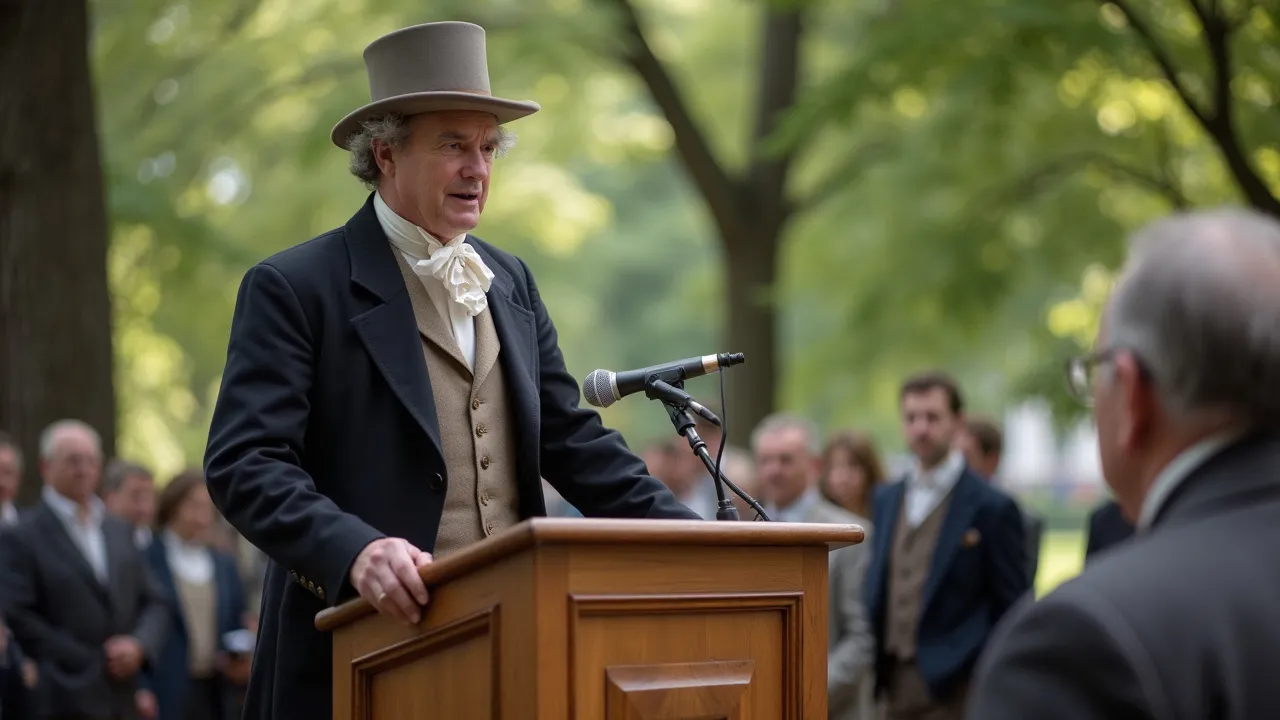
Ingersoll Day, observed on August 11th, commemorates the life and legacy of Robert G. Ingersoll, a 19th-century orator and freethought advocate. It celebrates his defense of secularism, reason, and humanism, inspiring modern freethought movements worldwide.
The Historical Origins & Evolutionary Journey
The Foundational Catalyst
Robert Green Ingersoll (1833–1899) rose to prominence as one of the most eloquent orators of the Gilded Age. Known as the "Great Agnostic," he championed secularism, women's suffrage, and the abolition of slavery. His famous lectures, such as "The Mistakes of Moses" and "Why I Am an Agnostic," drew massive crowds. Ingersoll Day originated informally among freethinkers who gathered on his birthday (August 11) to honor his contributions. The first known celebrations occurred in the early 1900s, led by organizations like the American Secular Union.
The Legislative/Official Adoption
While never a federal holiday, Ingersoll Day gained official recognition in several U.S. states and countries through proclamations by humanist and secular groups. In 2011, the American Humanist Association officially endorsed August 11 as Ingersoll Day. Some municipalities, like his birthplace in Dresden, New York, hold annual commemorations. Internationally, humanist societies in Canada, the UK, and Australia have adopted the day as a focal point for freethought advocacy.
Modern Global Legacy
Today, Ingersoll Day is observed by freethinkers, atheists, and humanists worldwide. It serves as a reminder of the importance of reason, science, and separation of church and state. Social media campaigns, public readings of Ingersoll's speeches, and interfaith dialogues mark the day. The holiday has expanded to include discussions on contemporary issues like climate change and LGBTQ+ rights, reflecting Ingersoll's progressive vision.
How to Celebrate Ingersoll Day
Individual Actions
- Read Ingersoll's Works: Spend time with his most famous lectures—free online at Project Gutenberg or secular websites.
- Host a Freethought Discussion: Gather friends to debate reason, ethics, and secularism, using Ingersoll's quotes as prompts.
- Support Secular Charities: Donate to organizations promoting science education or secular crisis relief.
School & Educational Activities
- Essay Contest: Encourage students to write on topics like "Why Reason Matters" or "Separation of Church and State."
- Debate Workshops: Teach critical thinking by analyzing Ingersoll's arguments against superstition.
- Historical Reenactments: Stage a mock 19th-century lecture on freethought.
Organizational & Corporate Rituals
- Public Lectures: Humanist groups often sponsor free talks on secular ethics or the impact of freethought.
- Social Media Campaigns: Use hashtags like #IngersollDay to share quotes and modern relevance.
- Interfaith Dinner: Bridge divides by inviting religious and non-religious community members to dialogue.
Global Regional Customs
In the United States, the day is marked by flag displays at some secular buildings. In the UK, humanists organize pub talks. Australia emphasizes outdoor celebrations with picnics and readings. Canada often ties the day to Indigenous recognition of reason and nature.
Core Societal Themes & Global Impact
Secularism vs. Theocracy
Ingersoll Day highlights the ongoing struggle for secularism worldwide. In nations where religion dominates law, the day serves as a rallying point for activists demanding separation of church and state. For example, in India, freethinkers use the day to criticize caste-based religious laws.
Reason in the Public Square
The day promotes evidence-based policy making. Ingersoll's emphasis on science over dogma resonates with groups opposing creationism in schools or pseudoscience in healthcare. In Europe, the day is leveraged to advocate for science funding.
Human Rights & Dignity
Ingersoll was an early feminist and abolitionist. Modern celebrations often link to Women's Rights and LGBTQ+ Equality. For instance, in Latin America, humanist groups connect Ingersoll Day to campaigns against gender violence.
Environmental Stewardship
Ingersoll wrote about humanity's duty to nature. Some secular environmental groups use the day for tree planting or clean-up drives, blending reason with green activism.
Ingersoll's Influence on Modern Freethought Movements
Oration and Rhetoric
Ingersoll's speeches set a gold standard for persuasive public speaking. Modern atheist speakers like Richard Dawkins and Sam Harris cite his clarity and emotional depth. The day often includes rhetorical workshops.
Legal and Political Thought
His defense of agnosticism in court (e.g., the Blasphemy Laws fight) inspired groups like the Freedom From Religion Foundation. Ingersoll Day sees legal advocacy for secular legislation, such as repealing blue laws.
Education Reform
Ingersoll championed free, secular public education. Today, organizations like the Secular Student Alliance use the day to recruit and train campus leaders for secular activism.
International Freethought Networks
- North America: Coordination between U.S. and Canadian humanists.
- Europe: Joint statements on secularism from the European Humanist Federation.
- Asia: Indian rationalists use the day to combat superstition.
Ingersoll Day in Popular Culture & Media
Literature
Biographies of Ingersoll often have special editions released on August 11. Graphic novels and children's books on freethought feature his life.
Film and Documentaries
Several short documentaries air on public television. The day also sees online streaming of old lecture reenactments.
Social Media & Hashtags
Trends like #IngersollDay and #Freethinkers share quotes, memes, and event info. Influencers in the atheist community post video tributes.
Memorial Activities
- Grave Visits: Ingersoll's tomb in Arlington Cemetery sees wreath-laying.
- Postage Stamps: Some countries issue commemorative stamps (notable: USPS never issued one, but humanist groups create unofficial stickers).
Critiques and Controversies Surrounding the Day
Religious Opposition
Conservative religious groups view Ingersoll Day as a promotion of atheism. Some school boards have banned related activities. The day spurs debates on religious freedom vs. secularism.
Historical Accuracy Debates
Some historians argue that Ingersoll was more complex than his agnostic label implies. Scholars use the day to revisit his views on race and capitalism.
Commercialization
Unlike major holidays, Ingersoll Day remains largely non-commercial, but occasional merchandising by freethought shops draws criticism from purists.
Internal Freethought Divisions
Some secular groups object to celebrating a single figure, preferring a more inclusive "Freethought Day." Others argue Ingersoll's exclusivity (white, male) requires intersectional expansion.
Future Outlook & Annual Themes
Emerging Traditions
Digital gatherings are increasing. Virtual reality lectures of Ingersoll are in development. The day may soon be recognized by the UN as a "Day of Reason."
Annual Theme Examples
- 2023: "Reason in a Post-Truth World"
- 2024: "Secularism and Democracy"
- 2025: "Science Education for All"
Global Expansion
Efforts are underway to make Ingersoll Day an international secular holiday. Campaigners leverage social media to reach non-English speaking countries, translating his works into Arabic, Spanish, and Mandarin.
Youth Engagement
Campus groups host "Freethought Fests" on August 11, combining music, art, and rational debate. Scholarships are often announced on this date.
Historical Timeline
Robert Green Ingersoll is born on August 11 in Dresden, New York. He is later influenced by his father, a Congregationalist minister who becomes a freethinker.
Ingersoll becomes a lawyer and enters politics. He serves as Illinois Attorney General (1867–1869) and gains fame for his oratory.
Ingersoll delivers his iconic lectures, including 'The Gods' (1872), 'The Mistakes of Moses' (1879), and 'Why I Am an Agnostic' (1896). Freethinkers begin informally celebrating his birthday.
Ingersoll dies on July 21 (not on his birthday). His death prompts large memorials, and annual tributes on August 11 intensify.
The American Secular Union officially lists 'Ingersoll Day' in its calendar. Large gatherings occur in New York and Chicago.
The American Humanist Association formally endorses August 11 as Ingersoll Day, encouraging all secular groups to participate.
The United Nations educational body (UNESCO) recognizes the cultural significance of freethought; Ingersoll Day gains international attention.
First global virtual celebration due to COVID-19, with speakers from six continents. Online archives of Ingersoll's works see record traffic.
Ingersoll Day is observed in over 30 countries. Theme: 'Reason in a Post-Truth World' sparks debates on misinformation.