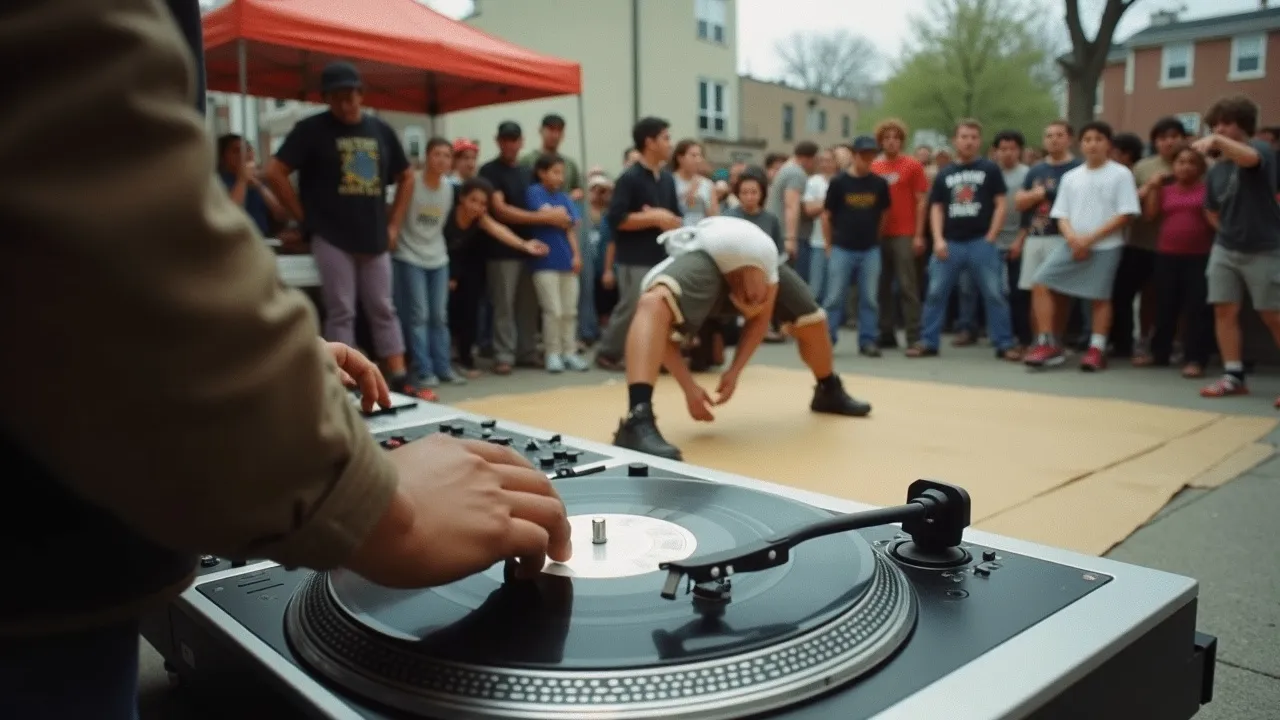
Celebrated on August 11th, Hip Hop Day honors the birth of hip hop culture in the Bronx, New York, in 1973. It commemorates the genre's influential impact on music, dance, art, and fashion worldwide.
The Historical Origins & Evolutionary Journey
The Foundational Catalyst
Hip Hop Day is celebrated on August 11th, marking the date in 1973 when DJ Kool Herc and his sister Cindy threw a back-to-school jam at 1520 Sedgwick Avenue in the Bronx, New York. This party is widely regarded as the birthplace of hip hop culture. Kool Herc pioneered the "merry-go-round" technique, extending the instrumental breaks of funk and soul records, allowing dancers to showcase their moves. The party featured the earliest forms of MCing (rapping), breakdancing, and graffiti art, all coming together in a single event.
The Legislative/Official Adoption
While the observance grew organically from the culture, formal recognition came decades later. In 2016, several U.S. states, including New York, California, and Texas, proclaimed August 11th as Hip Hop Appreciation Day. The U.S. Congress also passed resolutions acknowledging the genre's contributions. Globally, cities like London, Paris, and Tokyo now hold annual hip hop festivals on or around August 11th.
Modern Global Legacy
Today, hip hop is a multi-billion-dollar industry spanning music, fashion, film, and advertising. It has become a voice for marginalized communities worldwide, addressing social justice issues like police brutality, poverty, and systemic racism. The day is now celebrated with concerts, dance battles, graffiti jams, and educational workshops that teach the history and elements of hip hop.
How to Celebrate Hip Hop Day
Hip Hop Day offers countless ways to honor the culture. Below are actionable strategies for individuals, schools, and organizations across the globe.
For Individuals
- Listen to classic albums: Spend the day revisiting foundational records like Paid in Full (Eric B. & Rakim), The Chronic (Dr. Dre), or Illmatic (Nas).
- Learn a breakdance move: Practice the windmill or freeze using online tutorials.
- Create graffiti art: Use legal walls or sketchbooks to express your style.
- Watch hip hop documentaries: Films like The Get Down or Hip Hop Evolution provide deep insight.
For Schools & Universities
- Host a hip hop history seminar: Invite a local MC or DJ to speak about the culture's roots.
- Organize a cypher: Students can rap, beatbox, and dance in a circle, fostering community.
- Graffiti art contest: Use chalk or paint on large paper sheets to create murals that tell a story.
For Organizations & Corporate
- Charity concert: Feature local hip hop artists and donate proceeds to youth music programs.
- Social media campaign: Share facts, artist spotlights, and user-generated content using #HipHopDay.
Internationally, celebrations vary: In Japan, hip hop karaoke is popular; in Brazil, b-boys hold battles in public squares; in South Africa, kwaito artists join hip hop festivals. The key is to honor the original five elements: MCing, DJing, breakdancing, graffiti, and knowledge.
The Global Influence of Hip Hop
Music Beyond Borders
Hip hop has become the dominant youth culture worldwide. In France, artists like MC Solaar and IAM blend rap with jazz and local dialects. In South Korea, K-pop groups incorporate rapping and hip hop beats, reaching global charts. African hip hop scenes in Nigeria and Ghana attract millions with their fusion of traditional rhythms and rap.
Fashion & Language
From baggy jeans to sneaker culture, hip hop dictates style across continents. Slang terms like "dope," "lit," and "fire" originated in hip hop and now appear in mainstream dictionaries. The genre has also boosted streetwear brands such as Supreme and Off-White.
Economic Impact
Hip hop generates over $10 billion annually in the U.S. alone, including streaming, merchandise, and endorsements. Independent artists now thrive without major labels thanks to platforms like SoundCloud and YouTube, democratizing the music industry.
The Five Elements of Hip Hop Culture
Hip hop is more than just music; it is a cultural movement defined by five core elements:
- MCing (Rapping): Rhythmic vocal delivery over a beat, often addressing social issues or personal stories.
- DJing: The art of manipulating records on turntables, including scratching and beatmatching.
- Breakdancing (B-boying/B-girling): Athletic dance style involving spins, freezes, and footwork.
- Graffiti Art: Visual expression through spray-painted murals and tags, often on public spaces.
- Knowledge: Understanding the history, values, and philosophies that underpin the culture. This element is sometimes called the "fifth element."
Each element contributes to the holistic identity of hip hop and is celebrated on Hip Hop Day through workshops, battles, and exhibitions.
Hip Hop and Social Justice
Voice of the Oppressed
From its inception, hip hop has been a platform for marginalized communities to speak out against injustice. Early tracks like Grandmaster Flash's "The Message" highlighted poverty and urban decay. Public Enemy's "Fight the Power" became an anthem for racial equality. In the 1990s, Tupac Shakur and Notorious B.I.G. rapped about systemic violence and police brutality.
Modern Activism
Today, hip hop artists continue this tradition. Kendrick Lamar's album To Pimp a Butterfly explores black identity and politics. Cardi B and Megan Thee Stallion address women's empowerment. The genre has inspired movements like Black Lives Matter, with rappers often leading protests and fundraisers.
Educational Initiatives
Non-profits like the Hip Hop Archive at Harvard and the Universal Zulu Nation use the culture to teach history, literacy, and conflict resolution. Hip Hop Day often features panel discussions on the role of rap in social change.
Modern Hip Hop: Evolution and Trends
The Digital Age
Streaming platforms like Spotify and Apple Music have changed how hip hop is consumed. Playlists and algorithms now break new artists, leading to the rise of "SoundCloud rappers" like Lil Pump and XXXTentacion. Drill music, originating in Chicago, has spread globally with London drill and Brooklyn drill scenes.
Subgenres and Fusions
Hip hop continues to evolve:
- Trap: Heavy 808s and hi-hat rolls, popularized by artists like Migos and Travis Scott.
- Conscious rap: Focus on lyrical depth, like J. Cole and Common.
- Mumble rap: Emphasis on melody over lyrics, often criticized but commercially successful.
- Hip hop with live bands: The Roots, Anderson .Paak, and others blend rap with instrumentation.
Global Fusion
Artists like BTS, Bad Bunny, and Stromae incorporate hip hop into their music, breaking language barriers. Hip Hop Day celebrates this diversity by showcasing international acts and collaborations.
Historical Timeline
DJ Kool Herc throws a back-to-school party at 1520 Sedgwick Avenue, Bronx, widely considered the birth of hip hop. He extends the break of James Brown's "Get on the Good Foot" using two turntables.
The Sugarhill Gang releases "Rapper's Delight," the first hip hop single to become a mainstream hit, introducing rap to a global audience.
Graffiti and breakdancing become part of pop culture with films like "Beat Street" and "Breakin'." The first hip hop radio shows emerge.
Public Enemy releases "It Takes a Nation of Millions to Hold Us Back," a landmark album combining political activism with hard-hitting beats.
Wu-Tang Clan releases "Enter the Wu-Tang (36 Chambers)," revolutionizing East Coast hip hop with its raw sound and martial arts imagery.
Notorious B.I.G. and Tupac Shakur dominate the charts, but the East Coast-West Coast rivalry intensifies, leading to both artists' tragic deaths in 1996-97.
Jay-Z releases "The Blueprint," solidifying his status as a hip hop icon. Eminem's "The Marshall Mathers LP" breaks sales records.
Kendrick Lamar's "To Pimp a Butterfly" wins Grammy for Best Rap Album, praised for its social commentary and jazz influences. Streaming overtakes physical sales.
Travis Scott's "Astroworld" epitomizes the trap era. Hip hop surpasses rock as the most consumed music genre in the U.S.
50th anniversary of hip hop celebrated with global concerts, documentaries, and declarations. UNESCO acknowledges hip hop's cultural significance.