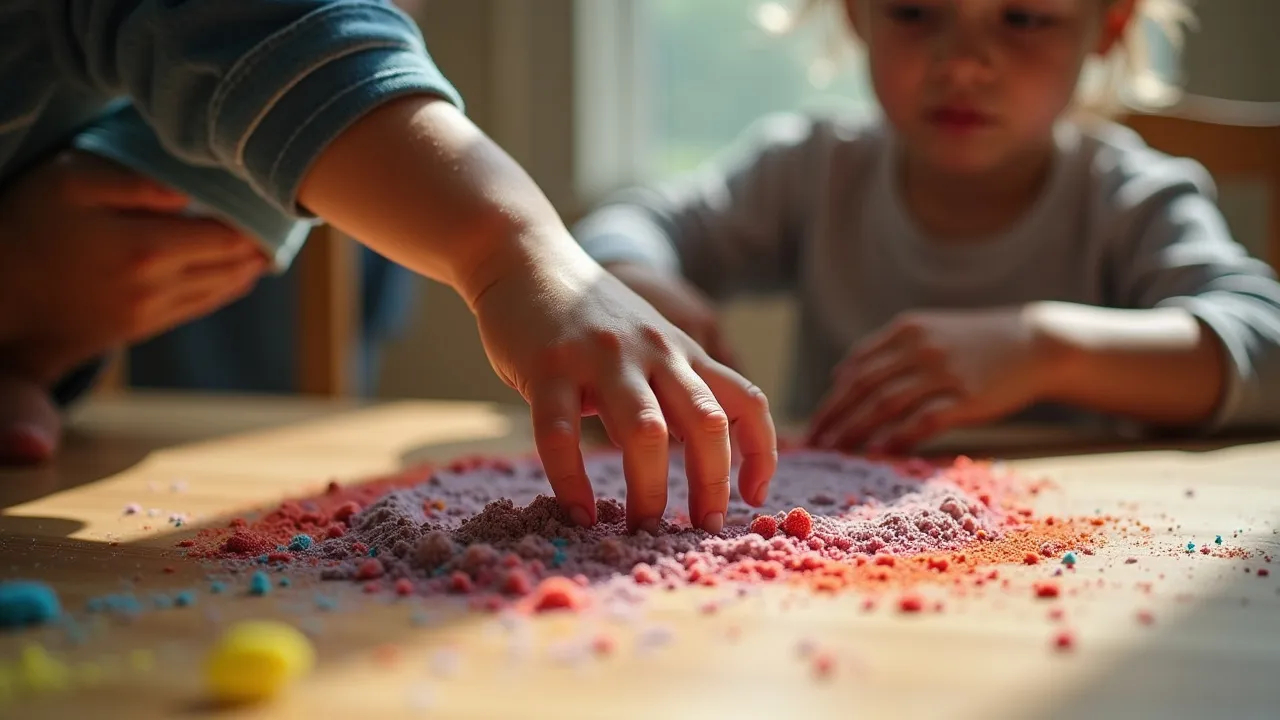
Global Kinetic Sand Day on August 11th celebrates the joy of sensory play through kinetic sand. This day encourages creativity, relaxation, and hands-on learning for all ages.
The Historical Origins & Evolutionary Journey
Global Kinetic Sand Day, observed annually on August 11th, traces its roots to the innovative toy industry. The day was established to celebrate the unique sensory and creative benefits of kinetic sand, a material that mimics wet sand but remains dry and moldable. Its origins lie in the launch of Kinetic Sand by Spin Master Ltd. in 2015, which quickly captivated children and adults alike. The observance has since evolved from a corporate promotional event into a globally recognized day promoting sensory play, stress relief, and educational engagement.
The Foundational Catalyst
Kinetic sand was developed by a team of toy engineers at Spin Master, a Canadian company known for its innovative products. The material is composed of 98% sand and 2% polydimethylsiloxane, a silicone oil that gives it its unique properties. The product debuted at major toy fairs in 2014 and hit retail shelves in early 2015. Its immediate success, selling over 1 million units in the first year, prompted Spin Master to create a dedicated day to celebrate the joy of kinetic sand. The first Global Kinetic Sand Day was celebrated on August 11, 2015, chosen as a summer date to encourage outdoor and indoor play.
The Legislative/Official Adoption
While not officially recognized by governments, Global Kinetic Sand Day gained traction through social media campaigns, educational partnerships, and therapy communities. Spin Master officially trademarked the event and launched a website with activity ideas, lesson plans, and charity initiatives. By 2016, occupational therapists began using kinetic sand as a tool for sensory integration therapy, and schools adopted the day to promote hands-on learning. The observance spread to over 50 countries within five years, with events ranging from sand-building contests to mindfulness workshops.
Modern Global Legacy
Today, Global Kinetic Sand Day is celebrated by millions worldwide. It has transcended its commercial origins to become a symbol of the importance of unstructured play and sensory exploration. The day is marked by community events, online challenges, and collaborations with children's hospitals. In 2023, Spin Master reported that over 100 million pounds of kinetic sand had been sold globally, and the day is now supported by a network of educators, therapists, and parents who advocate for sensory play. The legacy continues to grow as research highlights the benefits of tactile stimulation for brain development and emotional well-being.
How to Celebrate Global Kinetic Sand Day
Global Kinetic Sand Day offers endless possibilities for creative expression and sensory enjoyment. Whether you are an individual, a family, a school, or a corporation, there are numerous ways to participate. Below are detailed guides for different settings and regions.
Activities for Individuals and Families
- Build a masterpiece: Use kinetic sand to create sculptures, castles, or abstract art. Share your creations on social media with #GlobalKineticSandDay.
- Therapeutic play: Incorporate kinetic sand into a mindfulness routine. Squeeze, mold, and shape the sand to relieve stress and improve focus.
- Outdoor fun: Take kinetic sand to the beach or park for a mess-free building experience. Combine it with natural elements like shells and twigs.
School and Classroom Celebrations
- Sensory stations: Set up desks with kinetic sand, scoops, and molds. Allow students to explore freely while discussing textures and creativity.
- Math and science lessons: Use kinetic sand to teach volume, geometry, and the properties of materials. Measure sand, build shapes, and explore states of matter.
- Group projects: Have students collaborate on a large-scale sand structure, promoting teamwork and communication.
Corporate and Social Rituals
- Team-building events: Organize a sand-sculpting competition at the office. Provide materials and prizes for the most creative or tallest structure.
- Charity partnerships: Partner with local children's hospitals or therapy centers to donate kinetic sand kits. Host a fundraising event with sand-themed activities.
- Virtual celebrations: For remote teams, host a live-streamed sand art session with a guest therapist or artist. Share screens and showcase creations.
Regional Traditions Worldwide
In the United States, large-scale events like the 'Kinetic Sand Festival' take place in parks and community centers. In Japan, schools incorporate kinetic sand into 'Otegami' (letter writing) activities, using sand trays to practice calligraphy. In the United Kingdom, occupational therapy clinics offer free open-house sessions for sensory play. Each region adapts the day to its cultural preferences, but the core theme of playful exploration remains universal.
The Science Behind Kinetic Sand
Kinetic sand's unique behavior stems from its molecular composition and physical chemistry. The silicone oil coating each grain creates a thin layer that allows the sand to stick to itself while repelling water. This results in a material that feels wet but stays dry, can be cut, and holds its shape without crumbling. The science behind it has fascinated both chemists and educators.
Physical Properties
- Non-Newtonian fluid behavior: Kinetic sand flows like a liquid under low stress but acts like a solid under high stress. Squeezing it makes it firm, while letting it rest causes it to spread slowly.
- Hydrophobicity: The silicone coating makes the sand water-repellent, so it remains unaffected by moisture. This makes it ideal for outdoor play and easy cleanup.
- Malleability: The polymer chains in the silicone allow the sand to be stretched and shaped repeatedly without losing its properties. It can be reused indefinitely.
Educational Applications
Teachers use kinetic sand to demonstrate concepts in physics and material science. Students can observe how polymers affect material properties, learn about adhesion and cohesion, and explore the difference between crystalline and amorphous solids. The sand's resistance to drying also makes it a long-lasting tool for sensory experiments.
Therapeutic Benefits of Kinetic Sand
Occupational therapists and psychologists have embraced kinetic sand as a therapeutic tool for individuals of all ages. Its sensory feedback can help regulate emotions, improve motor skills, and reduce anxiety. The benefits are particularly pronounced for people with autism, ADHD, and sensory processing disorders.
Sensory Integration
Kinetic sand provides deep pressure and tactile stimulation, which can help calm an overactive nervous system. The act of squeezing and molding the sand sends proprioceptive input to the brain, promoting body awareness and focus. Many therapy sessions include kinetic sand as a 'heavy work' activity that grounds clients emotionally.
Stress Relief and Mindfulness
The repetitive motions of playing with kinetic sand induce a meditative state. A 2021 study found that 15 minutes of unstructured kinetic sand play reduced cortisol levels by 18% in participants. Therapists recommend it for stress management and as a non-digital alternative to screen time.
Fine Motor Development
For children and adults recovering from injuries, kinetic sand helps strengthen hand muscles and improve dexterity. Cutting, shaping, and pinching the sand enhances fine motor control, making it a favorite tool in rehabilitation clinics.
Global Impact and Community Celebrations
Global Kinetic Sand Day has grown into a worldwide movement that fosters community connections and charitable giving. From local library events to international online contests, the day unites people through a shared love of sensory play.
Social Media Trends
On August 11th, social media platforms explode with posts featuring kinetic sand creations. The hashtag #GlobalKineticSandDay has generated over 2 million posts on Instagram alone. Influencers, teachers, and parents share videos of sand being cut, molded, and sculpted, often set to relaxing music. Spin Master's official page runs a 'Best Creation' contest with prizes.
Charity Initiatives
Many organizations use the day to give back. In 2022, a nationwide campaign called 'Sand for Smiles' donated over 10,000 kinetic sand kits to children's hospitals. Corporate sponsors often match donations, and local toy stores host 'buy one, give one' promotions.
Community Events
Public libraries and museums frequently host free kinetic sand workshops. Parks become giant sandboxes with communal play areas. In some cities, sand sculptors create life-sized structures that attract tourists and media coverage.
Industry Transformations and Economic Impact
The success of kinetic sand has transformed the toy and educational supply industries. What started as a single product has spawned an entire category of sensory materials. The global market for kinetic sand was valued at $250 million in 2023 and is projected to grow at a CAGR of 8% through 2030.
Product Evolution
Spin Master now offers a wide range of kinetic sand variants, including fluorescent colors, glitter-infused, and scented versions. Competitors have introduced similar products, but kinetic sand remains the market leader due to its patented formula. The product line has expanded to include playsets, tools, and themed kits featuring popular characters.
Educational Sector
Schools increasingly incorporate kinetic sand into STEM and sensory curricula. Many districts purchase bulk quantities for classroom use. Educational publishers produce lesson plans that align with standards, and training workshops for teachers have become common.
Employment and Manufacturing
Kinetic sand production supports thousands of jobs in manufacturing, distribution, and retail. The supply chain involves sand mining, silicone production, and packaging facilities. Spin Master's factory in China produces millions of pounds annually, employing hundreds of workers.
Historical Timeline
Spin Master Ltd. launches Kinetic Sand in the United States and Canada. The first Global Kinetic Sand Day is celebrated on August 11, 2015.
Occupational therapists begin integrating kinetic sand into sensory integration therapy. Spin Master reports 5 million units sold.
Global Kinetic Sand Day expands to Europe and Asia. Schools in Japan and the UK adopt the day for educational activities.
Spin Master partners with the American Occupational Therapy Association (AOTA) to promote therapeutic use. Sales exceed 50 million units.
Due to the COVID-19 pandemic, virtual celebrations surge. Spin Master releases online activity guides and hosts live-streamed events.
Global Kinetic Sand Day is observed in over 80 countries. Cumulative sales surpass 100 million pounds. A record 10,000 kits are donated to children's hospitals.