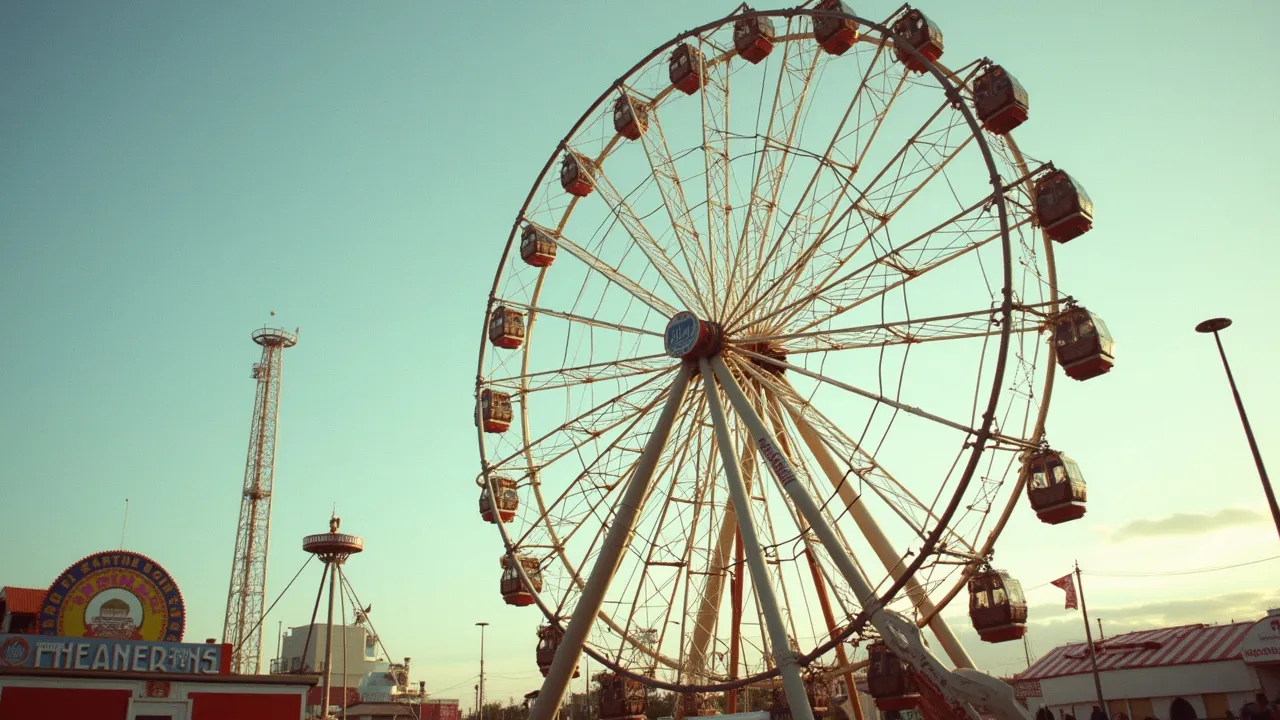
Ferris Wheel Day, celebrated on February 14th, honors the birth of George Washington Gale Ferris Jr., inventor of the iconic amusement ride. It's a day to appreciate engineering marvels and enjoy the thrill of the wheel.
The Historical Origins & Evolutionary Journey
Ferris Wheel Day, observed annually on February 14th, marks the birthday of George Washington Gale Ferris Jr., the visionary engineer who conceived the first Ferris wheel for the 1893 World's Columbian Exposition in Chicago. This day celebrates not only his birth but also the lasting legacy of his invention that revolutionized amusement parks worldwide.
The Foundational Catalyst
In 1891, organizers of the World's Columbian Exposition sought a centerpiece to rival the Eiffel Tower, which had debuted at the 1889 Paris Exposition. Ferris, a bridge builder, proposed a colossal rotating wheel that would carry passengers high above the fairgrounds. His design featured:
- A 250-foot diameter wheel
- 36 wooden cars, each seating up to 60 people
- A total capacity of over 2,000 riders
- Steel construction inspired by bridge-building techniques
The wheel opened on June 21, 1893, and became an instant sensation, with over 1.4 million passengers during the fair. It was a testament to American ingenuity and engineering prowess.
The Legislative/Official Adoption
Ferris Wheel Day is not federally recognized but has been promoted by amusement park industry groups and ride enthusiasts since the early 2000s. The date aligns with Ferris's birth on February 14, 1859, in Galesburg, Illinois. While no official proclamation exists, many parks offer special discounts or events on this day.
Modern Global Legacy
Today, Ferris wheels grace skylines from London to Singapore, serving as both tourist attractions and engineering landmarks. The original wheel was dismantled in 1906, but its spirit lives on in designs like the London Eye, the High Roller in Las Vegas, and the Ain Dubai. Ferris Wheel Day encourages people to appreciate the blend of art, science, and fun that these wheels represent.
How to Celebrate Ferris Wheel Day
Ferris Wheel Day offers a perfect opportunity to indulge in nostalgia and thrill. Whether you're a history buff, an engineering enthusiast, or just looking for a fun outing, here are ways to celebrate globally.
Individual Celebration Ideas
- Ride a Ferris wheel: Visit a local amusement park or fair that has one. Many parks offer special Valentine's Day discounts on February 14th, as the date coincides with romance.
- Build a model: Construct a miniature Ferris wheel using LEGO, K'Nex, or 3D printing kits. It's a great educational activity for families.
- Learn the history: Watch documentaries like The Great Ferris Wheel or read books about the 1893 World's Fair.
School and Community Events
- Organize a field trip to a Ferris wheel, with guided talks on physics (centripetal force, torque).
- Host a STEM challenge where students design and build small rotating wheels using simple materials like cardboard and skewers.
- Create art projects: Paint or draw Ferris wheels from different eras and parts of the world.
Corporate and Social Rituals
- Amusement parks often run promotions: "Ride the Wheel for $14.14" or half-price tickets.
- Companies can host team-building events at Ferris wheels, with private cabins for meetings or celebrations.
- On social media, share photos with hashtags like #FerrisWheelDay and #NationalFerrisWheelDay.
Global Variations
While February 14th is the primary date in the United States, other regions may celebrate differently:
- Japan: Ferris wheels are often associated with festivals, but the day is not widely observed; however, Valentine's Day ties make it popular for couples.
- Europe: The London Eye and other wheels host special events, sometimes extending to the weekend.
- Middle East: Ain Dubai offers exclusive sunset rides.
No matter where you are, the essence of the day is to appreciate the elegance and engineering of the Ferris wheel.
Engineering Marvel: How Ferris Wheels Work
Ferris wheels are marvels of mechanical engineering, combining simple principles with robust design. Understanding how they operate enhances appreciation for the ride.
The Mechanics
- Hub and axle: The central hub supports the entire structure and rotates on bearings. Modern wheels use electric motors to turn the hub.
- Spokes: Cables or steel arms connect the hub to the outer rim, distributing weight evenly.
- Cabins (gondolas): These are attached to the rim and remain upright due to gravity, using a pivot system.
- Braking system: Multiple fail-safe brakes ensure controlled stopping.
Physics in Action
As the wheel rotates, riders experience centripetal acceleration pulling them toward the center, countered by the normal force from the seat. At the top, they feel lighter; at the bottom, heavier. The thrill comes from the gradual change in height and speed.
Notable Innovations
- The original Ferris wheel used steam power and weighed over 2,100 tons.
- The London Eye (2000) features a giant cantilevered design, with a diameter of 120 meters.
- The High Roller (2014) is the tallest in North America at 167.6 meters, with glass-floor cabins.
Ferris wheels continue to push boundaries, incorporating LED lighting, climate control, and even dining experiences.
Cultural Significance and Global Impact
Ferris wheels have transcended their role as amusement rides to become cultural icons. They symbolize joy, human achievement, and the spirit of fairs.
Symbolism in Literature and Film
- Ferris wheels appear in movies like Before Sunrise (romance), The Third Man (suspense), and Eternal Sunshine of the Spotless Mind (memory), often representing transient moments of happiness.
- In literature, they are metaphors for cycles, time, and perspective.
Tourist Attractions
Many Ferris wheels are landmarks: the London Eye is one of the UK's most visited paid attractions, while the Singapore Flyer offers stunning skyline views. These wheels drive tourism and local economies.
Social Gathering Points
Parks with Ferris wheels become hubs for festivals, concerts, and community events. The ride's slow pace allows conversation and shared experiences, making it a favorite for families and couples.
Health, Safety, and Maintenance
Operating a Ferris wheel requires rigorous safety protocols. Here's how modern parks ensure a safe experience.
Daily Inspections
- Check structural integrity, bolts, and welds.
- Test brakes, motor, and control systems.
- Inspect cabin doors, locks, and restraints.
Emergency Procedures
- Evacuation plans: Manual lowering of cabins using backup power or hand cranks.
- Weather thresholds: Operations cease during high winds or lightning.
- Rider restrictions: Height and health guidelines posted.
Maintenance Schedules
- Lubrication of bearings and gears every 100 hours of operation.
- Annual major overhaul, including disassembly of critical components.
- Certification by third-party engineers per ASTM standards.
Economic and Environmental Aspects
Ferris wheels contribute significantly to local economies and are increasingly incorporating green technologies.
Economic Impact
A major Ferris wheel can attract millions of visitors annually, generating revenue for nearby businesses.
Construction creates jobs in engineering, manufacturing, and installation.
Operating costs include energy, staffing, and maintenance, but profit margins can be high due to ticket sales and merchandise.
Environmental Considerations
Many new wheels use LED lighting (energy-efficient) and solar panels.
Materials like recycled steel reduce carbon footprint.
Wheels are often built in urban areas to revitalize waterfronts or underused land.
Historical Timeline
George Washington Gale Ferris Jr. is born on February 14 in Galesburg, Illinois.
Ferris proposes his giant wheel to the World's Columbian Exposition organizers, who approve the concept.
The original Ferris Wheel opens on June 21 at the Chicago World's Fair, carrying over 1.4 million passengers before closing.
The original Ferris Wheel is dynamited and sold for scrap after being dismantled and stored.
The London Eye begins construction, later opening in 2000, becoming the world's tallest Ferris wheel at the time.
The High Roller in Las Vegas becomes the tallest Ferris wheel in North America.
Ain Dubai opens, claiming the title of the world's tallest Ferris wheel at 250 meters.