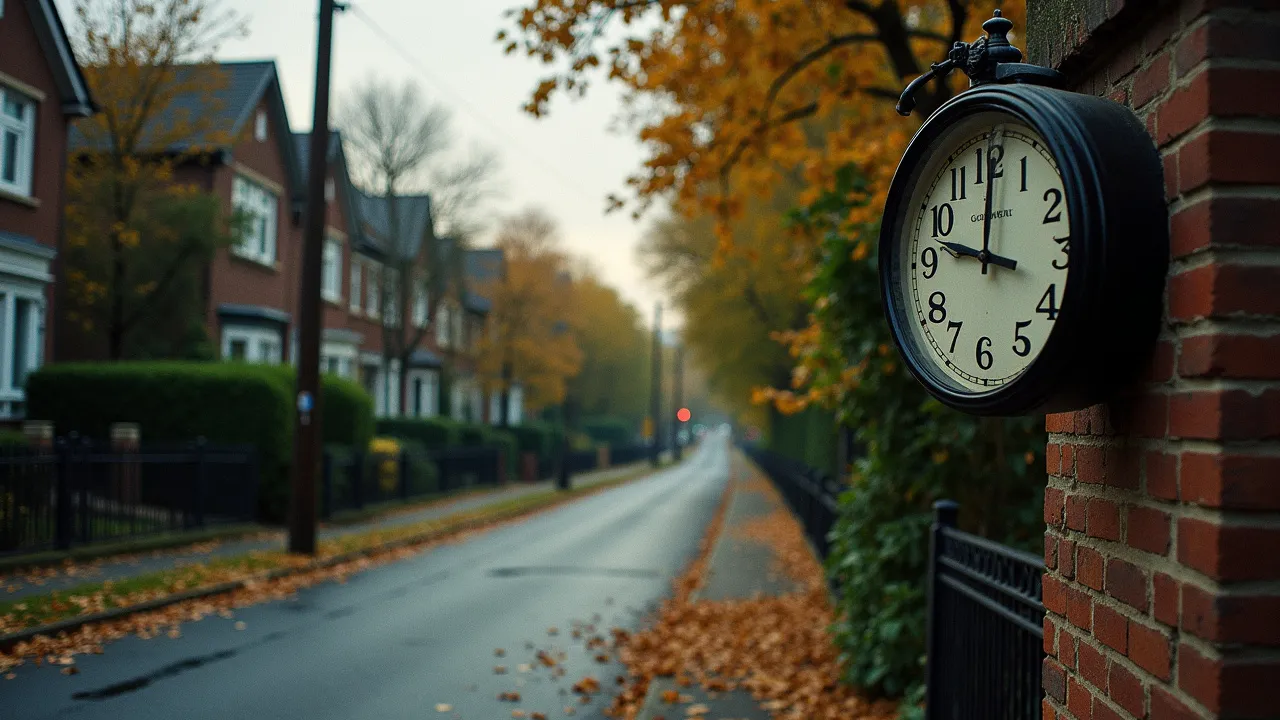
Daylight Saving Time Ends on the first Sunday in November, marking the return to Standard Time. Learn the history, health impacts, and tips to adjust to the 'fall back' change.
The Historical Origins & Evolutionary Journey
Daylight Saving Time (DST) has a complex history rooted in maximizing daylight hours for energy savings and productivity. The concept of shifting clocks was first proposed by Benjamin Franklin in 1784 in a satirical essay, but the modern implementation began during World War I as a fuel-saving measure.
The Foundational Catalyst
The first widespread adoption of DST occurred in 1916 by Germany and Austria-Hungary to conserve coal during wartime. The United Kingdom and many other European nations followed shortly after. The United States adopted DST in 1918 with the Standard Time Act, but it was repealed after the war.
The Legislative/Official Adoption
DST was reintroduced during World War II as a year-round measure ("War Time") from 1942 to 1945. After the war, states and localities were free to choose whether to observe DST, leading to a patchwork of time zones. To standardize this, the Uniform Time Act of 1966 established fixed start and end dates for DST across the U.S., though states could opt out. The current schedule—starting on the second Sunday in March and ending on the first Sunday in November—was set by the Energy Policy Act of 2005, which took effect in 2007.
Modern Global Legacy
Today, about 70 countries observe DST in some form, though many near the equator do not. In the U.S., the end of DST (often called "Fall Back") occurs at 2:00 AM local time on the first Sunday in November, when clocks are set back one hour to standard time. This change is widely debated for its effects on health, safety, and energy consumption.
How to Celebrate Daylight Saving Time Ends
While "Daylight Saving Time Ends" is not a traditional holiday, it is a significant annual event that many people mark by adjusting their routines and embracing the extra hour of sleep. Here are practical ways to celebrate and adapt:
Individual and Family Traditions
- Enjoy the extra hour: Use the "fall back" gain of one hour to sleep in, read a book, or have a leisurely breakfast.
- Turn back clocks: On Saturday night before the end, set all analog clocks back one hour. Digital devices typically update automatically.
- Change batteries: Use the event as a reminder to replace batteries in smoke detectors and carbon monoxide alarms—a safety tip promoted by fire departments.
School and Community Activities
- Time-themed lessons: Teachers can explain the history and science of time zones and DST.
- Community events: Some towns host "Fall Back" festivals with sunrise walks or brunches celebrating the earlier sunrises.
Workplace and Organizational Tips
- Adjust schedules: Employers may allow flexible start times to help employees adjust to the darker mornings.
- Safety reminders: Encourage workers to check safety equipment and be vigilant during darker commutes.
Globally, in countries that do not observe DST (like Japan and India), the date passes without notice, but in regions like Europe and North America, it is a shared experience of transitioning to standard time.
Global Impact and Regional Variations
The end of Daylight Saving Time affects billions of people across the Northern Hemisphere, but its observance varies significantly by region. In the United States, DST ends on the first Sunday in November. However, Hawaii and most of Arizona do not observe DST, so they remain on standard time year-round.
European Union
The EU observes DST from the last Sunday in March to the last Sunday in October, meaning the end occurs about a week earlier than in the U.S. The European Commission proposed abolishing seasonal clock changes in 2018, but no final decision has been made, leading to ongoing uncertainty.
Southern Hemisphere
Countries like Australia and Chile observe DST during their summer months, which are opposite to the Northern Hemisphere. For example, Australia's DST ends in early April.
Countries Without DST
Many countries near the equator, such as Indonesia and Kenya, do not observe DST at all, so the concept of "Daylight Saving Time Ends" is irrelevant there. This creates a diverse global landscape of timekeeping practices.
Health and Wellness Considerations
The transition to standard time has notable effects on human health and well-being. While "falling back" gives an extra hour of sleep, the shift can still disrupt circadian rhythms.
Sleep and Circadian Rhythms
Gaining an hour of sleep initially feels beneficial, but the change in light exposure can confuse the body's internal clock. Some people experience social jetlag, a mismatch between biological time and social time. Studies show that the end of DST is associated with a temporary increase in mood disturbances and sleep disorders.
Safety Implications
The sudden onset of earlier darkness increases risks for pedestrians and cyclists, especially during evening commutes. Traffic accident data often shows a spike in the days following the time change. Conversely, the morning commute benefits from increased daylight, potentially reducing accidents.
Mental Health
The shift to shorter daylight hours can trigger Seasonal Affective Disorder (SAD) in susceptible individuals. Mental health experts recommend exposure to natural morning light, regular exercise, and maintaining a consistent sleep schedule to mitigate effects.
Economic and Energy Implications
The original rationale for DST was energy conservation, but modern analyses question its effectiveness. The end of DST marks the return to standard time, which has distinct economic impacts.
Energy Consumption
Studies in the U.S. show that DST reduces electricity use for lighting in the evenings but increases heating and cooling demand. The net energy savings are debated, with some research indicating very minor reductions or even increases in overall consumption. The 2005 Energy Policy Act extended DST by four weeks partly to test energy savings, but subsequent studies found negligible effects.
Retail and Leisure Industries
The end of DST can hurt after-work activities like golf and barbecues due to earlier darkness, but it may boost indoor activities like movie theaters and gyms. The candy, barbecue, and sports equipment industries often lobby for longer DST.
Agricultural Sector
Farmers have historically opposed DST because their schedules depend on natural light and livestock, not clock time. The end of DST reduces disruption, as standard time aligns more closely with natural light patterns.
Technology and Timekeeping Adaptations
In the digital age, the end of Daylight Saving Time is a non-event for many devices, but it still requires coordination across network systems.
Automatic Updates
Most smartphones, computers, and smart devices automatically adjust to standard time using network time protocols. However, older analog clocks and some car clocks still need manual adjustment.
Software and Infrastructure
Server systems, financial markets, and transportation schedules must handle the time change seamlessly. The IANA Time Zone Database maintains records of all time zone changes worldwide, ensuring that software remains accurate.
Challenges
Time changes can cause bugs in legacy systems, especially those that do not account for DST. Programmers often need to update code to handle the transition, particularly for scheduling and logging events.
Cultural and Social Significance
The end of DST has become a cultural touchstone, marked by humor and practical advice. It symbolizes the transition from summer to winter, influencing social behaviors and routines.
Media and Pop Culture
News outlets annually remind viewers to "fall back" and check smoke alarms. Social media buzzes with memes about gaining an extra hour of sleep or confusion over time zones.
Community Traditions
Some communities hold "Fall Back" 5K runs or sunrise yoga sessions to embrace the earlier daylight. In areas with large immigrant populations, the time change can complicate communication with relatives in time zones that do not observe DST.
Psychological Impact
The end of DST is often seen as a marker of the approach of winter, which can bring melancholy for some but also anticipation for winter holidays. It is a reminder of the cyclic nature of seasons and human adaptation.
Historical Timeline
Benjamin Franklin proposes the concept of daylight saving in a satirical essay, suggesting Parisians adjust their schedules to save candle wax.
Germany and Austria-Hungary become the first countries to officially implement DST as a wartime fuel-saving measure.
The United States adopts DST with the Standard Time Act, but it is repealed after World War I due to unpopularity.
During World War II, the U.S. observes year-round DST, called 'War Time', to save energy.
The Uniform Time Act of 1966 standardizes the start and end dates of DST across the U.S., allowing states to opt out.
The Energy Policy Act of 2005 extends DST by four weeks, setting the end date to the first Sunday in November, effective 2007.
Current DST schedule takes effect in the U.S.: begins second Sunday in March, ends first Sunday in November.
The European Commission proposes ending mandatory daylight saving time, leaving member states to choose their permanent time.