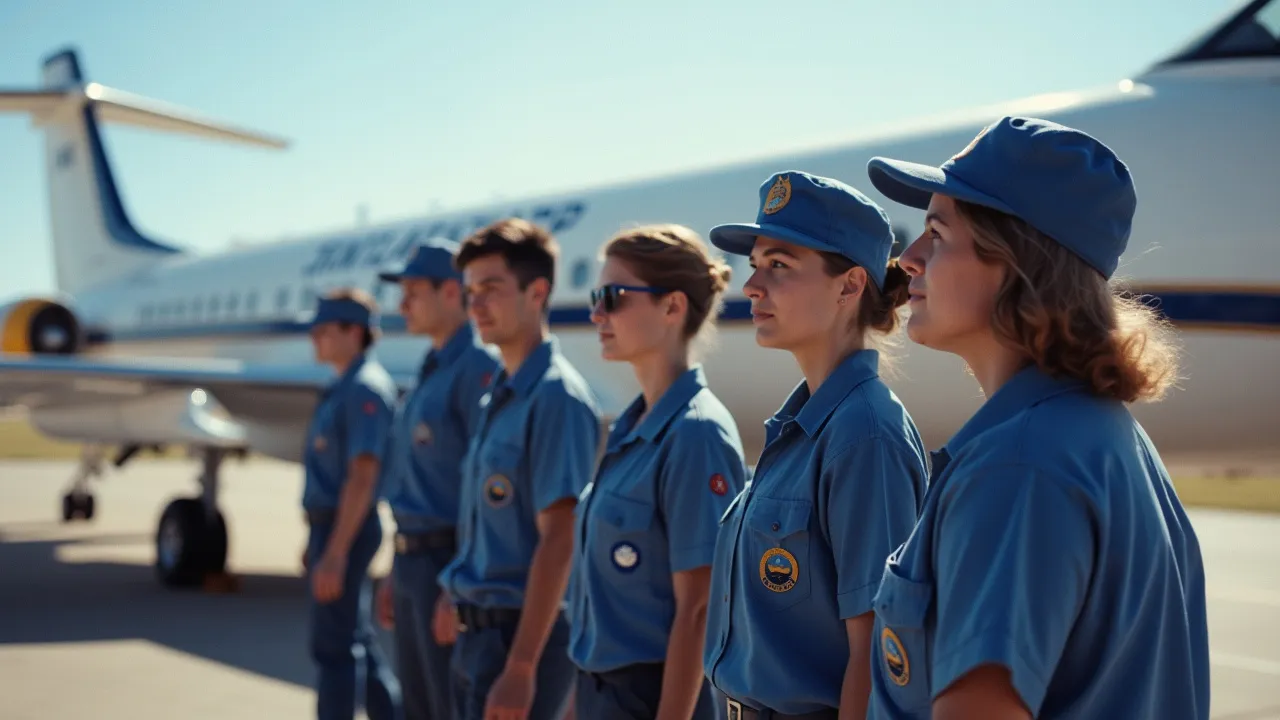
Observed on December 1st, Civil Air Patrol Day honors the founding of the U.S. Air Force auxiliary in 1941. It celebrates the volunteer spirit, aerospace education, and emergency services provided by CAP members nationwide.
The Historical Origins & Evolutionary Journey of Civil Air Patrol Day
Civil Air Patrol (CAP) Day is observed annually on December 1st, commemorating the founding of the Civil Air Patrol on December 1, 1941. This day honors the organization's vital role as an auxiliary of the United States Air Force and its contributions to the nation. The story of CAP begins in the months before America's entry into World War II, when civilian volunteers answered the call to defend the homeland.
The Foundational Catalyst (1938-1941)
In the late 1930s, as war raged in Europe, American aviation enthusiasts recognized a looming threat: German U-boats were wreaking havoc on Allied shipping just off the East Coast. The existing military was stretched thin, and there was no official civilian air patrol. In 1938, the Civil Air Patrol was first proposed by air-minded citizens, but it wasn't until the spring of 1941 that serious discussions began within the Office of Civilian Defense. On December 1, 1941, just six days before the attack on Pearl Harbor, the Civil Air Patrol was officially established by administrative order under the Office of Civilian Defense, with Major General John F. Curry as its first national commander.
The Legislative/Official Adoption and Wartime Service (1941-1946)
CAP's first mission, codenamed "Coastal Patrol," began in March 1942. Volunteers, flying their own private planes, patrolled the Atlantic and Gulf coasts, spotting enemy submarines, rescuing survivors of torpedoed ships, and escorting convoys. Over 200,000 CAP members served during World War II, flying more than 24 million miles and sinking at least two German U-boats. The Coastal Patrol flew from 21 bases and was credited with saving hundreds of lives. In 1943, the War Department took over CAP operations, and in 1946, Congress passed Public Law 476, incorporating CAP as a non-profit organization and designating it as the official civilian auxiliary of the newly formed U.S. Air Force in 1948.
Modern Global Legacy (1948-Present)
Throughout the Cold War and into the 21st century, CAP continued to evolve. In 2002, it was officially recognized in Title 10 of the U.S. Code, solidifying its status as the Air Force auxiliary. Today, CAP performs 90% of all inland search and rescue missions in the United States, as directed by the Air Force Rescue Coordination Center. Its three core missions—emergency services, aerospace education, and cadet programs—serve communities nationwide. Civil Air Patrol Day not only marks the founding of this organization but also celebrates the selfless service of its 60,000+ members.
How to Celebrate Civil Air Patrol Day
Civil Air Patrol Day offers a wonderful opportunity for individuals, schools, and organizations to honor the legacy and ongoing service of CAP. Here is a definitive guide to celebrating meaningfully.
For Individuals and Families
- Visit a Local CAP Squadron: Many squadrons hold open houses on December 1st. Contact your nearest unit to arrange a tour, meet members, and see aircraft up close.
- Fly the CAP Flag: If you have a CAP member in your family, display the CAP flag alongside the American flag to show support.
- Share on Social Media: Use #CivilAirPatrolDay to post stories, photos, or thank-you messages to CAP members. Tag your local squadron.
For Schools and Educational Institutions
- Host an Aerospace Education Workshop: Invite CAP's Aerospace Education Officers to conduct a STEM activity or drone demonstration for students.
- Organize a Fundraiser: Collect donations for CAP's disaster relief efforts or cadet scholarships. Even small amounts help purchase equipment for missions.
- Integrate CAP History into Curriculum: Assign students to research and present on CAP's role during WWII or modern emergency services.
For Organizations and Businesses
- Partner with CAP: Offer a grant or in-kind support for local CAP units. Many corporations match employee donations to nonprofits.
- Recognition Events: Host a luncheon or awards ceremony to honor CAP members in your community.
- Volunteer Days: Encourage employees to volunteer at a CAP event or join as a professional member.
Celebration Across the United States
While Civil Air Patrol Day is primarily a U.S. observance, CAP has units in all 50 states, Puerto Rico, and overseas. Each region may have unique traditions: wing-level awards ceremonies, flyovers at local airfields, or community service projects. Some squadrons host a "CAP for a Day" event, inviting non-members to experience a typical meeting. The diversity of celebration reflects the decentralized, volunteer-driven nature of CAP.
The Role of CAP in Modern Aerospace and Emergency Services
The Civil Air Patrol performs critical functions that directly impact public safety and national security. Understanding these missions provides context for why CAP Day is significant.
Search and Rescue (SAR) Operations
CAP files more than 85% of all federal inland SAR missions in the contiguous United States. Using advanced technology like the Advanced Airborne Command and Control system and satellite tracking, CAP aircrews locate downed aircraft, missing hikers, and disaster victims. In 2020 alone, CAP members flew over 100,000 hours and were credited with saving 114 lives.
Disaster Relief and Humanitarian Support
During natural disasters—hurricanes, wildfires, floods—CAP provides aerial damage assessment, transport of emergency personnel, and communications relay. CAP also delivers blood, medical supplies, and even animal feed to remote areas. Their digital imaging teams produce georeferenced maps for FEMA and state agencies.
Aerospace Education: Shaping the Next Generation
CAP's aerospace education program reaches over 500,000 students annually through classroom materials, teacher workshops, and the Cadet Program. Cadets learn about aviation history, drone technology, rocketry, and flight simulation. Many high school cadets earn their pilot's license through CAP's flight training scholarships.
Homeland Security Contributions
In a post-9/11 world, CAP supports homeland defense by flying counter-drug surveillance, border patrol support, and critical infrastructure inspections. They also conduct cyber defense exercises as part of the Air Force's cyber auxiliary mission.
Global Impact and Similar Civil Air Patrol Organizations
While Civil Air Patrol Day is a uniquely American observance, the concept of a civilian air auxiliary exists in many countries. CAP's model has inspired similar organizations worldwide, fostering international cooperation in aerospace and emergency services.
International Counterparts
- Royal Canadian Air Force Auxiliary: The RCAF Auxiliary, formed in 1948, provides SAR, airshow support, and youth development through the Air Cadet League. Their structure mirrors CAP's three missions.
- Australian Volunteer Air Force Reserve: Australia's Air Force Reserves have a volunteer component that assists with maritime patrol, surveillance, and disaster relief.
- United Kingdom's Air Training Corps: While primarily a youth organization, the ATC offers aviation cadet programs similar to CAP's Cadet Program.
CAP's Influence on Global Standards
The International Civil Aviation Organization (ICAO) has recognized CAP's operational standards for SAR and emergency response. CAP also trains with allied nations, sharing best practices in aerial search techniques. During international disasters, such as the 2010 Haiti earthquake, CAP deployed liaison officers to coordinate with foreign counterparts.
Cultural Exchange and Diplomatic Missions
CAP cadets participate in exchange programs with cadet organizations in Germany, Japan, and South Korea, fostering mutual understanding. The annual International Air Cadet Exchange (IACE) program, co-sponsored by CAP, sends cadets from the U.S. to over 15 countries. These exchanges build diplomatic ties and promote aerospace education globally.
Symbolism and Traditions of Civil Air Patrol Day
Civil Air Patrol Day is rich with symbols and traditions that underscore the organization's values: service, integrity, excellence, and respect.
Official Ceremonies and Awards
On December 1st, many squadrons hold a formal retreat or dining-out ceremony. The CAP flag, featuring the three-bladed propeller and airfoil, is prominently displayed. Special awards like the Frank G. Brewer Award for aerospace education contributions are often presented. The reading of CAP's Mission Statement and Cadet Oath reinforces the organizational ethos.
The CAP Uniform and Traditions
Members wear the Air Force-style uniform, which includes the signature blue shirt and trousers, a blue garrison cap, and the CAP emblem. Cadets earn rank through achievement, and ribbons denote special qualifications. A tradition unique to CAP Day is the "Tie Ceremony" where new officers receive their official CAP tie.
Community Service Projects
Many squadrons use CAP Day to organize community service: clearing debris from parks, visiting veterans' hospitals, or conducting free eye-screening events. The emphasis on giving back resonates with CAP's founding spirit of civic duty.
Flyovers and Airfield Open Houses
Where conditions allow, CAP conducts flyovers of major landmarks or local airports. Open house events at CAP bases showcase aircraft—most commonly the Cessna 172 or 182—and allow the public to sit in the cockpit and talk to pilots.
How to Get Involved in Civil Air Patrol
Becoming part of CAP offers meaningful volunteer opportunities. CAP membership is open to U.S. citizens and legal residents aged 12 and older. There are three membership categories:
Senior Members (Ages 18+)
Adults can serve as pilots, ground team leaders, aerospace education officers, or administrative support. Requirements include a background check and completion of Level 1 training. Benefits include access to CAP aircraft for missions, professional development, and networking.
Cadet Members (Ages 12-20)
The cadet program teaches leadership, aerospace, and character development. Cadets can earn achievements leading to the General Billy Mitchell Award, which can accelerate enlistment in the U.S. Air Force. Activities include encampments, flight academies, and honor guard.
Patron Members (Supporters)
Those who wish to support CAP without active duty can join as patron members. They receive the CAP newsletter and can attend events.
Steps to Join
- Find a local squadron using the CAP squadron locator at GoCivilAirPatrol.com.
- Contact the squadron's membership officer and attend a meeting.
- Complete the application and background check.
- Pay annual dues (approximately $50 for cadets, $70 for seniors, with discounts for families).
Joining CAP on Civil Air Patrol Day is a natural way to honor the day and start a rewarding service journey.
Historical Timeline
Aviation advocates first propose a civilian air patrol to counter German U-boat threats along the U.S. coast.
December 1: Civil Air Patrol officially established by administrative order under the Office of Civilian Defense, with Maj. Gen. John F. Curry as first national commander.
March: CAP's Coastal Patrol begins operations from 21 bases. CAP members fly over 24 million miles, sinking at least two U-boats and saving hundreds of lives.
The War Department assumes operational control of CAP, placing it under the Army Air Forces.
Congress passes Public Law 476, incorporating CAP as a nonprofit organization.
CAP is designated as the official civilian auxiliary of the U.S. Air Force by Public Law 557.
CAP is recognized in Title 10 of the U.S. Code, codifying its permanent role as the Air Force auxiliary.
Congress passes the Civil Air Patrol Act, strengthening oversight and funding for CAP missions.
CAP performs 90% of all inland search and rescue missions in the U.S., with over 60,000 members across 1,400 squadrons.