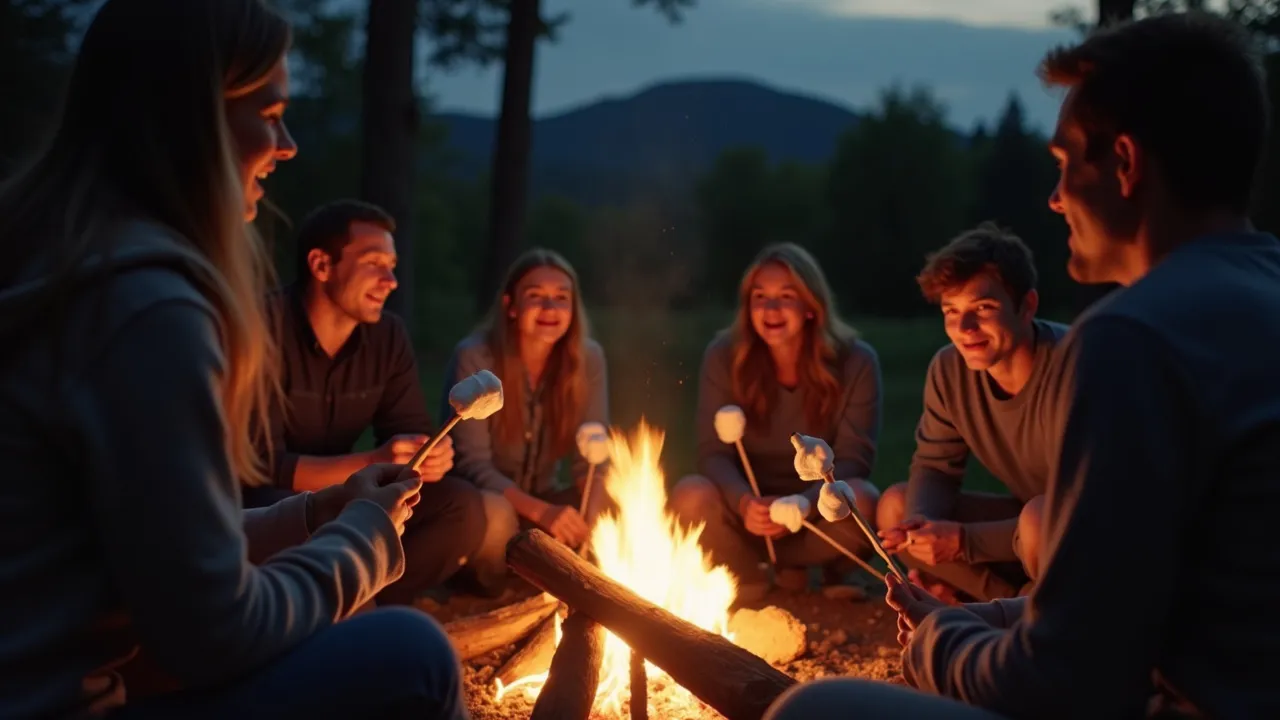
Campfire Day, celebrated on the first Saturday of August (e.g., August 3rd), is a day dedicated to the timeless tradition of gathering around a campfire. It encourages people to unplug, share stories, and enjoy the warmth of fire under the stars.
The Historical Origins & Evolutionary Journey
Campfire Day, observed on the first Saturday of August, traces its roots to the primal human practice of gathering around fire. Fire has been central to human survival and community since the Paleolithic era, serving as a source of warmth, protection, and social bonding. The modern observance, however, emerged from the organized camping and outdoor recreation movements of the late 19th and early 20th centuries.
The Foundational Catalyst
The rise of industrial urbanization in the 1800s spurred a romanticized view of nature and wilderness. Visionaries like Ernest Thompson Seton and Daniel Carter Beard promoted woodcraft and camping skills among youth. Seton's Woodcraft Indians (1902) and Beard's Sons of Daniel Boone (1905) emphasized campfire gatherings as a means of character development. These organizations later merged into the Boy Scouts of America (1910), which institutionalized the campfire as a core activity—complete with songs, stories, and ceremonies.
The Legislative/Official Adoption
Unlike many official holidays, Campfire Day was not established by a government decree. Instead, it evolved organically through community traditions and later promotional efforts by camping and outdoor recreation associations. In the mid-20th century, the American Camping Association and similar groups began promoting a designated day to encourage outdoor experiences. The first Saturday of August was chosen strategically: it falls at the height of summer camping season in the Northern Hemisphere, offering optimal weather for campfires. By the 1970s, the observance had spread informally across the United States and Canada, and eventually to other continents through global scouting and outdoor networks.
Modern Global Legacy
Today, Campfire Day is celebrated in diverse ways worldwide. In Australia and New Zealand, it aligns with winter camping trips. In Scandinavia, it coincides with the tradition of mökki (cottage) fires. The digital age has also transformed it: virtual campfires via video calls gained popularity during the COVID-19 pandemic. Yet the core essence remains unchanged—a time to disconnect from technology, reconnect with nature, and strengthen human bonds through the ancient ritual of fire.
How to Celebrate Campfire Day (First Saturday)
Celebrating Campfire Day is about embracing the outdoors, community, and tradition. Whether you are an individual, family, school, or organization, there are countless ways to participate meaningfully. Below are actionable strategies adapted for different regions and contexts.
Global Traditions and Practices
- North America: Roasting marshmallows for s'mores, telling ghost stories, and singing campfire songs like 'Kumbaya'. Many national parks offer ranger-led campfire programs.
- Europe: In the UK, 'bonfire night' traditions merge with campfire gatherings featuring baked potatoes and folk songs. Scandinavian countries often include candles for mys (coziness).
- Australia & New Zealand: With winter in August, campfires are central to 'bush camping'. Damper bread cooked on coals is a staple.
- Africa: Traditional storytelling around fires is common, often accompanied by drumming and local cuisines like braai (South African barbecue).
- Asia: In Japan, takibi (campfire) parties are popular, blending modern camping with ancient tea ceremonies over embers.
Actionable Celebration Ideas for Individuals and Groups
- Plan a local campfire event at a designated fire pit in a park or backyard. Check local fire regulations and obtain permits if required.
- Practice fire safety: keep a bucket of water and shovel nearby, never leave the fire unattended, and fully extinguish before leaving.
- Prepare classic campfire recipes: s'mores, campfire cones (fill waffle cones with chocolate, fruit, and marshmallows), foil packet vegetables, and hot dogs on sticks.
- Organize storytelling sessions: share folktales, personal anecdotes, or read spooky stories aloud. Use a talking stick to give everyone a turn.
- Involve children: teach them how to safely build a fire, sing songs, and stargaze. Create a 'campfire bingo' card with items like cricket sounds or a shooting star.
Corporate and Organizational Celebrations
Companies and schools can host team-building campfires. Activities include leadership storytelling workshops, fire-building competitions, and group discussions on sustainability. Nonprofits can use Campfire Day to raise awareness about wildfire prevention or outdoor education. Virtual campfires—where participants share stories via video call while lighting a candle—are inclusive for remote teams.
The Cultural Significance of Campfire Traditions
Campfires have been a cornerstone of human culture for millennia, serving as a focal point for community life. In preliterate societies, oral traditions—myths, legends, and histories—were passed down around the fire. This practice continues in modern times, albeit in new forms. Campfire Day highlights these enduring values.
Social Bonding and Belonging
Sharing a campfire creates an intimate, egalitarian space. The circular arrangement eliminates hierarchy, encouraging open dialogue. Research in environmental psychology shows that group campfire experiences increase feelings of trust, cooperation, and shared identity. The rhythmic crackling of fire and its warm glow promote relaxation and mindfulness, lowering cortisol levels.
Storytelling and Cultural Transmission
Campfire stories range from humorous anecdotes to cautionary tales. They reinforce cultural norms and teach lessons. In many Indigenous cultures, the fire is a sacred space for elders to impart wisdom. Modern adaptations include 'Moth-style' storytelling events around campfires, which have become popular in urban settings.
Ritual and Reflection
Campfires often mark transitions: the end of a hiking day, a birthday celebration, or a memorial. The act of tending a fire fosters patience and respect for nature. Many participants describe the experience as 'grounding'—a rare opportunity for deep connection free from digital distractions.
Safety and Environmental Stewardship
While campfires bring joy, they also pose risks. Responsible celebration is paramount. Campfire Day is an ideal time to educate the public on fire safety and Leave No Trace ethics.
Fire Safety Guidelines
- Choose the right location: Use existing fire rings or pits. Keep the fire at least 10 feet away from tents, trees, and dry grass.
- Build safely: Use small sticks and tinder. Never use accelerants like gasoline—they can cause flare-ups.
- Monitor constantly: An adult should always supervise the fire. Keep children and pets at a safe distance.
- Extinguish completely: Douse with water, stir ashes, and repeat until cool to the touch. Never bury hot coals—they can smolder undetected.
Leave No Trace Principles
To minimize ecological impact, follow the seven Leave No Trace principles, especially: Dispose of waste properly (pack out all trash, including food scraps), Leave what you find (do not collect firewood from living trees), and Be considerate of other visitors (keep noise low and respect fire bans). Campfire Day can be a platform to promote sustainable outdoor ethics.
Campfire Cuisine and Storytelling
Food and stories are the heart of any campfire gathering. Campfire Day celebrations are incomplete without these two elements.
Classic Campfire Recipes
- S'mores: The quintessential campfire treat—roasted marshmallow, chocolate bar, and graham cracker sandwich. Variations include using peanut butter cups or cookie dough.
- Campfire Cones: Fill a waffle cone with chocolate chips, banana slices, and mini marshmallows, wrap in foil, and warm over coals.
- Foil Packet Meals: Layer diced vegetables, protein, and seasoning in aluminum foil, seal, and cook on embers for 15-20 minutes.
- Baked Potatoes: Wrap potatoes in foil, bury in hot coals for 45 minutes, and serve with butter and salt.
- Campfire Popcorn: Use a long-handled popper or foil pouch over flames—season with salt or chili powder.
The Art of Storytelling Around the Fire
Effective campfire storytelling involves mood setting, vocal variety, and audience participation. Use the fire's crackle as a backdrop. Start with a simple opening: 'Gather round, friends.' Keep stories concise—5-10 minutes. Encourage others to share their own tales. For spooky stories, lower your voice and pause at key moments. For humorous stories, exaggerate characters and actions. Remember: the goal is connection, not perfection.
The Future of Campfire Day in a Digital Age
As technology pervades daily life, the traditional campfire faces competition from screens and streaming. However, Campfire Day is adapting, leveraging digital tools to preserve and spread the tradition.
Virtual Campfires and Hybrid Events
During the pandemic, virtual campfires became a lifeline for community. Platforms like Zoom enabled groups to share a 'fire'—each person lighting a candle at home. The format continues as a hybrid option, allowing friends and family across distances to celebrate together. Apps with campfire sound effects enhance the atmosphere.
Balancing Tradition and Innovation
Some worry that technology dilutes the authentic experience. Yet, campfire enjoyment is not about rejecting modernity but about intentional use. Campfire Day can incorporate apps for star identification, nature sound recording, or digital storytelling prompts. The key is to keep the fire—real or symbolic—as the central focus.
Environmental concerns, such as wildfire risks and air quality, also shape the future. Dry regions may impose bans, sparking interest in propane 'campfires' or LED alternatives. While not the same, these allow safe celebrations. Ultimately, the spirit of Campfire Day—community, storytelling, and warm light—will endure, evolving with each generation.
Historical Timeline
Organized camping movements emerge in the United States and Europe, led by figures like Ernest Thompson Seton and Robert Baden-Powell, who formalize campfire gatherings as a core youth activity.
Boy Scouts of America is founded, institutionalizing campfire ceremonies, songs, and storytelling. The campfire becomes a symbol of scouting traditions worldwide.
Post-WWII economic boom leads to widespread family camping and recreational vehicle travel. Car camping makes campfires accessible to millions, and the term 'campfire' enters popular culture.
The COVID-19 pandemic sparks a surge in backyard camping and virtual campfire events. Campfire Day gains traction on social media with hashtags like #CampfireDay, highlighting its adaptability.