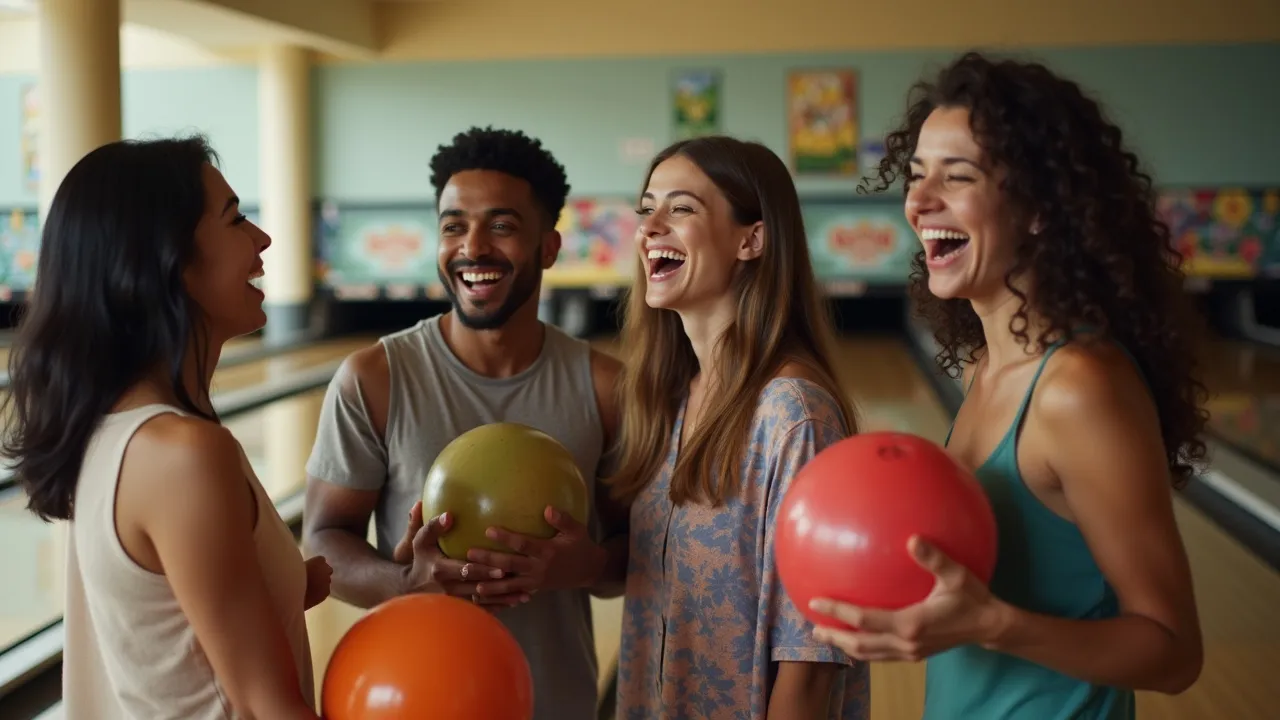
Bowling Day, observed on August 8th, celebrates the timeless sport of bowling with gatherings at alleys worldwide. It honors the game's rich history and social camaraderie, encouraging everyone to hit the lanes for fun and friendly competition.
The Historical Origins & Evolutionary Journey
The Foundational Catalyst
Bowling's roots stretch back over 5,000 years to ancient Egypt, where rolled stones were aimed at objects in a crude form of the game. However, the modern observance of Bowling Day on August 8th is a distinctly 20th-century American invention. It was first promoted by the Bowling Proprietors' Association of America (BPAA) in 1956 to boost participation during the post-war bowling boom. At that time, bowling alleys were springing up across the United States, becoming community hubs for families and returning soldiers. The BPAA designated a fixed date, August 8th, to create a consistent annual celebration that would attract newcomers and retain existing bowlers.
The Legislative/Official Adoption
Unlike many observances, Bowling Day was never codified by federal law but gained widespread recognition through industry marketing and media partnerships. By the 1970s, local bowling centers were organizing tournaments, free games, and special events on August 8th, solidifying the date in the public calendar. The BPAA's promotional campaigns, including cooperative tie-ins with brands like Brunswick and AMF, helped the day achieve national status. In 2010, the day received a boost when the United States Bowling Congress (USBC) officially endorsed it, adding prestige and standardized rules for events.
Modern Global Legacy
Today, Bowling Day has transcended its American origins, celebrated in over 20 countries. While the primary date remains August 8th, variations exist: Japan observes a similar 'Bowling Day' in April to coincide with the start of the cherry blossom season, and Australia promotes it in October during spring. The digital age has introduced online tournaments and live-streamed matches, but the essence remains unchanged—a celebration of rolling a ball down a lane to knock down pins. The day now serves as a fundraiser for charities like the Special Olympics and a platform for introducing youth to the sport.
How to Celebrate Bowling Day
Bowling Day offers countless ways to enjoy the sport, whether you are a seasoned pro or a first-timer. Here is a definitive global guide to making the most of August 8th.
Individual & Social Celebrations
- Gather a group of friends and book a lane at your local alley. Most centers offer discounted games or 'buy one, get one free' specials on Bowling Day.
- Participate in a themed costume game—dress as your favorite bowling pin or retro bowler to add fun. Many alleys host costume contests with prizes.
- Try a new bowling style like candlepin, duckpin, or five-pin if available. These regional variations offer fresh challenges and are popular in New England and Canada.
Corporate & School Events
- Organize a company bowling tournament to boost team morale. Include categories like 'highest score' and 'most creative technique'.
- Host a fundraising bowling night for a local charity. Charge a small entry fee and donate proceeds. Many alleys support this by providing free lane time for non-profits.
- Schools can hold a 'Bowling Day Field Trip' to a nearby alley, combining physical activity with lessons in math (scoring) and physics (momentum).
Unique Global Traditions
United States: Major chains like Bowlero offer unlimited games for a flat fee. Many alleys host 'Glow Bowling' with neon lights and music after dark.
Japan: Bowling Day is part of 'Golden Week' sometimes, with family-oriented events and beginner lessons. In Tokyo, high-tech alleys feature automatic scoring and animated screens.
Germany: Known as 'Bowlingtag', it often includes beer and pretzel specials, reflecting the country's strong bowling culture. Kegel (a variant) is also celebrated.
Australia: Due to the reversed seasons, August is winter, so indoor bowling is perfect. Many alleys run 'Christmas in August' themes with festive decorations.
Global Impact & Industry Transformations
Economic Contributions
The bowling industry contributes over $4 billion annually to the U.S. economy alone, supporting more than 100,000 jobs. Bowling Day amplifies this by driving a significant spike in revenue: alleys report a 50% increase in foot traffic on August 8th compared to typical mid-summer weekdays. The day also boosts related sales of bowling balls, shoes, bags, and accessories from manufacturers like Storm and Hammer.
Technological Innovations
Modern alleys have evolved from manual pinsetting to fully automated systems using computerized scoring and lane sensors. Bowling Day often showcases new technologies such as interactive touch-screen consoles for ordering food and controlling lane settings, and virtual reality (VR) bowling simulators that allow practice without occupying a physical lane. These innovations make the sport more accessible and data-driven, appealing to younger generations.
Social & Cultural Shifts
Bowling has long been a social equalizer, cutting across age, gender, and economic lines. Bowling Day emphasizes inclusivity, with many alleys hosting events for people with disabilities, including bumper lanes and ramps. The day also highlights the role of bowling in community building, from organized leagues to casual family outings. In countries like South Korea, professional bowlers have celebrity status, and Bowling Day features nationally televised exhibitions and tournaments.
Health & Wellness Benefits of Bowling
Bowling is more than just fun; it offers significant physical and mental health advantages. Bowling Day encourages active participation that can lead to long-term well-being.
Physical Fitness
- Strength and coordination: Swinging a 6-16 pound ball works arm, shoulder, and leg muscles. The repeated squat-like motion (when releasing the ball) engages the lower body and core.
- Caloric burn: An hour of bowling can burn between 150 and 300 calories, depending on weight and intensity. Three games (about 1.5 hours) is a moderate workout.
- Low-impact exercise: Ideal for seniors or those with joint issues, bowling is gentle on knees and hips compared to running or jumping sports.
Mental & Social Health
- Stress relief: The repetitive motion and focus required to hit the pins lower cortisol levels. Announcing a strike instantly boosts dopamine and mood.
- Social bonding: Bowling alleys are gathering spots where conversation flows between turns. A 2020 study found that regular bowlers report 15% lower rates of loneliness.
- Cognitive stimulation: Calculating scores, adjusting ball speed and spin, and reading lane conditions all engage the brain, improving strategic thinking and reaction time.
Inclusive Health Programs
Many bowling centers offer 'Bowling Health Days' on August 8th, including free blood pressure screenings and nutritional advice, partnering with local health organizations to promote wellness through sport.
Popular Culture & Media Representations
Bowling has left an indelible mark on movies, television, and literature. Bowling Day often spotlights these cultural touchstones, with special screenings and trivia events.
Iconic Films
- 'The Big Lebowski' (1998): Jeff Bridges' portrayal of 'The Dude' turned bowling into a cult lifestyle. The film's quote 'The Dude abides' is synonymous with the sport's laid-back vibe. Many alleys host thematic parties on Bowling Day, complete with White Russians and rugs.
- 'Kingpin' (1996): A comedy about a fallen bowling pro, it exaggerated the sport but also highlighted the dedication of competitive bowlers.
- 'The Bowling Alley' (short film): An animated classic that introduced children to the sport's sounds and excitement.
Television & Music
TV shows like 'The Simpsons' and 'Roseanne' featured episodes set in bowling alleys, reinforcing their working-class Americana image. In music, hits like 'Bowling Baby' by Bon Jovi and 'Bowling for Soup' (band) have also kept the sport in the cultural zeitgeist. Bowling Day often coincides with online streaming marathons of these episodes on platforms like Netflix or Hulu.
Literature & Art
From the novel 'The Bowling is My Life' by John Madden to contemporary photography collections documenting alley life, bowling inspires creative works that capture its unique blend of precision and chaos. Bowling Day encourages local artists to display bowling-themed art in alley lobbies.
Future Outlook & Sustainability Trends
As bowling enters its next century, Bowling Day is evolving to reflect broader societal shifts towards sustainability, inclusivity, and digital integration.
Eco-Friendly Bowling
- Energy-efficient pinsetters: Newer models use 30% less electricity. Many alleys are retrofitting to reduce carbon footprint.
- Recyclable bowling balls: Manufacturers like Ebonite now use recycled materials and offer recycling programs for old balls. Bowling Day often features 'green lane' events highlighting these initiatives.
- Reduce single-use plastic: Alleys are switching to reusable cups and biodegradable food containers, especially during Bowling Day celebrations.
Digital & Interactive Experiences
- E-sports bowling: Virtual leagues using VR headsets allow participation from home, making the sport accessible to those with mobility issues. Some alleys set up VR stations on Bowling Day.
- Social media challenges: On August 8th, the hashtag #BowlingDay trends with challenges like 'bowl with your non-dominant hand' or 'most creative roll'. This generates user content and promotes the sport to younger audiences.
- Data-driven coaching: Apps like Bowling Analyzer Pro track stats and suggest improvements, turning casual players into enthusiasts.
Inclusivity and Diversity
The industry is actively working to attract a more diverse player base. Bowling Day now promotes adaptive bowling for people with disabilities (e.g., wheelchair ramps, audio cues for visually impaired bowlers) and gender-neutral leagues. The Bowling Diversity Initiative launched in 2022 aims to increase participation among underrepresented groups, with Bowling Day serving as a key recruitment event.
Historical Timeline
Ancient Egyptian grave goods include primitive bowling balls and pins, suggesting the sport's early origins.
The first indoor bowling alley opens in New York City, known as 'Knickerbocker Alleys'.
The American Bowling Congress (ABC) is formed, standardizing rules and equipment in the United States.
The first automatic pinsetter machine is introduced by the American Machine and Foundry (AMF), revolutionizing the sport.
The Bowling Proprietors' Association of America designates August 8th as National Bowling Day to encourage participation.
Bowling makes its debut as an exhibition sport at the Summer Olympics in Rome, though it is not yet a medal event.
The Professional Bowlers Association (PBA) Tour begins televised broadcasts, increasing the sport's popularity.
The film 'The Big Lebowski' premieres, becoming a cult classic and boosting bowling's cultural cachet.
The United States Bowling Congress (USBC) officially endorses National Bowling Day, providing promotional materials and sanctioned events.
Bowling is recognized by the International Olympic Committee as a sport, though it has yet to be included in the Games.
Amid COVID-19, Bowling Day goes virtual with online tournaments and at-home challenges, expanding its reach.
Bowling Day sees record participation with over 15 million people hitting the lanes in the U.S. alone, driven by social media campaigns and eco-friendly initiatives.