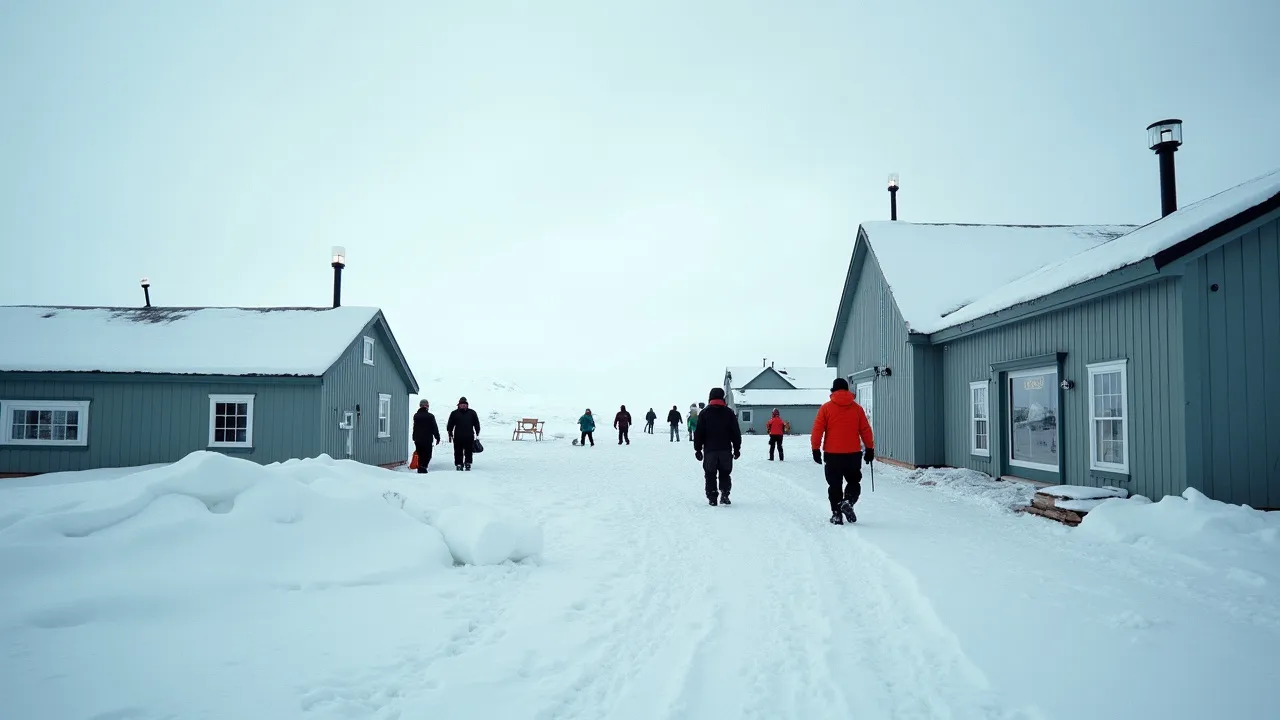
Antarctica Day, observed on December 1st, honors the signing of the Antarctic Treaty in 1959, which dedicated the continent to peace and scientific research. It’s a day to celebrate international cooperation and environmental stewardship in Antarctica.
History of Antarctica Day
Antarctica Day marks the anniversary of the signing of the Antarctic Treaty on December 1, 1959. This landmark agreement established Antarctica as a continent dedicated to peace and scientific research, free from military activity and territorial claims. The day is a celebration of international cooperation and the spirit of exploration that has defined human engagement with the frozen continent.
The Foundational Catalyst
The push for an Antarctic treaty emerged during the International Geophysical Year (IGY) of 1957-1958, when scientists from 12 nations collaborated on research in Antarctica. The success of this cooperation highlighted the need for a formal agreement to maintain the continent as a scientific preserve. The original signatories were Argentina, Australia, Belgium, Chile, France, Japan, New Zealand, Norway, South Africa, the Soviet Union, the United Kingdom, and the United States.
Legislative/Official Adoption
The Antarctic Treaty was signed in Washington, D.C., and entered into force on June 23, 1961. Over the decades, additional agreements have been added, collectively known as the Antarctic Treaty System. Antarctica Day as an observance was promoted by the Antarctic Treaty parties and various educational organizations to raise awareness about the continent's unique status and the importance of its protection.
Modern Global Legacy
Today, 54 nations are parties to the Antarctic Treaty, representing about 80% of the world's population. Antarctica Day is celebrated with educational events, scientific symposia, and public outreach programs that highlight ongoing research and environmental challenges such as climate change and biodiversity conservation.
How to Celebrate Antarctica Day
Celebrating Antarctica Day can be done in many ways, from personal learning to community events. Here are actionable strategies for individuals, schools, and organizations:
For Individuals
- Read about Antarctic history and the treaty system. Watch documentaries or attend virtual lectures.
- Host a ‘polar party’ with themed activities, such as viewing penguin cams or learning about Antarctic explorers.
- Reduce your carbon footprint to support the fight against climate change, which directly impacts Antarctica.
For Schools and Educators
- Organize a science fair focusing on Antarctic research topics like glaciology, marine biology, or atmospheric science.
- Invite a guest speaker from a research institute or polar organization to talk about life on the ice.
- Use interactive maps and data to teach students about the continent's geography and the treaty's significance.
For Organizations and Companies
- Partner with environmental groups to fundraise for Antarctic conservation projects.
- Host a webinar on sustainable practices in polar regions or the impact of tourism.
- Encourage employees to volunteer for citizen science initiatives that monitor Antarctic wildlife or ice melt.
Regional Variations
While December 1st is the primary date, some countries with strong Antarctic ties may have additional celebrations. For example, Australia observes ‘Antarctic Week’ around the same time, and Chile holds ceremonies at its Antarctic bases. In the United States, the National Science Foundation often hosts public events in conjunction with research stations.
Global Impact of Antarctica Day
Antarctica Day underscores the global significance of the continent. Antarctica plays a critical role in Earth's climate system, ocean currents, and sea-level regulation. The day highlights how international cooperation has kept Antarctica demilitarized and open for scientific research. It also promotes environmental awareness, as the continent faces threats from climate change, pollution, and invasive species. The Antarctic Treaty System serves as a model for collaborative governance of shared global resources.
Scientific Contributions
Research in Antarctica has led to breakthroughs in climate science, astronomy, biology, and medicine. For example, the discovery of the ozone hole was made possible by Antarctic measurements. The continent's ice cores provide a record of Earth's climate history, informing predictions about future change.
Cultural and Educational Outreach
Antarctica Day is used by museums, libraries, and science centers to engage the public with polar science. Many institutions host film screenings, panel discussions, and interactive exhibits that bring the continent to life for people far from the ice.
Scientific Cooperation in Antarctica
The Antarctic Treaty established the continent as a natural reserve for science. Today, over 30 countries operate research stations year-round, sharing data and resources. Key areas of international collaboration include:
Climate Research
Ice cores, satellite observations, and field studies help scientists understand global climate patterns. Antarctica holds about 70% of the world's fresh water in its ice sheet, and its melting contributes to sea-level rise.
Biodiversity Studies
Unique species like penguins, seals, and krill are studied to understand adaptation to extreme environments. The Southern Ocean’s ecosystems are vital for global carbon cycling.
Astronomy and Space Science
The dry, clear air of the Antarctic Plateau makes it one of the best places on Earth for astronomical observations. Projects like the IceCube Neutrino Observatory use the ice itself to detect particles from space.
Logistics and Support
International cooperation extends to transportation, communication, and emergency response. The Council of Managers of National Antarctic Programs (COMNAP) coordinates logistics to ensure efficient and safe operations.
Environmental Protection and the Antarctic Treaty System
The Antarctic Treaty System includes the Protocol on Environmental Protection to the Antarctic Treaty (Madrid Protocol), which designates Antarctica as a natural reserve devoted to peace and science. Key environmental provisions include:
- Prohibition of mineral resource extraction (except for scientific research)
- Strict waste management and pollution control
- Protected areas for unique ecosystems
- Environmental impact assessments for all activities
Climate Change Challenges
Antarctica is warming in some regions, causing ice shelf disintegration and glacier retreat. The West Antarctic Ice Sheet is particularly vulnerable. Antarctica Day serves as a reminder of the urgent need for global climate action.
Invasive Species
Tourism and scientific activities risk introducing non-native species. Strict biosecurity measures are enforced, such as cleaning gear and clothing before entering the continent.
Geopolitical Significance of Antarctica
Although no country owns Antarctica, several nations have territorial claims that are held in abeyance under the Antarctic Treaty. The treaty effectively freezes claims and prohibits new ones. This unique geopolitical arrangement has promoted peace and prevented conflict over resources. Antarctica Day highlights the value of diplomacy and international law in managing shared spaces.
Strategic Military Aspects
The treaty bans all military activity, including weapons testing and nuclear explosions. However, military personnel and equipment can be used for logistical support. This demilitarization ensures that Antarctica remains a place of science and cooperation.
Future Challenges
As ice melts and resources become more accessible, pressure may arise to revise the treaty. Antarctica Day encourages ongoing dialogue to strengthen protections and ensure the continent's preservation for future generations.
Antarctica Day in Popular Culture
Antarctica Day has inspired films, books, and art that bring the continent’s mystery and beauty to wider audiences. Documentaries like 'Antarctica: A Year on Ice' and 'Encounters at the End of the World' showcase daily life and research. Fictional works often portray Antarctica as a frontier of discovery or a setting for adventure. The day also sees social media campaigns where people share facts, photos, and personal stories from polar connections.
Social Media and Events
Hashtags like #AntarcticaDay and #AntarcticTreaty trend on December 1st. Organizations host Twitter chats, Instagram takeovers from researchers, and Facebook Live tours of research stations. These digital efforts help demystify the continent and inspire the next generation of polar scientists.
Historical Timeline
International Geophysical Year (IGY) fosters unprecedented scientific cooperation in Antarctica, laying the groundwork for a formal treaty.
The Antarctic Treaty is signed in Washington, D.C. by 12 nations, dedicating the continent to peace and science.
The Antarctic Treaty enters into force on June 23, establishing the framework for governance.
The Convention for the Conservation of Antarctic Seals is adopted to protect marine mammals.
The Convention on the Conservation of Antarctic Marine Living Resources (CCAMLR) is signed, regulating fishing.
The Protocol on Environmental Protection to the Antarctic Treaty (Madrid Protocol) is adopted, banning mining and setting strict environmental rules.
The Antarctic Treaty Secretariat is established in Buenos Aires, Argentina, to support treaty operations.
The Ross Sea Marine Protected Area is established, the world's largest, covering over 1.5 million square kilometers.
COVID-19 pandemic leads to reduced human presence in Antarctica, highlighting the continent's vulnerability and the importance of scientific continuity.