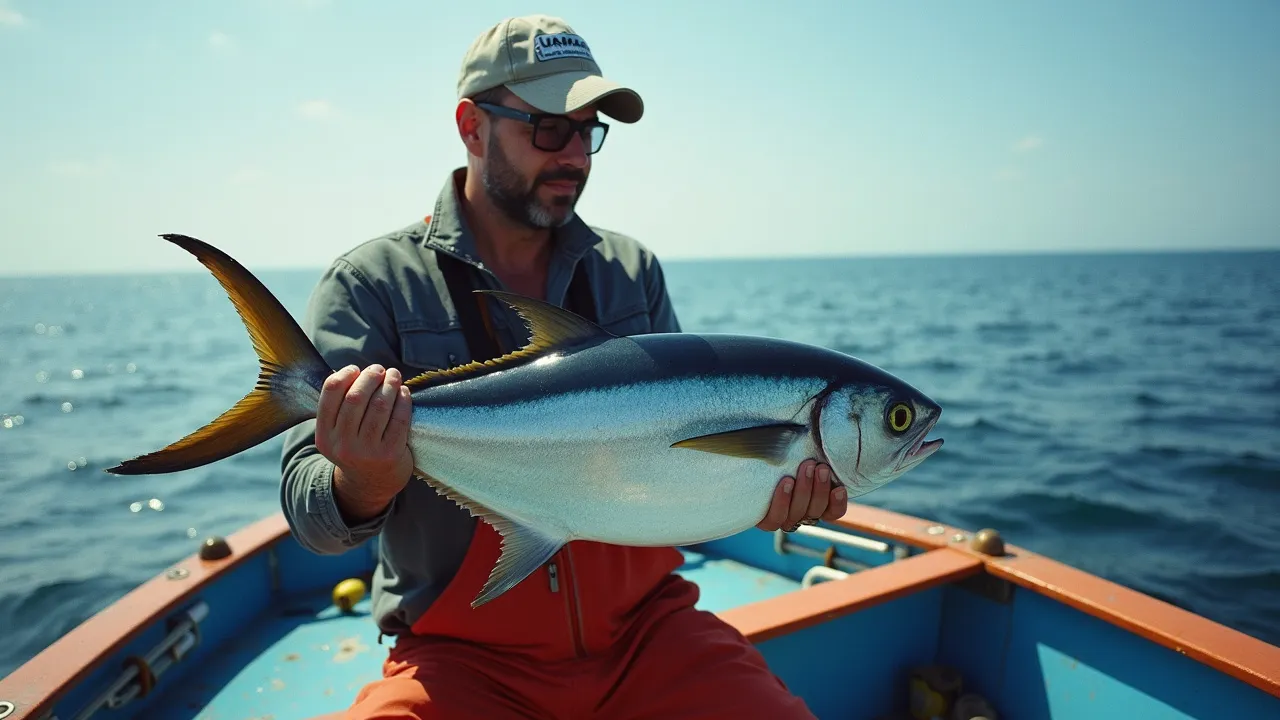
World Tuna Day, observed annually on May 2nd, raises awareness about the importance of tuna and the need for sustainable fishing practices to protect ocean ecosystems.
The Historical Origins & Evolutionary Journey
World Tuna Day was established by the United Nations General Assembly through resolution A/RES/71/124 in December 2016, with the first official observance on May 2, 2017. The date was chosen to coincide with the opening of the tuna fishing season in several regions, symbolizing a global commitment to sustainable management.
The Foundational Catalyst
The push for a dedicated day stemmed from alarming declines in tuna stocks due to overfishing, illegal fishing, and bycatch. The United Nations Conference on Sustainable Development (Rio+20) in 2012 highlighted the need for better ocean governance. Tuna, as a highly migratory species, became a focal point for international cooperation under the United Nations Convention on the Law of the Sea (UNCLOS) and regional fisheries management organizations (RFMOs).
The Legislative/Official Adoption
The proposal for World Tuna Day was spearheaded by Pacific Island nations, whose economies and food security heavily rely on tuna. The resolution was co-sponsored by over 60 countries, emphasizing three pillars:
- Promoting sustainable fishing practices
- Protecting tuna spawning grounds
- Ensuring fair economic returns for coastal communities
Modern Global Legacy
Since 2017, World Tuna Day has evolved into a platform for governments, NGOs, and the seafood industry to announce new conservation measures. Campaigns like “Eat Tuna Responsibly” and partnerships with major retailers have amplified the message. The day also supports the UN Sustainable Development Goal 14 (Life Below Water), with a focus on ending overfishing and rebuilding tuna stocks by 2025.
How to Celebrate World Tuna Day
World Tuna Day offers numerous ways for individuals, communities, and organizations to participate in conserving tuna and oceans. Here are actionable strategies tailored to different audiences:
For Individuals
- Choose Sustainable Tuna: Look for certifications like MSC (Marine Stewardship Council) or Dolphin-Safe labels when buying canned or fresh tuna.
- Reduce Food Waste: Use every part of the tuna, from fillets to bones, in meals to minimise waste.
- Educate Yourself: Watch documentaries like “Seaspiracy” or read reports from WWF and Greenpeace about tuna stock status.
- Social Media Campaigns: Use hashtags like #WorldTunaDay and #SustainableTuna to share facts and recipes.
For Schools & Universities
- Organise a “Tuna and Oceans” science fair with projects on marine biology, overfishing, and seafood supply chains.
- Invite local fishermen or marine biologists for guest lectures on sustainable fishing practices.
- Conduct a “Tuna-Free Lunch” day to experience alternatives like plant-based tuna (e.g., from soy or jackfruit).
For Businesses & Organisations
- Adopt a sourcing policy that prioritizes certified sustainable tuna and publish annual sustainability reports.
- Launch a customer education campaign with in-store signage or QR codes linking to tuna traceability information.
- Partner with NGOs like Ocean Conservancy to fund tuna conservation projects in the Pacific or Indian Oceans.
Regional Traditions
In the Pacific Islands, communities hold ceremonies blessing fishing fleets and share traditional tuna dishes like “poke” or “eka”. In Japan, sushi restaurants offer special sustainable tuna menus. In Spain, the “Ruta del Atún” (Tuna Route) highlights traditional trap fishing methods (“almadrabas”).
Global Impact of Tuna Fishing
Tuna is one of the most commercially valuable fish species, with global trade exceeding $40 billion annually. It supports the livelihoods of millions of people worldwide, from small-scale artisanal fishers in developing countries to large industrial fleets. However, unsustainable fishing practices threaten this economic backbone.
Economic Significance
An estimated 7 million tonnes of tuna are caught each year, with major fishing nations including Indonesia, Japan, Spain, and the United States. Tuna fisheries contribute significantly to food security in island nations like the Maldives and Kiribati, where tuna provides up to 50% of animal protein intake. The industry also supports processing plants in Thailand, Ecuador, and Ghana, employing hundreds of thousands.
Environmental Challenges
- Overfishing: The International Seafood Sustainability Foundation (ISSF) reports that 33% of tuna stocks are overexploited (e.g., Atlantic bluefin, Indian Ocean yellowfin).
- Bycatch: Non-target species like sharks, sea turtles, and dolphins are accidentally caught, with an estimated 10% of total catch being bycatch.
- Illegal, Unreported, and Unregulated (IUU) Fishing: Accounts for up to 20% of global tuna catch, undermining conservation efforts.
Conservation Milestones
Thanks to initiatives like the Western and Central Pacific Fisheries Commission (WCPFC) regulations, some stocks are recovering. The Pacific skipjack tuna remains healthy, while Atlantic bluefin has rebounded 40% since 2000 due to quotas and enforcement. However, continuous vigilance is required.
Sustainability Efforts and Certifications
To ensure tuna remains available for future generations, a multi-pronged approach combines science, policy, and consumer action.
Key Sustainability Initiatives
- Fishing Quotas: Regional fisheries management organisations (RFMOs) set catch limits based on scientific stock assessments.
- Selective Fishing Gear: Use of FAD-free (Fish Aggregating Device) methods reduces bycatch. Pole-and-line and handline fishing are endorsed.
- Traceability Systems: Blockchain and GPS tracking allow consumers to verify the origin of their tuna.
Certification Labels
Consumers can look for:
- MSC (Marine Stewardship Council): Ensures fisheries are well-managed and sustainable.
- Dolphin-Safe: Guarantees no dolphins were harmed during tuna fishing.
- Friend of the Sea: Certifies sustainable fishing practices and social responsibility.
Nutritional and Culinary Significance
Tuna is a nutrient-dense food, rich in protein, omega-3 fatty acids, vitamin D, and selenium. It is consumed globally in various forms, from fresh steaks to canned products.
Health Benefits
- Omega-3s reduce inflammation and support heart and brain health.
- Selenium acts as an antioxidant, protecting cells from damage.
- Low in saturated fat, making it a lean protein source.
However, concerns about mercury content in large tuna species (e.g., bluefin, bigeye) mean that pregnant women and children should limit consumption. Canned light tuna (skipjack) has lower mercury levels.
Culinary Uses Across Cultures
Tuna is incredibly versatile: Japanese cuisine uses it in sushi (maguro), sashimi, and donburi; Italian cuisine features it in tonnato sauce and salads; Latin American ceviches often use fresh tuna; and Mediterranean dishes like tuna with olives and capers. Canned tuna is a global pantry staple for sandwiches, casseroles, and burgers.
The Future of Tuna Stocks and Oceans
The trajectory of tuna populations depends on immediate and sustained action. Climate change, ocean acidification, and plastic pollution add new pressures. Warmer waters alter tuna migration patterns, affecting spawning and feeding grounds.
Positive Trends
- Increased adoption of Harvest Control Rules (HCRs) by RFMOs, which pre-define management responses based on stock levels.
- Growth of marine protected areas (MPAs) in tuna spawning zones, such as the Phoenix Islands Protected Area in Kiribati.
- Technological innovations like satellite monitoring of fishing vessels to combat IUU fishing.
What You Can Do
Beyond individual choices, advocacy matters: support organisations lobbying for stronger RFMO regulations, choose sustainable seafood rankings (e.g., Monterey Bay Aquarium Seafood Watch), and pressure companies to adopt transparent supply chains. World Tuna Day serves as a yearly reminder that our collective actions determine the fate of these magnificent fish and the health of our oceans.
Historical Timeline
Global tuna catches rise sharply with the advent of industrial purse-seine and longline fishing methods, leading to the first signs of overfishing.
The United Nations Convention on the Law of the Sea (UNCLOS) establishes a legal framework for the conservation and management of highly migratory species like tuna.
The United Nations Fish Stocks Agreement promotes regional cooperation for sustainable tuna fisheries, leading to the creation of RFMOs.
The International Seafood Sustainability Foundation (ISSF) is formed to promote science-based tuna conservation.
Rio+20 UN Conference on Sustainable Development highlights the need for ocean stewardship, setting the stage for World Tuna Day.
The United Nations General Assembly adopts resolution A/RES/71/124, establishing May 2 as World Tuna Day.
First official World Tuna Day observed globally, with events in over 50 countries.
The EU bans the import of tuna caught via driftnets, strengthening sustainability regulations.
Pacific skipjack tuna is declared fully recovered due to effective management, setting a positive precedent.