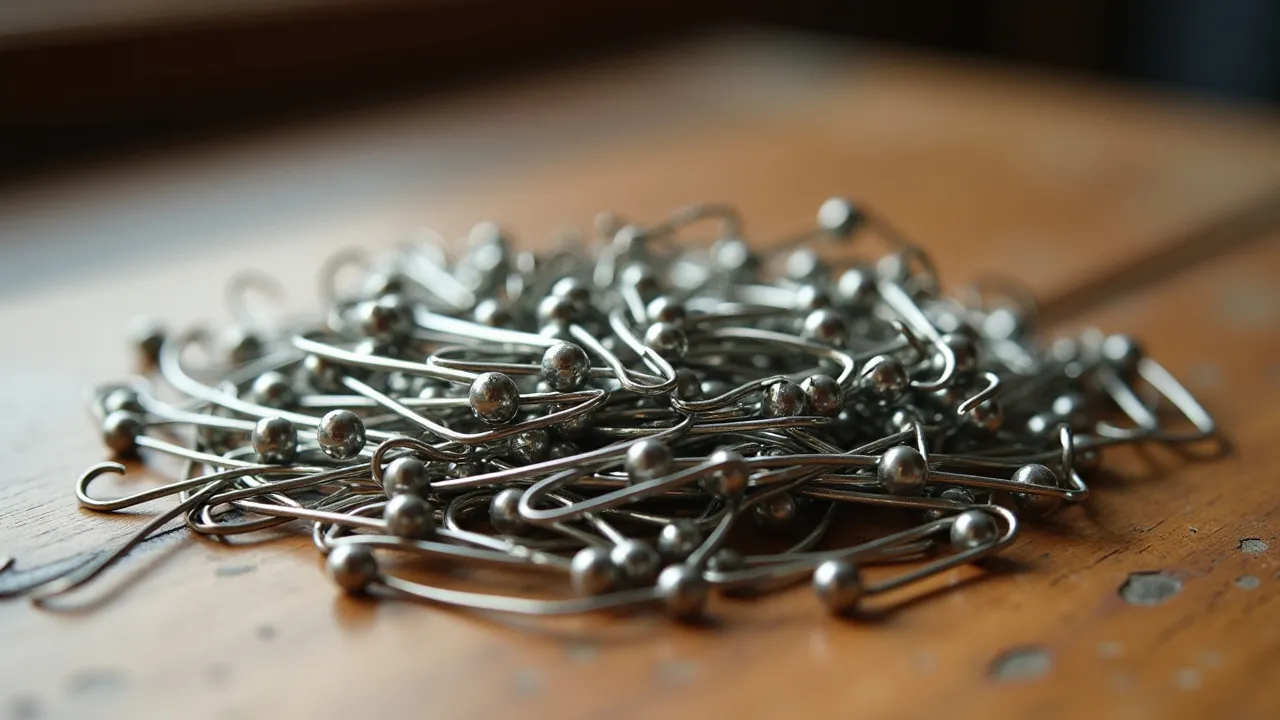
Safety Pin Day on April 10th celebrates the invention and versatility of the safety pin, a simple yet indispensable fastening device. Discover its history, uses, and ways to honor this tiny tool.
The Historical Origins & Evolutionary Journey
The Foundational Catalyst
The safety pin, as we know it today, was invented by American mechanic Walter Hunt in 1849. Hunt, a prolific inventor also known for pioneering the sewing machine, designed the safety pin as a way to pay off a $15 debt. He created a prototype from a piece of brass wire, forming a coiled spring at one end and a clasp at the other to protect the user from the sharp point. The design was so effective that he received U.S. patent #6281 on April 10, 1849—the very date now honored as Safety Pin Day.
The Legislative/Official Adoption
While Safety Pin Day lacks official federal recognition, it has been embraced by enthusiasts, crafters, and historians as a day to appreciate the humble safety pin. The date April 10th marks the patent anniversary. Over the years, various organizations and online communities have promoted the day through social media campaigns and educational events, cementing it as a grassroots observance.
Modern Global Legacy
Today, safety pins are ubiquitous—from household sewing kits to industrial uses. They have also taken on symbolic meanings, such as after the 2016 Brexit referendum when wearing a safety pin on a lapel became a sign of solidarity with immigrants and minorities. The evolution from a simple fastener to a cultural emblem underscores the safety pin's enduring relevance.
- 1849: Walter Hunt patents the safety pin.
- 1900s: Mass production makes safety pins cheap and widely available.
- 2016: Safety pin symbol adopted as an ally sign in the UK and US.
How to Celebrate Safety Pin Day
Individual & Family Activities
- DIY Craft Projects: Create jewelry, keychains, or artwork using safety pins and beads. Instructions are widely available online.
- Emergency Kit Check: Ensure your home or car emergency kit includes safety pins—they can secure bandages, fix clothing, or serve as fishing hooks.
- Historical Appreciation: Read about Walter Hunt or watch a documentary on 19th-century inventions.
School & Community Events
- Organize a 'Safety Pin Fashion Show' where students decorate clothing with safety pins.
- Host a discussion on the role of small inventions in daily life.
- Collect safety pins for donation to local sewing or crafting programs.
Corporate & Social Rituals
Companies can celebrate by giving away branded safety pin kits or organizing a 'pin drive' for charity. On social media, use hashtags like #SafetyPinDay and #April10 to share stories and creations.
The Global Impact of the Safety Pin
Economic Significance
The safety pin industry, though often overlooked, supports manufacturing jobs worldwide. Countries like China, India, and the US produce billions of safety pins annually. The simple design allows for cheap mass production, making it accessible to all socioeconomic levels.
Medical and Emergency Uses
In remote areas, safety pins are used as makeshift suture tools, to secure splints, or to fasten bandages. Their reliability in emergencies has saved countless lives. Organizations like the Red Cross recommend including safety pins in first aid kits.
Environmental Impact
Unlike plastic fasteners, metal safety pins are reusable and recyclable. Their durability reduces waste, aligning with sustainable living practices. Some manufacturers now produce pins from recycled steel.
Safety Pin as a Symbol of Solidarity
Origins of the Symbol
In the wake of the 2016 Brexit vote and the 2016 US presidential election, wearing a safety pin on a lapel became a quiet way to signal that the wearer was a safe person for marginalized groups to approach. The trend started in the UK and spread globally via social media.
Criticism and Evolution
Some critics argued the symbol was performative, but many defended it as a meaningful gesture of allyship. Over time, the safety pin symbol has evolved, appearing in LGBTQ+ pride fashion and anti-hate campaigns. It remains a potent icon of support.
Industrial and Craft Applications
Manufacturing Versatility
Safety pins are used in the garment industry for temporary fastening during sewing, in bag closures, and as part of machinery. They come in various sizes, from tiny 1-inch pins to heavy-duty 6-inch pins for upholstery.
Creative Crafts
Jewelry makers use safety pins to create necklaces, bracelets, and earrings. Quilters use them to hold layers together. Schools use them for art projects, teaching children fine motor skills. Online platforms like Pinterest feature thousands of safety pin craft ideas.
Safety Pin Day in Popular Culture
Media References
The safety pin appears in films like 'The Breakfast Club' (1985), where a character uses one as an earring, and in music videos as a punk rock accessory. It has been referenced in songs by artists like The Clash and Madonna.
Annual Celebrations
Museums of invention, like the National Inventors Hall of Fame, often host special exhibits on April 10th. Online communities post tutorials and host virtual gatherings. Some sewing enthusiasts organize 'stitch-ins' to promote the craft.
Historical Timeline
Walter Hunt invents the safety pin and receives U.S. patent #6281 on April 10. The design features a coiled spring and clasp to secure the point.
Mass production begins; safety pins become household essentials. Companies like the American Pin Company emerge.
Safety pin design remains largely unchanged; used extensively in clothing manufacturing and home sewing.
During World War II, safety pins are included in soldier survival kits for field repairs and medical emergencies.
Safety pins become a punk fashion icon, used as earrings, piercings, and clothing embellishments.
Safety pin symbol adopted as a sign of solidarity with immigrants and minorities after Brexit and US election.