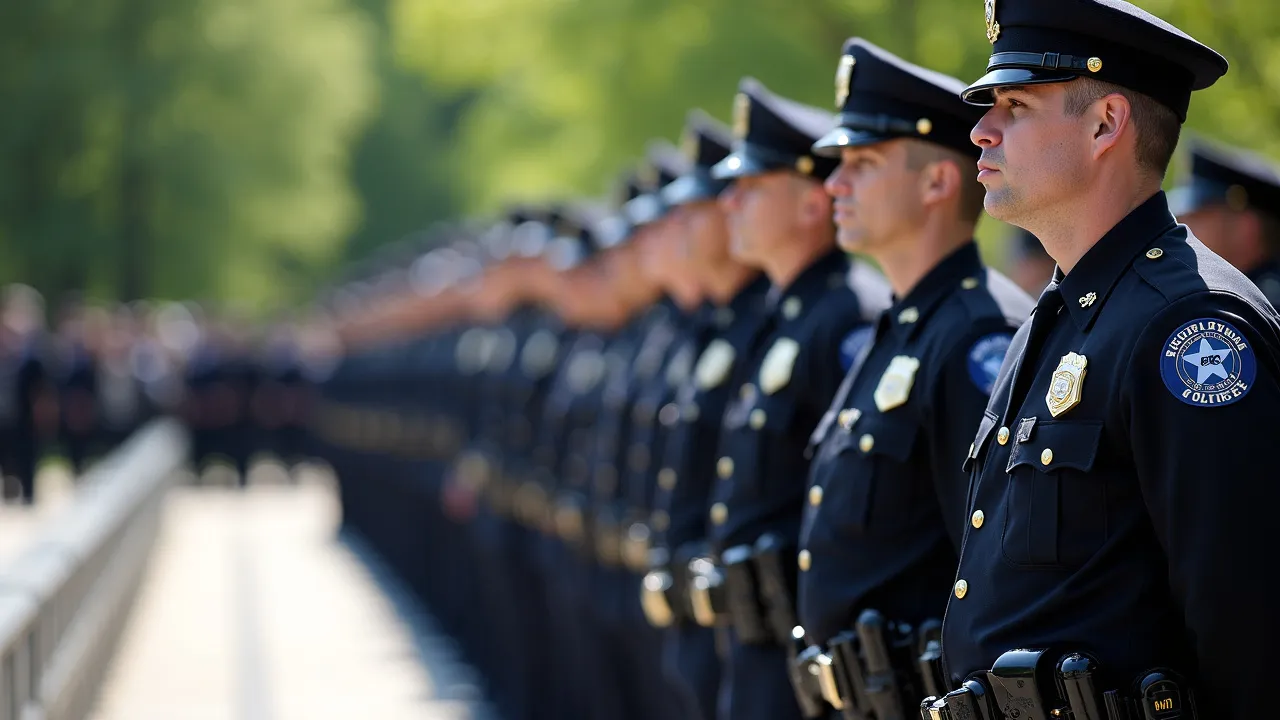
Peace Officer Memorial Day, observed on May 15th each year, honors law enforcement officers who have died or been disabled in the line of duty. Established by President John F. Kennedy in 1962, it is a day of remembrance and gratitude.
The Historical Origins & Evolutionary Journey
Peace Officer Memorial Day is a deeply significant observance in the United States, dedicated to honoring federal, state, and local peace officers who have made the ultimate sacrifice or been permanently disabled while serving their communities. The day falls on May 15th each year, as per federal law, and is part of National Police Week, a broader commemorative period that includes the National Peace Officers Memorial Service and other events.
The Foundational Catalyst
The roots of this memorial day trace back to the early 1960s, a time when law enforcement faced rising dangers from organized crime and civil unrest. In 1961, the Fraternal Order of Police (FOP) began advocating for a national day to remember fallen officers. The catalyst was the tragic death of Officer James “Jack” McGovern of the Kansas City Police Department, whose widow, Mrs. McGovern, joined forces with FOP President John J. Harrington to push for federal recognition. Their lobbying efforts gained traction in Congress, leading to a joint resolution that was signed into law by President John F. Kennedy on May 4, 1962 (Public Law 87-456). The proclamation designated May 15th as Peace Officers Memorial Day and the week surrounding it as Police Week.
The Legislative & Official Adoption
President Kennedy’s Proclamation 3537 stated: “By joint resolution approved May 4, 1962, the Congress has requested the President to designate May 15 of each year as Peace Officers Memorial Day and the calendar week of each year during which such day falls as Police Week.” This formalized the observance. Every year since, the President issues a proclamation reaffirming the day. In 1994, President Bill Clinton signed an executive order requiring all federal buildings to fly the American flag at half-staff on May 15th. Over the decades, the day has evolved from a simple acknowledgment into a nationwide week of ceremonies, memorial services, and public awareness campaigns.
Modern Global Legacy
While Peace Officer Memorial Day is primarily a U.S. observance, its spirit has inspired similar memorials worldwide. The United Kingdom observes National Police Memorial Day in September, Australia holds National Police Remembrance Day on September 29, and many other nations have established their own days to honor fallen officers. The day has become a symbol of the enduring brotherhood and sisterhood of law enforcement across borders, emphasizing the universal sacrifices made by those who uphold the law.
How to Celebrate Peace Officer Memorial Day
Celebrating Peace Officer Memorial Day involves a blend of solemn remembrance, community support, and personal reflection. Below is a comprehensive guide for individuals, groups, and organizations to honor the day meaningfully.
For Individuals & Families
- Attend a local memorial service: Many communities host ceremonies at law enforcement memorials or police headquarters. Check local event listings for May 15th events.
- Visit the National Law Enforcement Officers Memorial in Washington, D.C., or a local memorial. Leave a tribute such as flowers or a handwritten note.
- Display the flag at half-staff on your property to show respect. The U.S. flag code mandates half-staff on government buildings, but private citizens are encouraged to participate.
- Participate in the National Moment of Silence at 1:00 PM EST, observed by many law enforcement agencies and the public.
For Schools & Educational Institutions
- Organize a classroom lesson about the history of Peace Officer Memorial Day and the role of peace officers in society. Use resources from the National Law Enforcement Officers Memorial Fund.
- Invite a local officer to speak about the importance of the day and the realities of police work.
- Encourage students to write thank-you letters to police departments or families of fallen officers, which can be delivered via local precincts.
For Organizations & Corporations
- Sponsor a candlelight vigil in your community. Coordinate with local police unions or fraternal orders to ensure proper etiquette.
- Donate to a police charity such as the Concerns of Police Survivors (C.O.P.S.) or the Officer Down Memorial Page. Many organizations run fundraising campaigns during Police Week.
- Provide a free meal or service to active and retired officers on May 15th as a token of gratitude.
Global Traditions
While the day is uniquely American, countries like Canada, Mexico, and the Philippines have adopted similar observances. In Canada, the National Peace Officers Memorial Day is held on the last Sunday of September (though some provinces mark May 15th). The core theme across all regions is respect and support for the fallen and their families.
The Significance of Peace Officer Memorial Day in Modern Society
Peace Officer Memorial Day serves as a critical moment of national reflection, especially in an era where law enforcement faces intense scrutiny. The day helps bridge the gap between the public and police by humanizing the men and women who risk their lives daily.
Promoting Healing and Solidarity
For families of fallen officers, the day is a powerful source of validation. It reassures them that their loved one’s sacrifice is not forgotten. The collective mourning fosters a sense of solidarity across law enforcement agencies and communities, reinforcing the idea that police officers are more than just uniforms—they are neighbors, friends, and protectors.
Impact on Police Morale
Recognizing the danger inherent in police work boosts morale among active duties. A 2020 survey by the Pew Research Center found that 86% of police officers felt that their work was not adequately appreciated by the public. Memorial day events counteract this sentiment by highlighting the extreme sacrifices made by the profession.
Educational Value
Schools and media outlets often use Peace Officer Memorial Day to educate the public about the history and challenges of law enforcement. This can reduce misunderstandings and foster a more informed dialogue about police reform and support.
Global Observances and Comparative Traditions
While Peace Officer Memorial Day is deeply rooted in U.S. history, the concept of honoring fallen law enforcement officers is universal. This section explores how different countries commemorate their peace officers.
United Kingdom: National Police Memorial Day
Observed on the last Sunday in September, the UK’s National Police Memorial Day is a service held at different cathedrals each year, organized by the Police Federation of England and Wales. It features readings, music, and the roll call of fallen officers.
Canada: National Peace Officers Memorial Day
Canada officially recognizes the last Sunday of September as National Peace Officers Memorial Day, although some provinces like Ontario and British Columbia hold events on May 15th to align with the US observance. The day was established in 1998 by proclamation of the Governor General.
Australia: National Police Remembrance Day
This day is observed on September 29, the feast day of St. Michael the Archangel, the patron saint of police. Events include church services, wreath-laying ceremonies, and the reading of names of officers who died in the previous year.
New Zealand: Remembrance Day
New Zealand Police hold a national remembrance service on September 29 as well, with similar traditions to Australia. Local stations also conduct small ceremonies.
Other Nations
Many Latin American countries, such as Brazil and Mexico, have their own police memorial days, often tied to national police foundation dates. The common thread across all cultures is the call to honor the commitment and bravery of peace officers.
Notable Events and Ceremonies During Police Week
The week of May 15th, known as National Police Week, is packed with events that attract thousands of attendees from across the globe. Here are the most prominent:
National Peace Officers Memorial Service
Held on May 15th at the U.S. Capitol West Front, this service is the largest law enforcement event in the world. It features the reading of the names of officers added to the National Law Enforcement Officers Memorial, a wreath-laying ceremony, and remarks by dignitaries.
Fraternal Order of Police Memorial Service
The FOP holds an interfaith memorial service at the National Law Enforcement Officers Memorial. This service is more intimate and includes bagpipe music and a moment of silence.
Candlelight Vigil
On the evening of May 13th (the Sunday before), the National Law Enforcement Officers Memorial Fund organizes a candlelight vigil. Thousands of participants hold candles as the names of fallen officers are illuminated on the memorial walls.
Police Unity Tour
This annual bicycle ride from various points to the National Law Enforcement Officers Memorial raises awareness and funds for the memorial. The tour concludes during Police Week.
Emerald Society & Pipe Band March
Law enforcement pipe bands from around the country march through the streets of Washington, D.C., in a colorful tribute to their fallen brethren.
How Peace Officer Memorial Day Shapes Public Policy and Law
Beyond the ceremonies, Peace Officer Memorial Day has a tangible impact on legislation and public safety funding.
Legislative Gains
The high visibility of the day has spurred Congress to pass numerous bills aimed at protecting officers. For example, the Law Enforcement Officers Safety Act (LEOSA) of 2004, which allows qualified officers to carry concealed firearms nationwide, was often promoted during Police Week briefings. Similarly, the Social Security Fairness Act for Public Safety Officers has been championed during memorial events.
Funding for Memorials and Support Services
The National Law Enforcement Officers Memorial Fund, which operates the memorial in Washington, D.C., receives substantial private and federal donations driven by the emotional resonance of Memorial Day. In 2022, the fund distributed over $2 million to survivor support programs.
Influence on Crime Prevention Policies
The day also refocuses attention on officer safety equipment and training. Following each May 15th, federal grants for bulletproof vests, body cameras, and stress counseling often see renewed funding cycles.
The Role of Survivor Support Organizations
Peace Officer Memorial Day is not just about remembrance; it's a lifeline for families of fallen officers. Several organizations play a central role in supporting survivors.
Concerns of Police Survivors (C.O.P.S.)
Founded in 1984, C.O.P.S. provides resources to families, including emotional support, networking events, and scholarships. During Police Week, C.O.P.S. hosts a retreat for children who have lost a parent in the line of duty.
Officer Down Memorial Page (ODMP)
ODMP maintains a comprehensive database of fallen officers, updated daily. On May 15th, they host a virtual memorial that allows people worldwide to leave tributes.
National Law Enforcement Officers Memorial Fund
This nonprofit manages the memorial and organizes the annual candlelight vigil. It also operates a museum in D.C. dedicated to law enforcement history.
These organizations depend heavily on the awareness generated by Peace Officer Memorial Day to fund their year-round operations.
Historical Timeline
The Fraternal Order of Police (FOP) and the widow of fallen officer James McGovern lobby Congress for a national day honoring peace officers.
President John F. Kennedy signs Public Law 87-456, designating May 15th as Peace Officers Memorial Day and the week as Police Week.
First official observance of Peace Officer Memorial Day on May 15, with a ceremony at the U.S. Capitol.
The National Law Enforcement Officers Memorial is dedicated in Washington, D.C., becoming the focal point for May 15th observances.
President Bill Clinton issues an executive order requiring all federal flags to fly at half-staff on May 15th.
Canada establishes its own National Peace Officers Memorial Day on the last Sunday of September, but many events align with May 15th.
The Law Enforcement Officers Safety Act (LEOSA) is signed into law, partly inspired by the solidarity of Police Week.
President Joe Biden issues a proclamation emphasizing support for officer mental health and survivor benefits on the 60th anniversary of the observance.