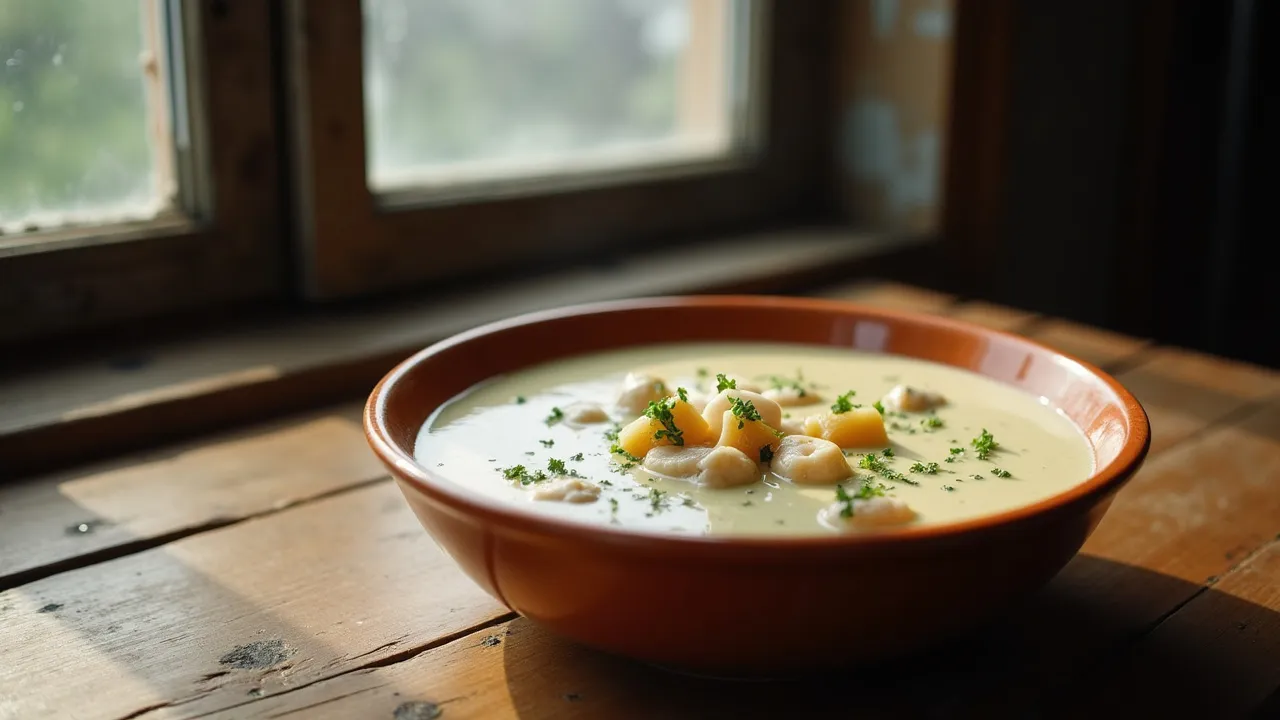
National Clam Chowder Day is celebrated every February 25th, honoring one of America's most iconic soups. From creamy New England to tomato-based Manhattan styles, this day invites seafood lovers to savor a warm, hearty bowl of clam chowder.
The Historical Origins & Evolutionary Journey
National Clam Chowder Day, observed on February 25th, celebrates a dish with deep roots in American culinary history. Clam chowder has evolved over centuries, blending Native American, European, and regional influences.
The Foundational Catalyst
The earliest chowders were simple seafood stews made by coastal Indigenous peoples, using clams, fish, and local vegetables. European settlers, particularly from France and England, adapted these stews, adding onions, salt pork, and ship's biscuits (hardtack) as thickeners. The word 'chowder' likely derives from the French chaudière, a large pot used for communal cooking.
The Legislative/Official Adoption
There is no official legislation establishing National Clam Chowder Day; it emerged as a grassroots observance, likely promoted by seafood councils, chowder festivals, and the National Day Calendar. The date February 25th appears to be chosen to break the monotony of late winter, offering a warm, comforting meal before spring.
Modern Global Legacy
Today, clam chowder is a beloved staple in American cuisine, with regional variations recognized worldwide. The day is celebrated with chowder cook-offs, restaurant specials, and home cooking, cementing its place in food culture.
How to Celebrate National Clam Chowder Day
Celebrating National Clam Chowder Day on February 25th is easy and delicious. Here are actionable strategies for individuals, schools, and organizations:
For Individuals & Families
- Cook a pot of homemade clam chowder using a traditional New England or Manhattan recipe.
- Host a chowder-tasting party with friends, comparing different regional styles.
- Visit a local seafood restaurant to enjoy their version of clam chowder.
For Schools & Community Groups
- Organize a chowder cook-off to promote teamwork and culinary skills.
- Teach a history lesson on the origins of chowder and its cultural significance.
- Collect canned clam chowder for food drives to help those in need.
For Businesses & Nonprofits
- Restaurants can offer special pricing or a free sample with purchase.
- Seafood markets can share online recipes and host live cooking demos.
- Food bloggers can post archives of chowder recipes using social media hashtags like #NationalClamChowderDay.
Global participation varies: in New England, parades are rare, but chowder festivals are common; in Canada, similar chowder days exist regionally.
Regional Styles & Culinary Diversity
Clam chowder boasts two primary regional styles: New England (creamy, milk or cream-based) and Manhattan (tomato-based, clearer broth). Other variations include Rhode Island (clear broth, no cream or tomato) and minor versions like Hatteras (North Carolina) and Minorcan (Florida, with datil peppers).
New England Clam Chowder
Characterized by its rich, creamy base, potatoes, salt pork, and quahog clams. Originating in the Northeast, it is often served in a bread bowl.
Manhattan Clam Chowder
A tomato-based broth with vegetables, lacking cream. It emerged in the 19th century, possibly as an Italian-American adaptation, though purists debate its authenticity.
Lesser-Known Variants
Rhode Island Chowder: Clear broth, no tomatoes or cream, focusing on clam flavor.
Minorcan Chowder: From St. Augustine, Florida, uses datil peppers for heat.
Hatteras Chowder: Thin broth with bacon and potatoes, from the Outer Banks.
Nutritional Aspects & Health Benefits
Clam chowder can be both nutritious and indulgent. Clams are an excellent source of lean protein, iron, vitamin B12, and omega-3 fatty acids. However, cream-based versions are high in saturated fat and calories.
Healthier Preparation Tips
- Use low-fat milk or evaporated skim milk instead of heavy cream.
- Add extra vegetables like celery, carrots, and leeks.
- Limit salt pork or use turkey bacon as a substitute.
- Serve smaller portions or pair with a salad.
Manhattan chowder is generally lower in calories and fat due to its tomato base. Individuals with shellfish allergies should avoid clam chowder entirely.
Economic & Cultural Impact of Clam Chowder
Clam chowder supports the commercial fishing industry, particularly quahog and steamer clam fisheries. It is a staple in New England seafood chains like Legal Sea Foods, and festivals like the Annual Chowderfest in Newport, Rhode Island, attract tourists. The day also boosts local restaurants and grocery stores.
Cultural significance: clam chowder is featured in literature (Melville's Moby-Dick mentions chowder) and film, symbolizing comfort and maritime heritage. It is a point of regional pride, with cook-offs and recipe debates reflecting local identity.
Modern Trends & Innovations
In recent years, chefs have reinvented clam chowder with fusion twists: Thai coconut clam chowder, smoky chipotle Manhattan chowder, and even vegan clam chowder using mushrooms and hearts of palm. Dairy-free versions using cashew cream have gained popularity. Food trucks and fast-casual chains have introduced chowder in fresh formats. Social media has amplified the day, with influencers sharing recipes and encouraging home cooks to participate.
Historical Timeline
Indigenous peoples along the Atlantic coast of North America cook shellfish stews, the earliest form of clam chowder.
European settlers adapt Native American stews, adding salt pork, onions, and hardtack. The term 'chowder' enters common usage.
First known published recipe for clam chowder appears in an American cookbook.
Manhattan clam chowder emerges, possibly at New York's Delmonico's Restaurant, using tomatoes instead of cream.
Campbell's Soup Company introduces a canned version, popularizing clam chowder nationwide.
New England clam chowder becomes standard fare in diners and restaurants across the US.
Chowder festivals, such as the Newport Chowder Festival, start celebrating regional versions.
National Clam Chowder Day gains recognition via online calendars and food blogs.
National Day Calendar officially lists National Clam Chowder Day as February 25th.
Vegan and dairy-free chowder recipes surge in popularity, expanding the dish's accessibility.