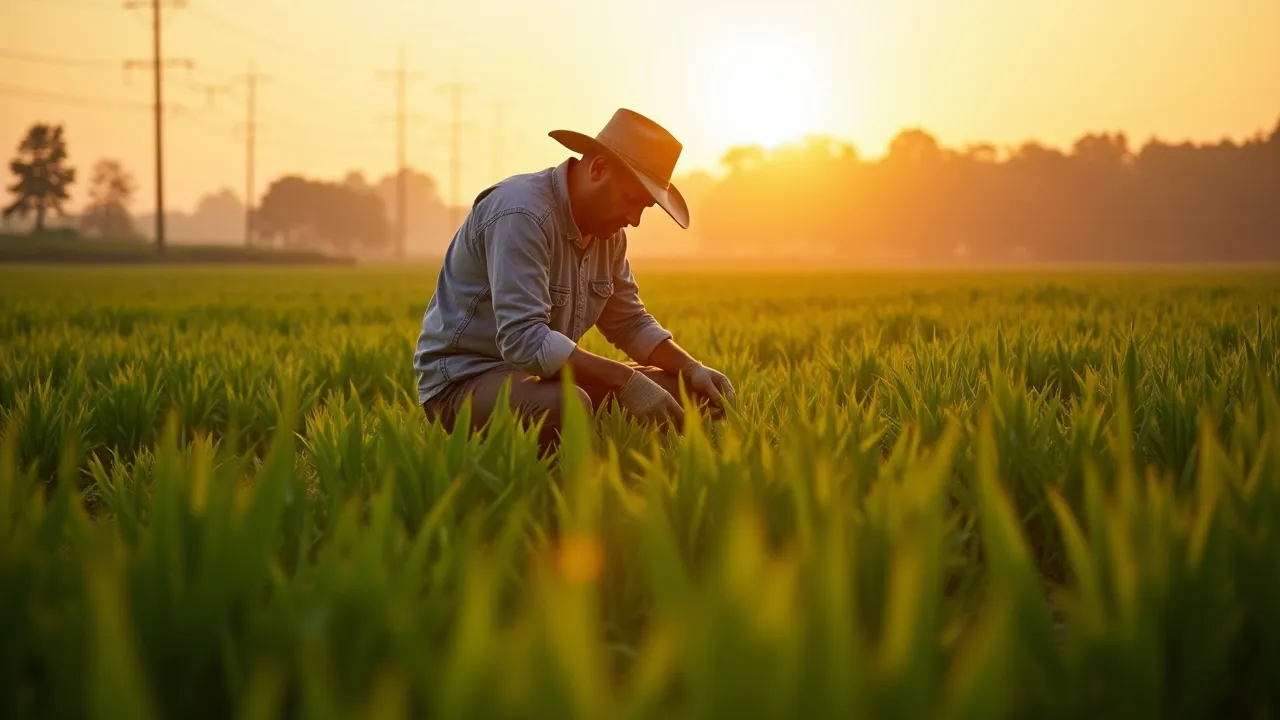
National Ag Day celebrates the abundance provided by American agriculture and recognizes the contributions of farmers and ranchers. Observed on the third Tuesday of March, it aims to educate the public about the vital role of agriculture in our daily lives.
The Historical Origins & Evolutionary Journey
National Ag Day, observed annually on the third Tuesday of March, is a celebration of the abundance produced by American agriculture and the essential contributions of farmers and ranchers. The day was established to bridge the gap between rural and urban populations, fostering a deeper understanding of how food and fiber are produced. Since its inception in 1973, the observance has grown into a nationwide movement. According to the Agriculture Council of America, "Ag Day is about educating the public about the vital role of agriculture in our daily lives."
The Foundational Catalyst
In the early 1970s, the Agriculture Council of America (ACA) identified a critical need: urban Americans had little connection to farming. The ACA, a coalition of agribusinesses, commodity groups, and farm organizations, launched National Ag Day to promote awareness. The first celebration occurred in 1973 with events in Washington, D.C., including a ceremonial planting and educational exhibits. Over 100 organizations participated, reaching millions through media coverage.
Legislative/Official Adoption
By 1974, the ACA officially designated the third Tuesday of March as the permanent date. The U.S. Department of Agriculture later endorsed the observance. In 1985, President Ronald Reagan issued a proclamation recognizing National Ag Day. Subsequent presidents have continued this tradition. The day is often part of 'National Agriculture Week,' which the USDA officially recognizes.
Modern Global Legacy
Today, National Ag Day has evolved into a multifaceted event. It encompasses week-long activities, school educational programs, social media campaigns, and industry conferences. The focus has expanded to include sustainability, technology, and global food security. The day serves as a platform to highlight innovations in precision farming, biotechnology, and conservation. According to surveys, public awareness of agriculture has increased significantly since the 1970s, though more work remains.
How to Celebrate National Ag Day: A Global Guide
National Ag Day offers numerous ways for individuals, schools, and organizations to show appreciation for agriculture. Below is a comprehensive guide to celebrating the day effectively, with actionable steps for different groups.
Individual Actions
- Visit a local farm – Many farms open their doors for tours on Ag Day. Check local listings for u-pick farms or agritourism destinations. It’s a chance to see where food comes from firsthand.
- Buy from farmers' markets – Support local growers by purchasing fresh produce. Markets often feature special Ag Day promotions and educational booths.
- Share on social media – Use hashtags like #NationalAgDay, #AgDay, or #ThankAFarmer to spread awareness. Post photos of farm visits or homegrown meals.
- Read about agriculture – Learn about farming practices, food systems, and the challenges facing farmers. Books, documentaries, and articles can deepen understanding.
- Donate to food banks – Support hunger relief efforts, as many farmers donate surplus produce.
School and Community Activities
- Organize a farm-to-school program – Invite a farmer or agricultural educator to speak to students. Many organizations offer free resources.
- Host a food drive – Collect non-perishable items for local food banks, emphasizing locally grown products.
- Create educational displays – Highlight different crops, livestock, and farming techniques. Use posters, samples, and interactive stations.
- Start a school garden – Plant vegetables and herbs to teach students about growing food.
- Film contest – Encourage students to create short videos about agriculture and share them online.
Corporate and Organizational Involvement
Businesses can celebrate by sourcing local ingredients for employee meals, hosting farmers' markets on-site, or sponsoring farm tours. Many companies use Ag Day to launch sustainability initiatives or highlight their supply chain origins.
Worldwide Traditions
While primarily a U.S. observance, other countries have similar days. In Canada, Agriculture Day is celebrated in February. In India, National Farmers' Day is on December 23. Many nations use the opportunity to promote agricultural education and support local farmers.
The Economic Impact of Agriculture
Agriculture is a cornerstone of the U.S. economy, contributing significantly to GDP, employment, and trade. National Ag Day highlights these contributions, reminding policymakers and the public of the sector's importance.
Contribution to GDP
According to the USDA, agriculture and related industries contributed $1.264 trillion to the U.S. GDP in 2021, representing 5.4% of the total. The sector includes farming, forestry, fishing, and food processing.
Employment
More than 22 million workers are employed in agriculture and related fields, which is about 10% of total U.S. employment. These jobs range from farm labor to technology development.
Trade and Exports
U.S. agricultural exports reached a record $196 billion in 2022, supporting rural economies and global food security. Major exports include soybeans, corn, and meat products.
One in every 10 American jobs is tied to agriculture.
Farmland accounts for nearly 40% of U.S. land area.
Agriculture supports millions of additional jobs in manufacturing and retail.
Technological Innovations in Modern Farming
Modern agriculture has been transformed by technology, making farming more efficient, sustainable, and productive. National Ag Day showcases these advancements.
Precision Agriculture
GPS-guided tractors, variable rate technology, and soil sensors allow farmers to optimize inputs like water, fertilizer, and pesticides. This reduces waste and environmental impact while increasing yields.
Drones and Remote Sensing
Drones equipped with multispectral cameras provide real-time data on crop health, moisture levels, and pest infestations. This enables targeted interventions, reducing chemical use.
Biotechnology and Gene Editing
CRISPR and other genetic tools have developed crops that are drought-resistant, pest-resistant, and more nutritious. These innovations help farmers adapt to climate change and feed a growing population.
Automation and Robotics
Autonomous tractors, robotic harvesters, and milking machines reduce labor costs and improve efficiency. Some dairies now use fully automated systems monitored via smartphones.
Precision farming can increase yields by up to 50% while reducing inputs.
Drone use in agriculture is projected to grow 20% annually.
Gene-edited crops are regulated differently from GMOs.
The Role of Agriculture in Sustainability
Agriculture faces the challenge of feeding a growing global population while minimizing environmental impact. Sustainable practices are central to National Ag Day discussions.
Conservation Practices
- Conservation tillage – Reduces soil erosion and improves water retention. Over 70% of U.S. farmland uses some form of conservation tillage.
- Cover cropping – Planting crops like rye or clover during fallow periods improves soil health and reduces erosion.
- Integrated pest management (IPM) – Combines biological, cultural, and chemical methods to control pests with minimal environmental harm.
- Renewable energy – Farmers install solar panels, wind turbines, and biogas systems to reduce carbon footprints.
Water Conservation
Drip irrigation and precision watering systems reduce water use by up to 50%. Many farms are adopting water recycling technologies.
Carbon Sequestration
Agricultural practices like no-till farming and agroforestry capture carbon in soil, helping mitigate climate change.
National Ag Day highlights success stories from farmers who have adopted these practices, encouraging broader adoption.
National Ag Day Around the World
While National Ag Day is a U.S. event, agriculture is celebrated globally. Each country has its own traditions and dates.
Canada
Agriculture Day in Canada is observed on the second Tuesday of February. It focuses on the importance of Canadian agriculture and food production.
India
National Farmers' Day (Kisan Diwas) is celebrated on December 23, the birth anniversary of former Prime Minister Chaudhary Charan Singh, a champion of farmers' rights.
Australia
National Agriculture Day in Australia is held in November, with events across the country celebrating the contributions of farmers.
Europe
The International Day of Rural Women is observed on October 15, highlighting women's roles in agriculture. Many European countries also have national harvest festivals.
- In Brazil, National Farmers Day (Dia do Agricultor) is on July 28.
- Japan celebrates Agriculture Day on December 5.
- South Africa has National Farmers Day on August 17.
These observances share the common goal of appreciating food producers and raising awareness of agricultural challenges.
How Schools and Communities Participate
Education is a key pillar of National Ag Day. Schools integrate agricultural topics into curriculums, and communities host events to connect urban populations with rural realities.
Curriculum Integration
- Science: Plant growth experiments, soil testing, and genetic studies.
- Social studies: The history of agriculture, food systems, and global trade.
- Health and nutrition: Understanding where food comes from and the importance of healthy eating.
- Art: Drawing farm scenes or creating models of farm equipment.
Community Events
Local organizations host fairs, workshops, and farm tours. The goal is to bridge the gap between urban and rural communities. Many cities hold farmers' markets with educational booths.
Virtual Participation
In recent years, virtual farm tours and online webinars have allowed more people to participate. The Agriculture Council of America provides free lesson plans and resources on its website.
By engaging students and communities, National Ag Day ensures that future generations appreciate the importance of agriculture.
Historical Timeline
First National Ag Day celebrated in Washington D.C. by the Agriculture Council of America, featuring ceremonial planting and educational exhibits.
The Agriculture Council of America officially fixes the date as the third Tuesday of March, establishing it as an annual observance.
President Ronald Reagan issues the first presidential proclamation recognizing National Ag Day, emphasizing its importance to the nation.
Social media campaigns begin to spread awareness, with hashtags like #NationalAgDay gaining traction and engaging a wider audience.
Focus on sustainability and technological innovation becomes central to National Ag Day events, highlighting precision farming and conservation.
Virtual celebrations due to the COVID-19 pandemic include online farm tours and webinars, expanding participation globally.